
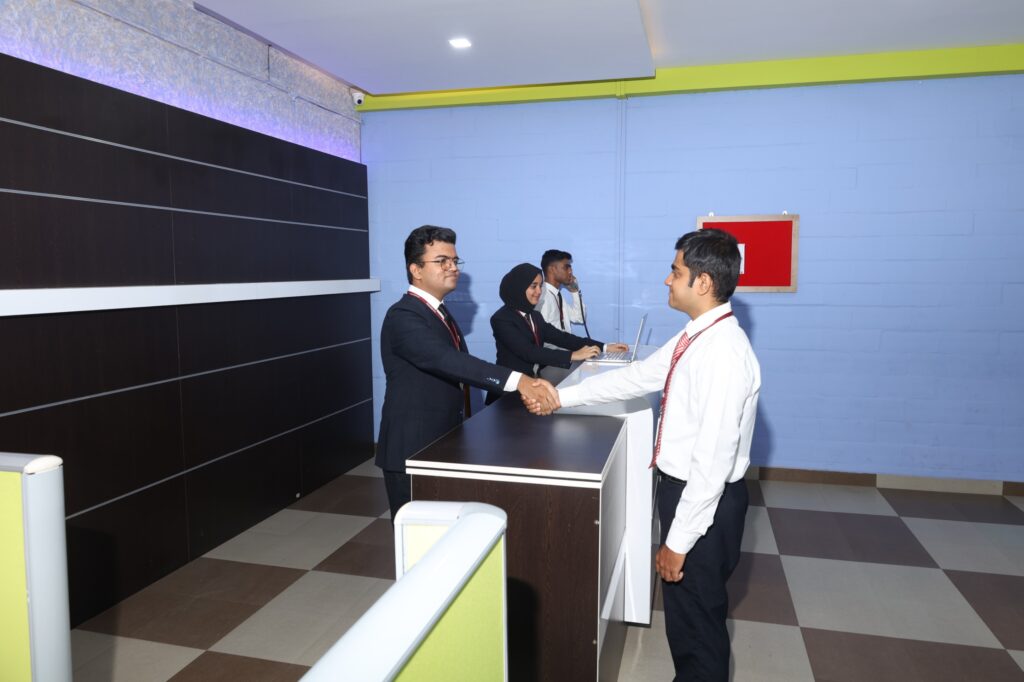
Welcome to the Department of Hotel Management at Yuvakshetra Institute of Management Studies—an academic sanctuary where the spirit of hospitality comes alive. Located in the serene landscape of Palakkad, our institution holds the distinction of being the first in the district to offer a university-recognised degree in Hotel Management. This proud legacy has shaped our identity as a forerunner in hospitality education, nurturing aspiring hoteliers into confident, industry-ready professionals who embody both excellence and empathy.
What makes our environment unique is the atmosphere of focused learning blended with hands-on engagement. The department is housed in an architecturally advanced academic block built with German engineering precision—not simply for design but to support purposeful training. Every space has been planned to resemble what students will encounter in the professional world, from reception counters to restaurant layouts and kitchen infrastructure. It’s not a simulated feel—it’s a working model of the industry itself.
The learning experience here is not passive. From the very first semester, students are introduced to how hotels function—not through theory alone, but by being involved in actual processes, responsibilities, and decision-making exercises. Whether it’s understanding the rhythm of a commercial kitchen, attending to the fine details of guestroom upkeep, or mastering the art of managing check-ins at a simulated front office, students are immersed in the reality of the profession. Theory is constantly brought into conversation with practice, and students are encouraged to question, reflect, and refine their approach.
The strength of our department lies in its people. Our faculty members come with deep academic backgrounds and years of field experience. They’re not just instructors; they are mentors who guide students through global trends, operational challenges, and evolving customer expectations. The focus is not only on developing technical skill but also on building confidence, communication, and a sense of professional responsibility.
An important part of our vision is ensuring our students have access to the world beyond the classroom. Through formal partnerships with leading hotel groups and international training organisations, we provide pathways to international internships and work placements. Our students have trained and worked in a wide range of countries, including the UAE, Qatar, Oman, Maldives, Mauritius, Malaysia, and Germany. These placements are not just a line on a résumé—they are opportunities to understand new cultures, guest behaviours, and business models. Alumni of the department can be found in some of the most respected names in the industry—Hyatt, Hilton, Marriott, One&Only Resorts, IHG, Radisson, and more—carrying with them the discipline and adaptability they developed during their time here.
To make such exposure meaningful, we’ve invested in a full range of industry-grade labs. Students train in dedicated spaces designed to mimic the standards of star hotels—be it the training kitchens equipped with commercial cooking ranges, the restaurant floor where service techniques are practiced, the bar setup for beverage operations, or the front office and housekeeping labs that function just like their real-world counterparts. These are not mere classrooms—they’re working labs where each session builds muscle memory and workplace familiarity.
To achieve excellence in the field of Hospitality Education and research and be the most preferred recruitment destination
To develop young men and women into professional experts to manage Hospitality Industry in general and Hotels in particular. To equip youngsters with conceptual and interpersonal skills for managerial decision making and its execution in hospitality and related industries. To develop and encourage the entrepreneurial capabilities of the young generation to become effective change agents.
We at yuvakshetra College are committed to excel in the field of Hospitality Education, by moulding the students from all cross sections of the society and enhancing their skills to meet the challenges of the dynamic business environment.
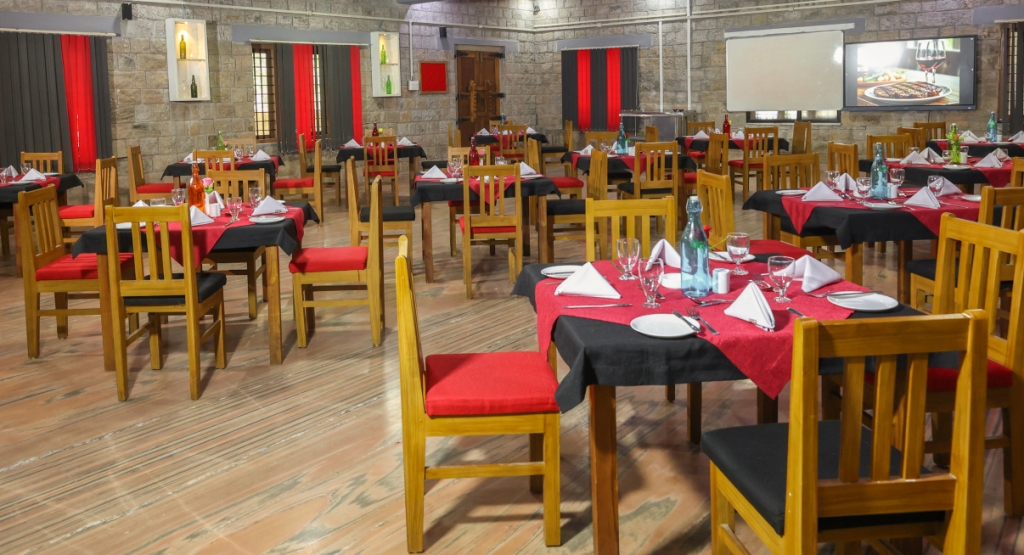
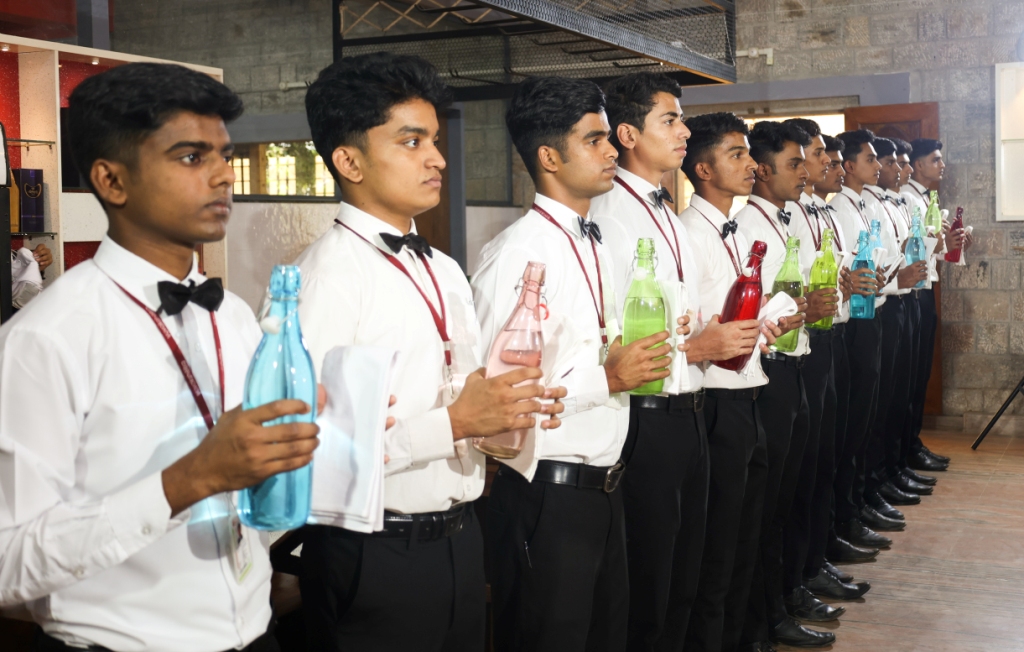
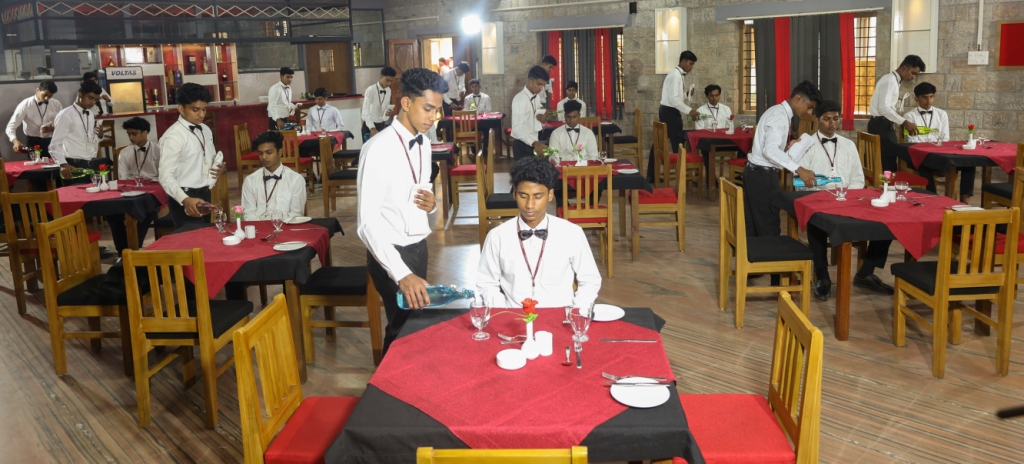
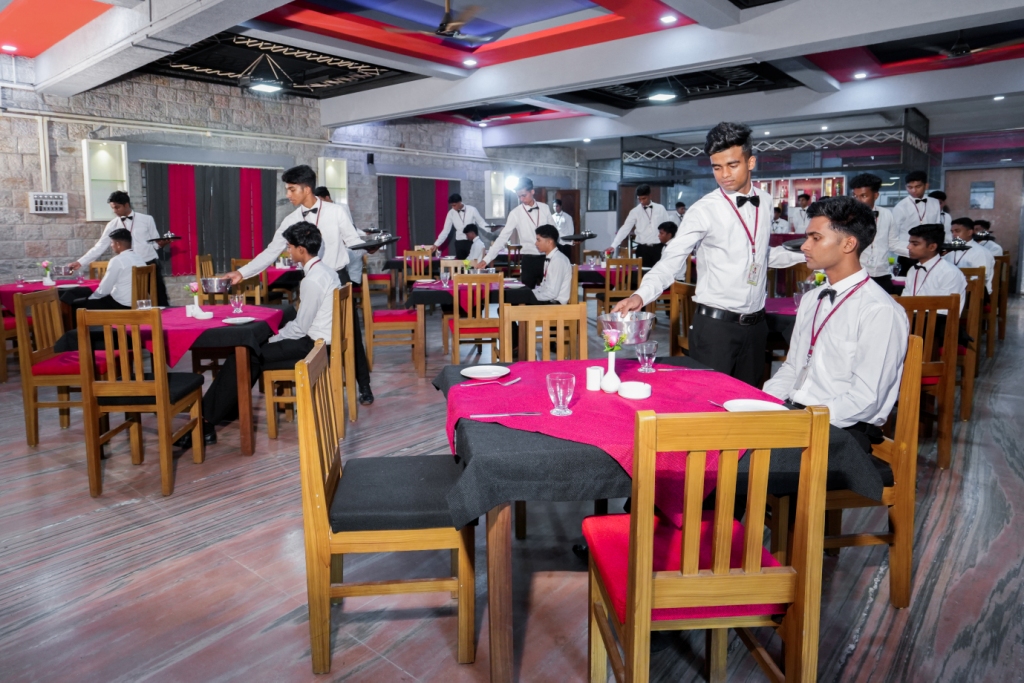
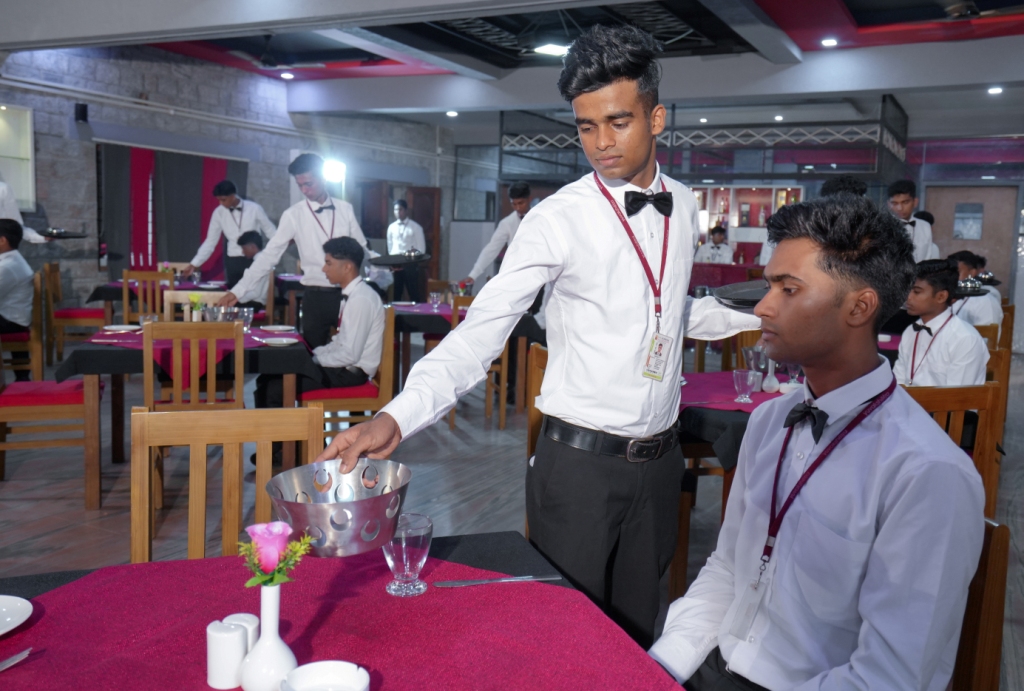
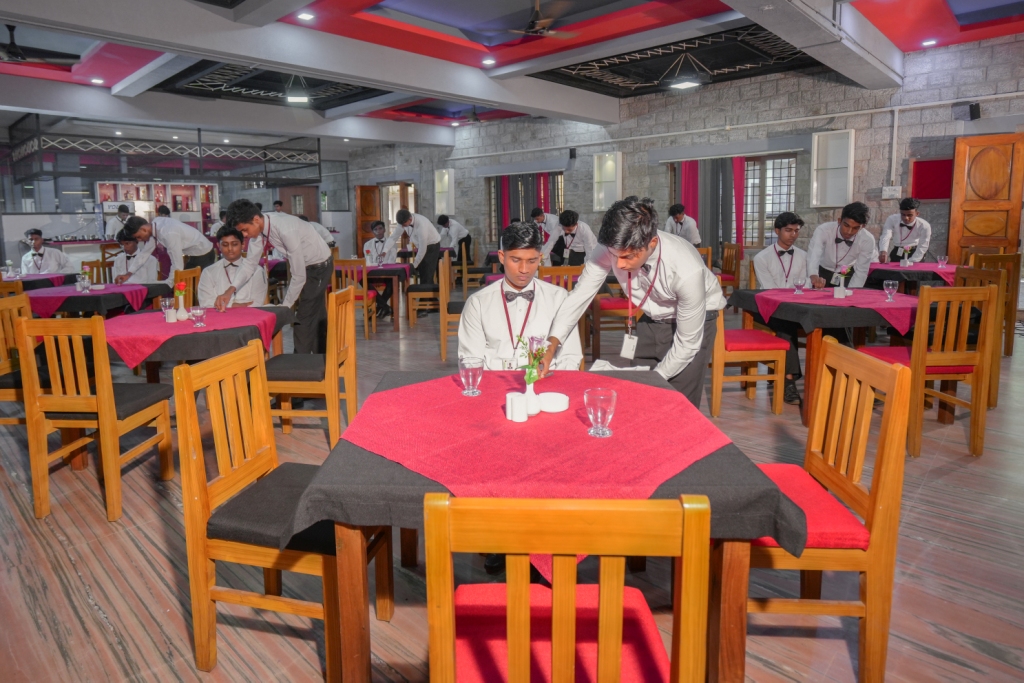
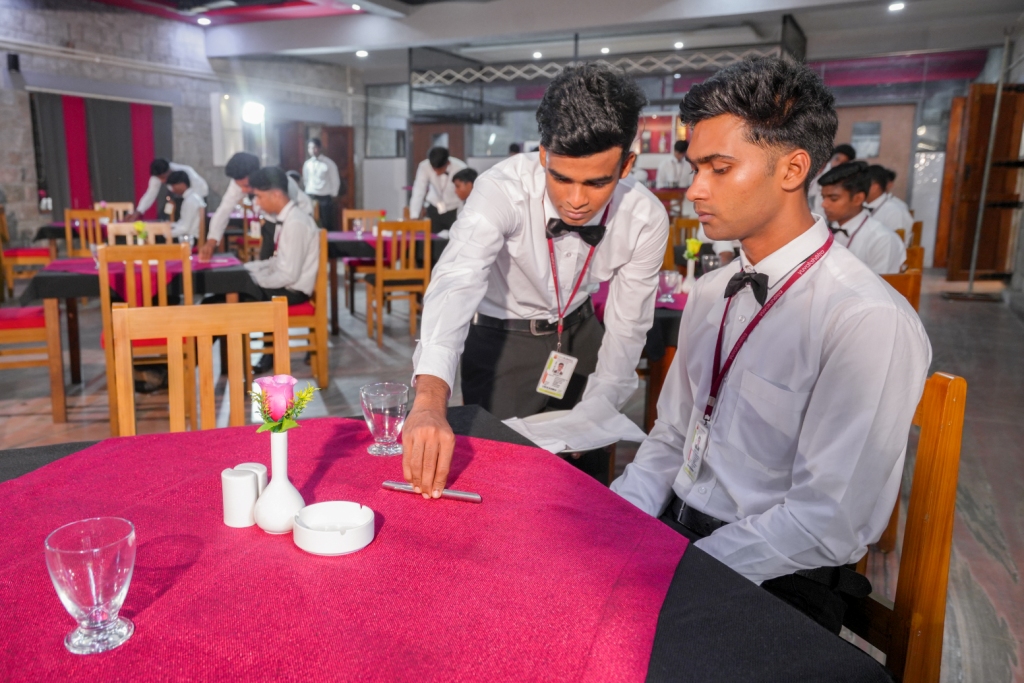
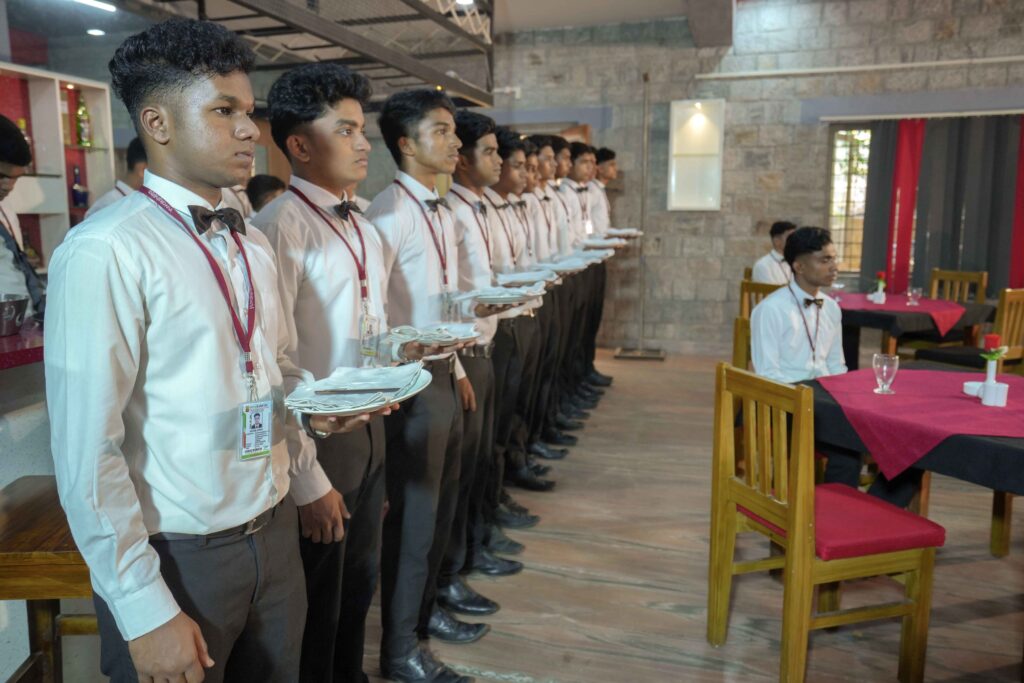
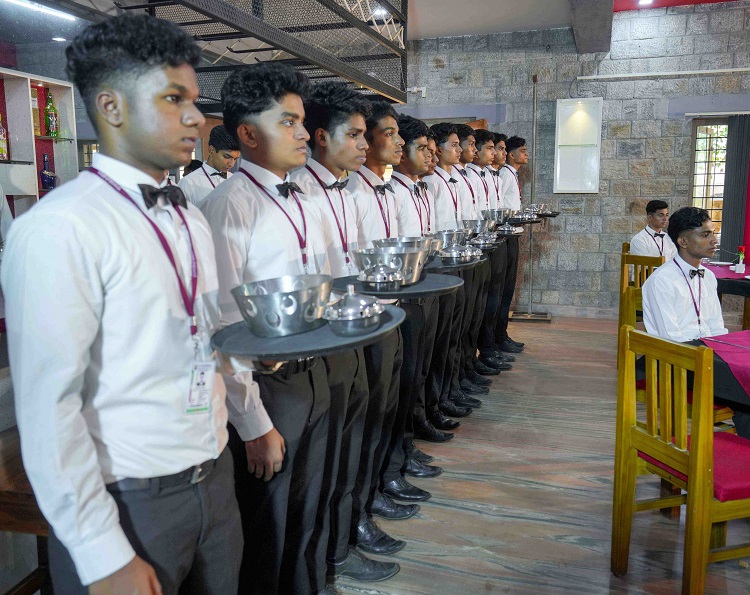
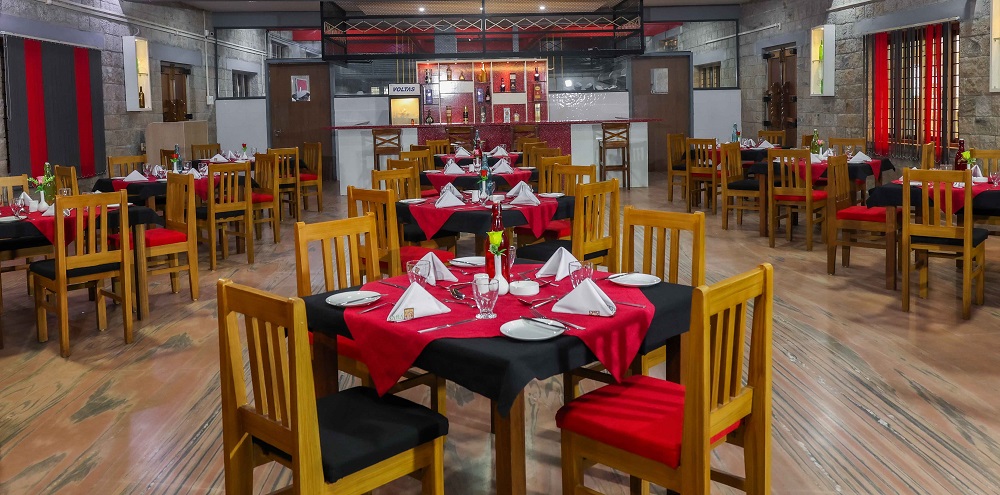
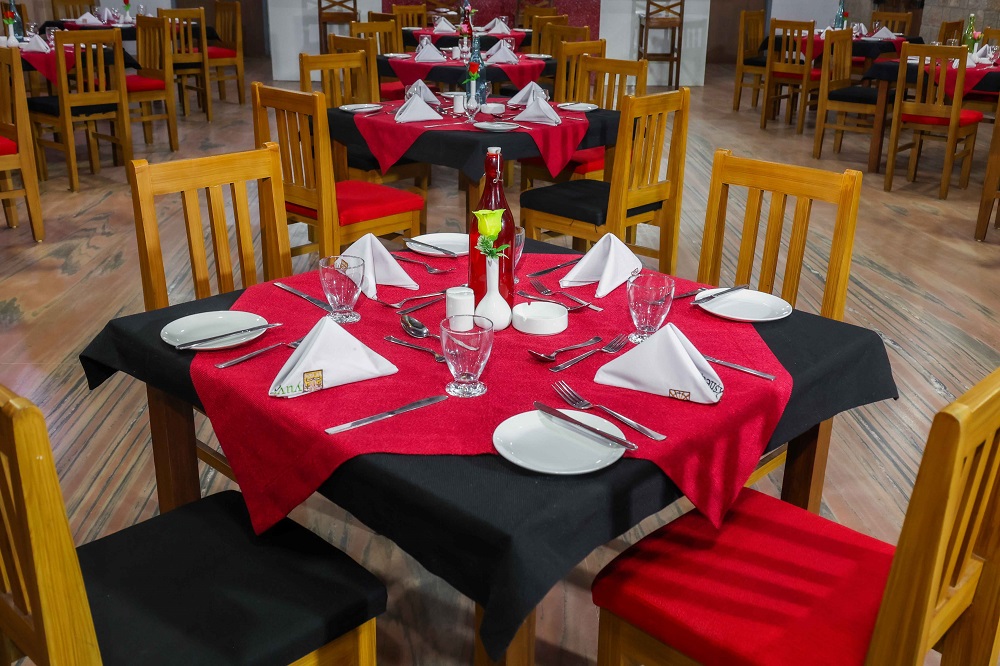
Basic Training Restaurant
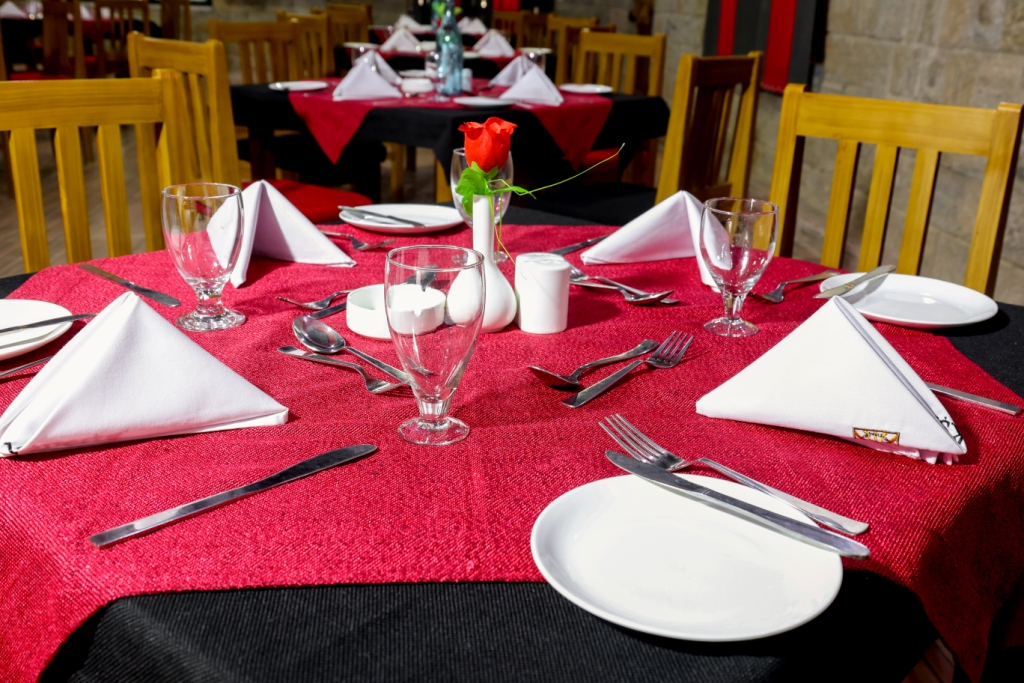
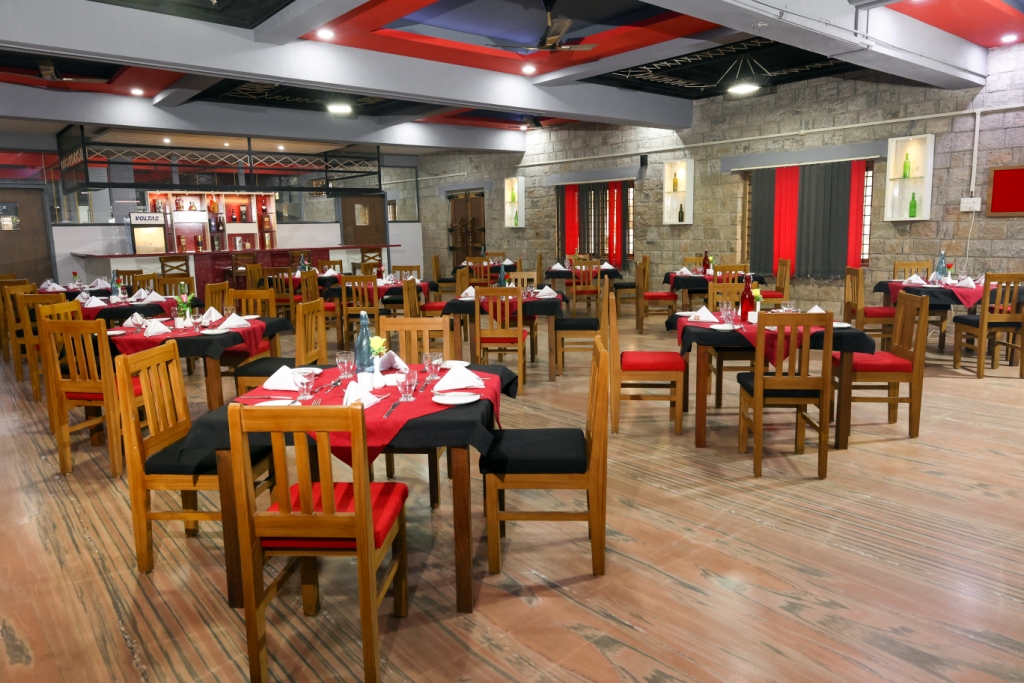
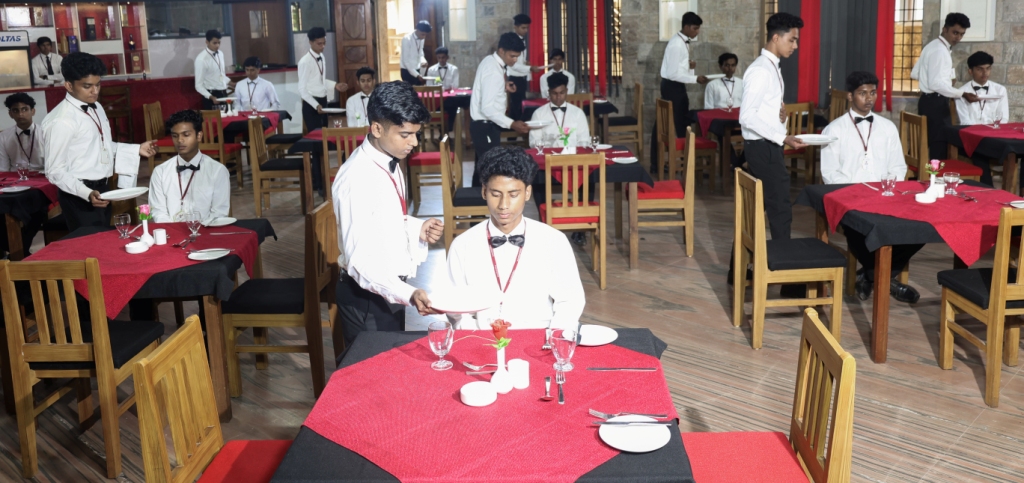
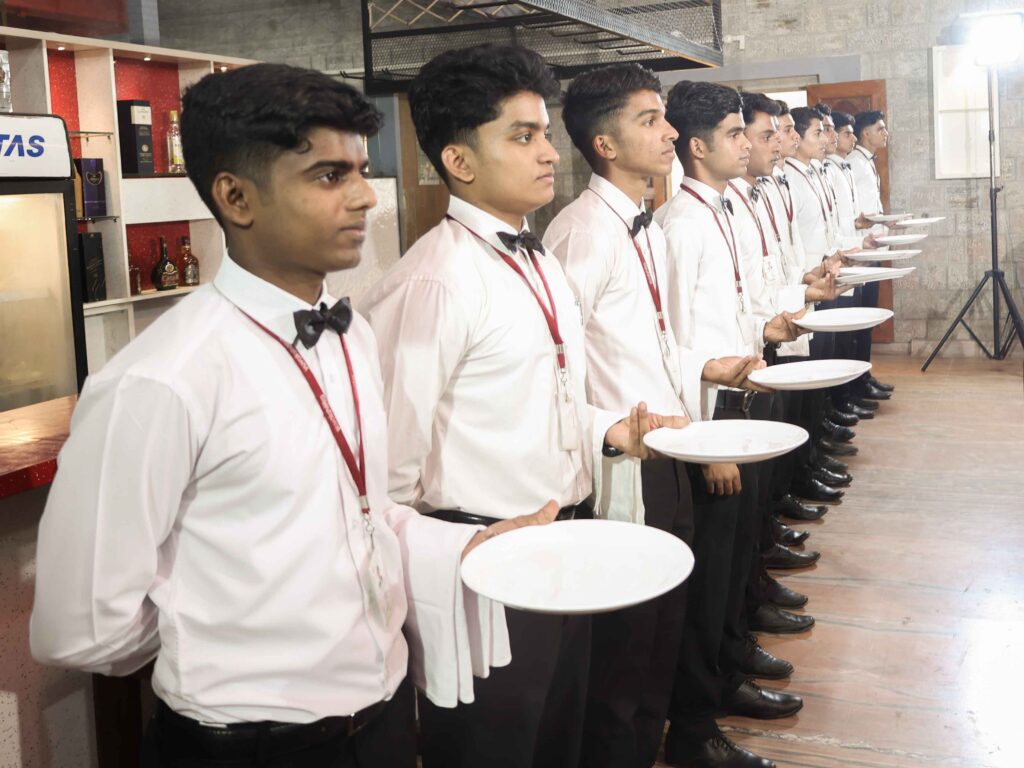
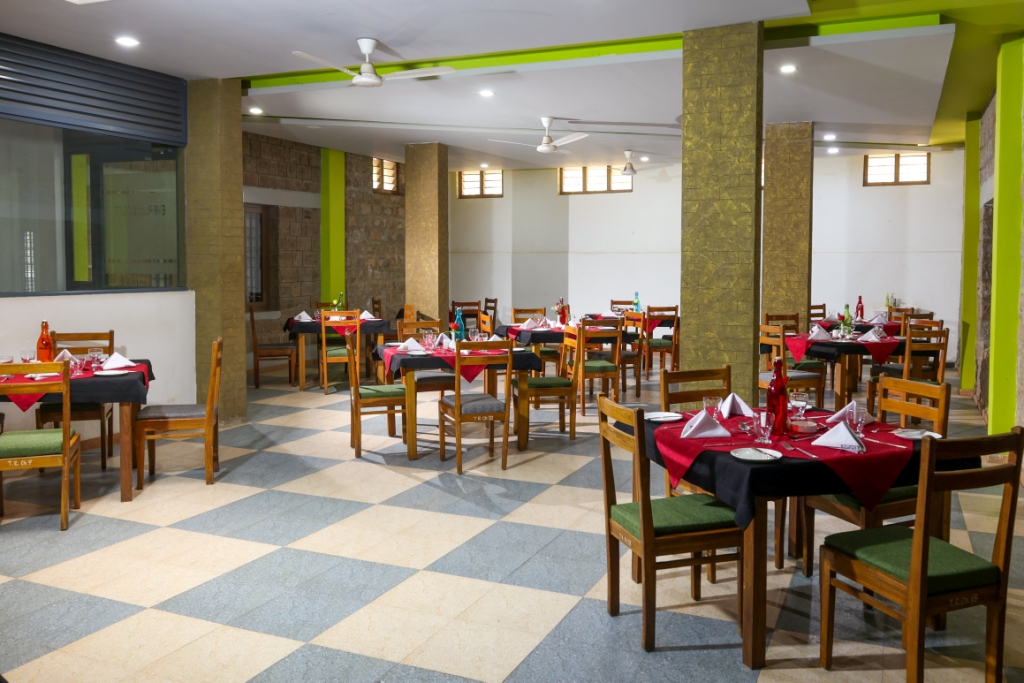
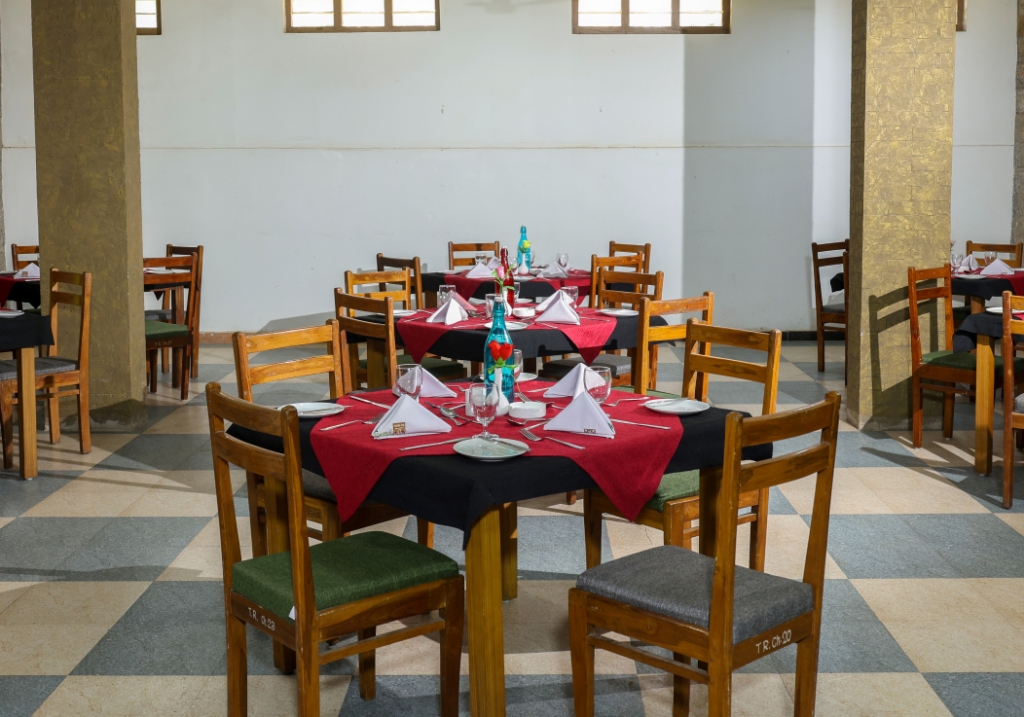
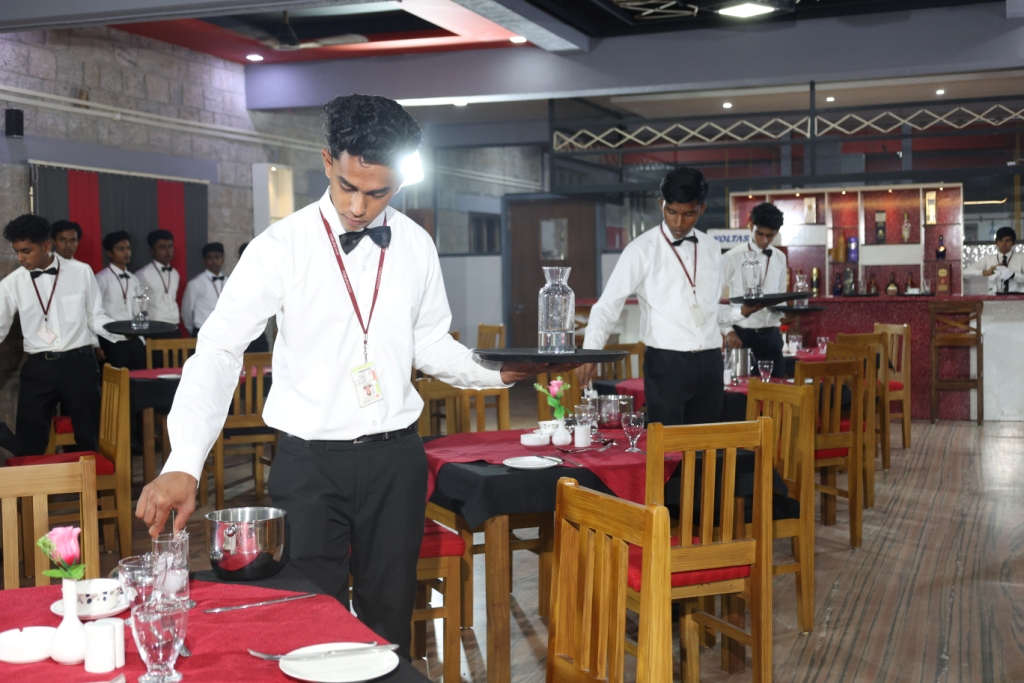
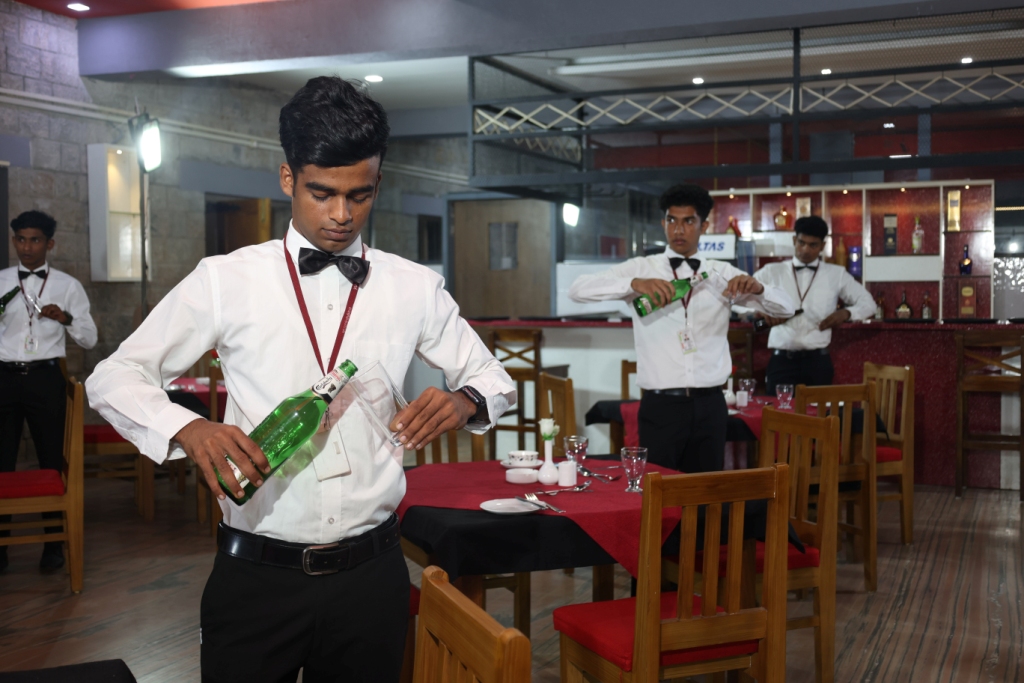
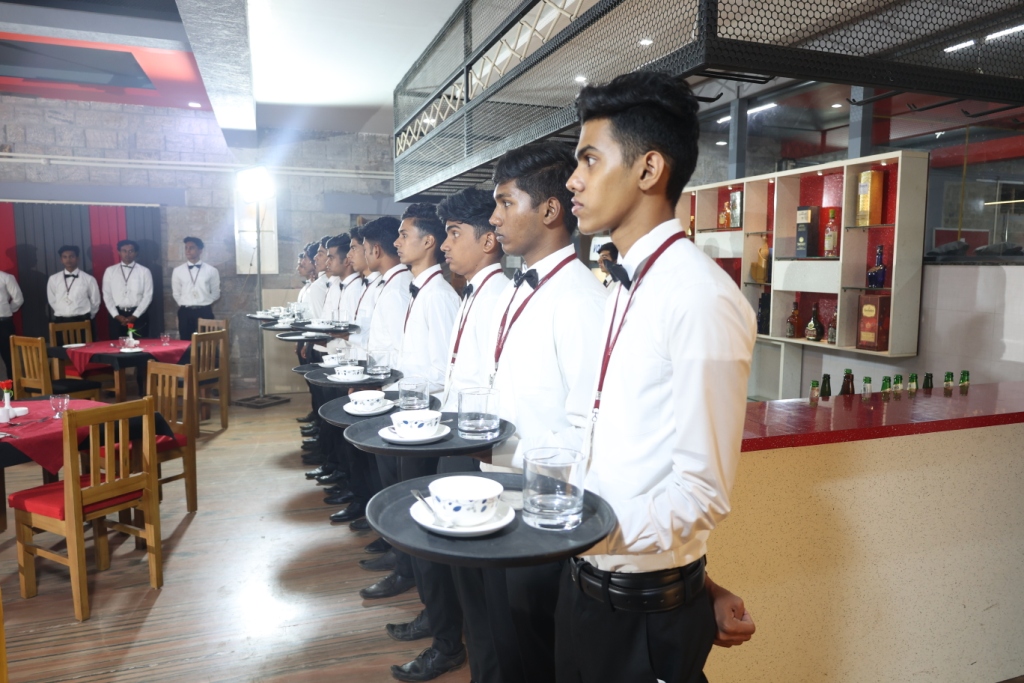
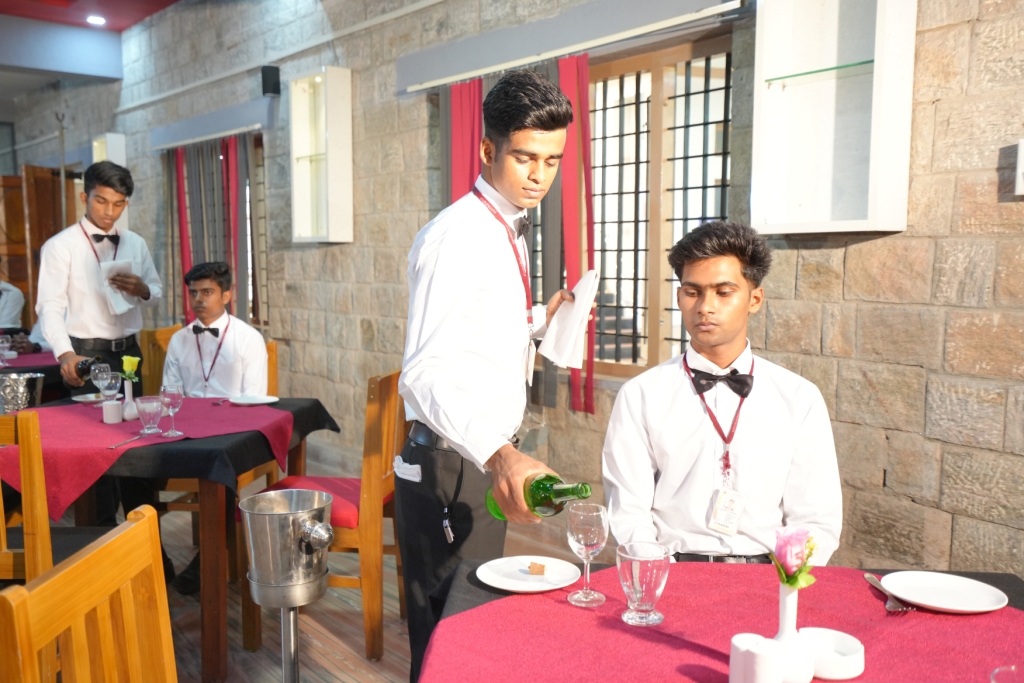
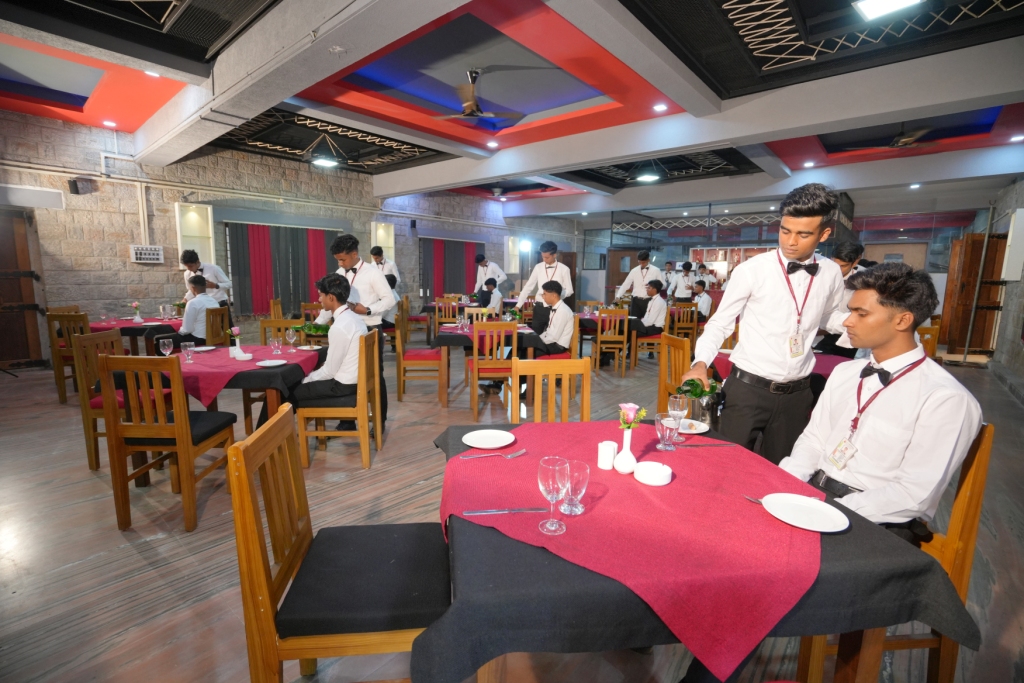
The Basic Training Restaurant at the department is more than a practical classroom—it is a space where students step into the role of hospitality professionals and experience firsthand the rhythm of restaurant operations. Designed as a 48-cover fine-dining facility, the restaurant replicates the ambiance and structure of a functioning hotel dining room, offering students a close-up view of what service excellence truly involves.
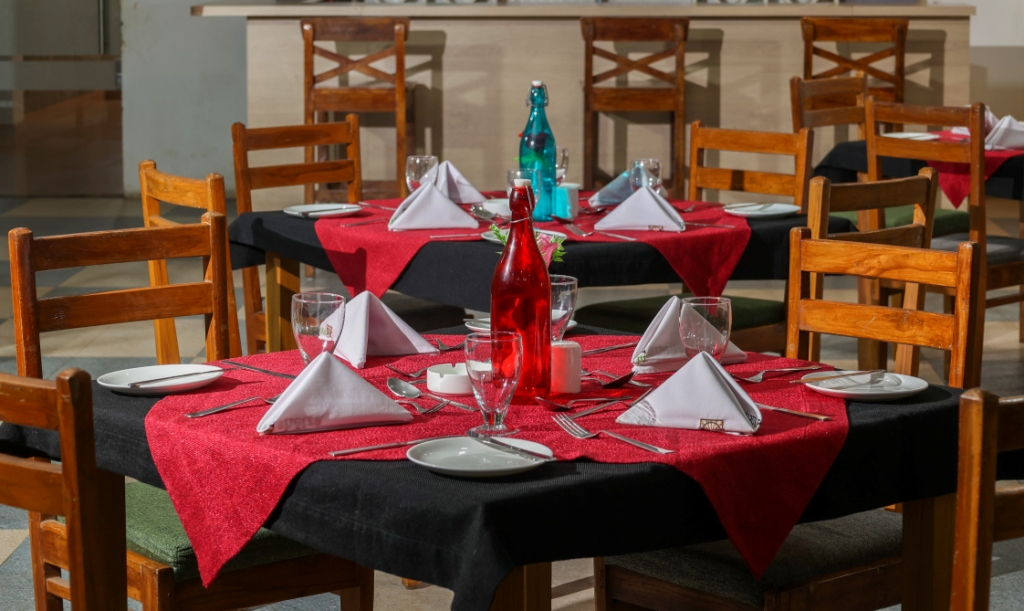
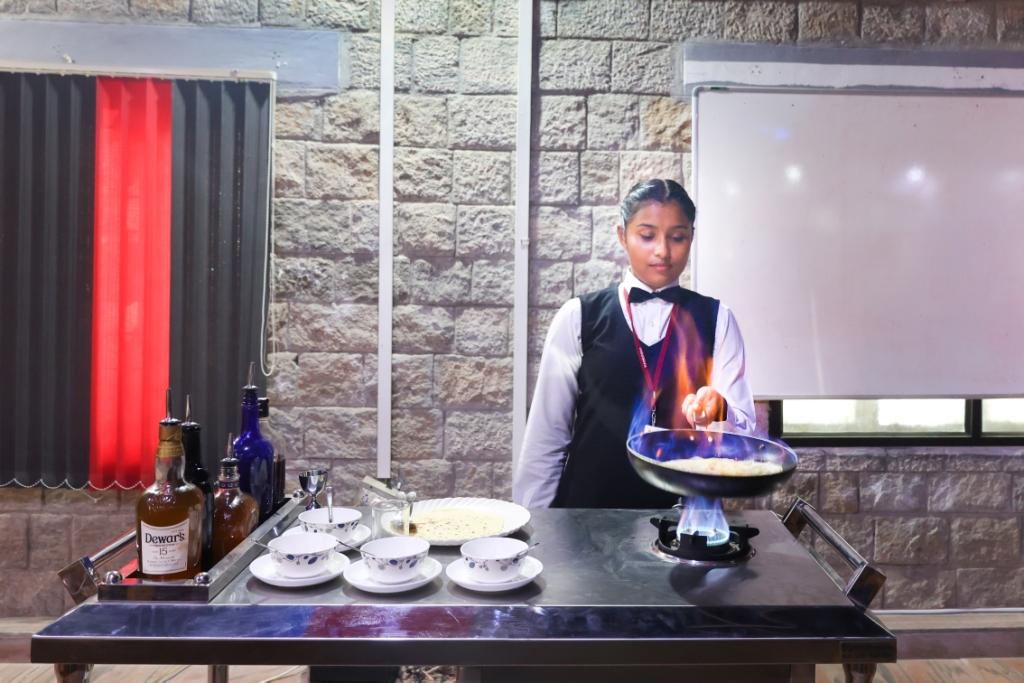
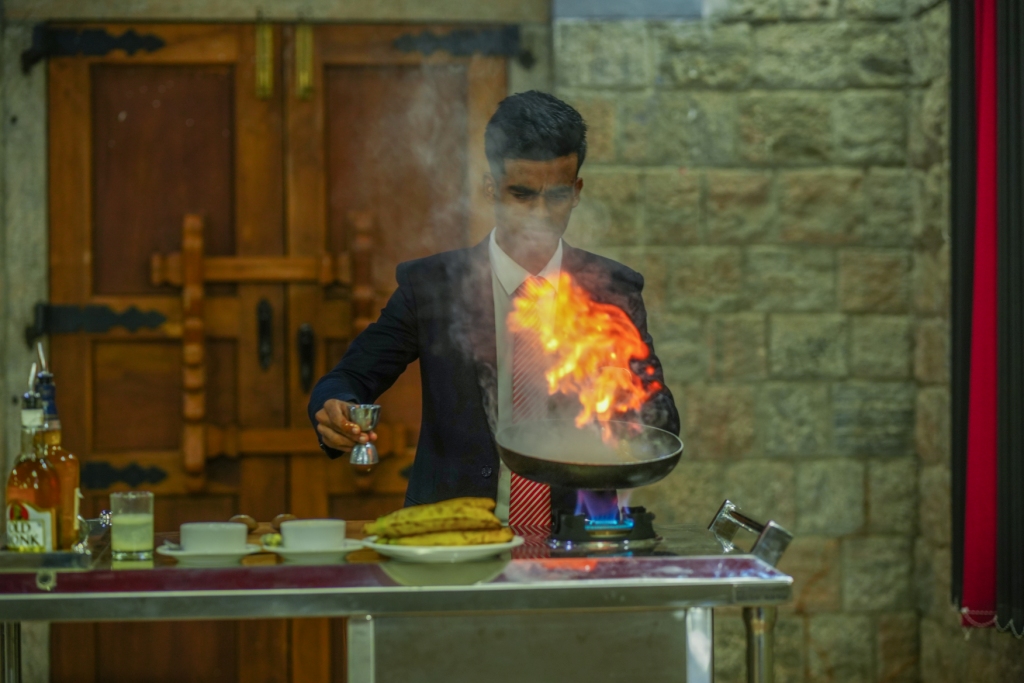
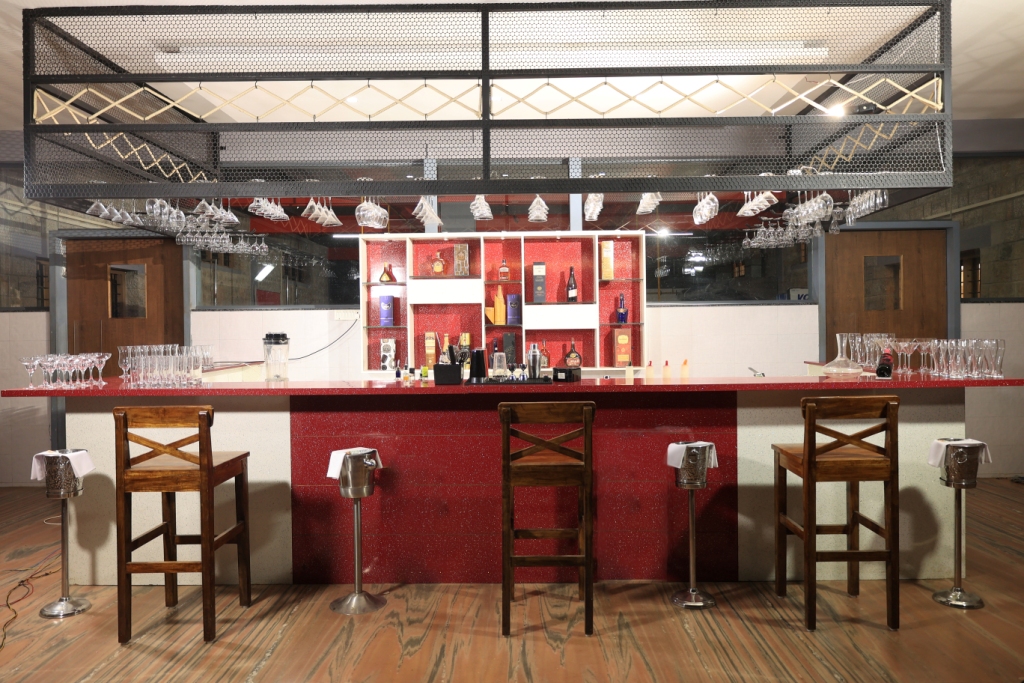
Every corner of the space has been thoughtfully laid out to mirror the flow and detail expected in industry-standard establishments. A fully functional bar counter stands ready for beverage training, while a gueridon trolley is used to practice the intricacies of tableside service—skills that demand both technique and poise. An LCD screen forms part of the infrastructure, supporting demonstrations and interactive learning in real time, enhancing both observation and participation.
From the outset, students are immersed in the essential elements of food and beverage service. They learn the art of arranging tables according to various formats, be it à la carte, table d’hôte, or buffet. They develop competence in the service of beverages, from the simple offering of water to the careful preparation and presentation of mocktails, tea, and coffee. Each task is approached not as a routine, but as a skill to be mastered, refined, and delivered with precision.
Equally important is the exposure to professional service styles followed across the globe. Students are introduced to American (pre-plated), French (gueridon), Russian (silver), English (host-led), and buffet services—each with its distinct approach to interaction, presentation, and guest satisfaction. These methods are not just taught, but performed, allowing learners to internalize service patterns and adapt their techniques with confidence.
The training also extends to the finer technical aspects of service. Students become familiar with identifying various types of glassware, handling basic mixology, maintaining bar hygiene, and setting up a bar for efficient workflow. Alongside this, they are guided through key soft skills such as order taking, guest communication, upselling, and operating point-of-sale systems—skills that are crucial in ensuring smooth front-of-house operations.
What gives the space its real-world relevance is its direct connection to the training kitchen. This layout mirrors the structure of actual hotel restaurants, where timing and coordination between kitchen and service teams are critical. Working in this interconnected setup, students develop an instinct for time management, teamwork, and service flow—essentials that cannot be taught through theory alone.
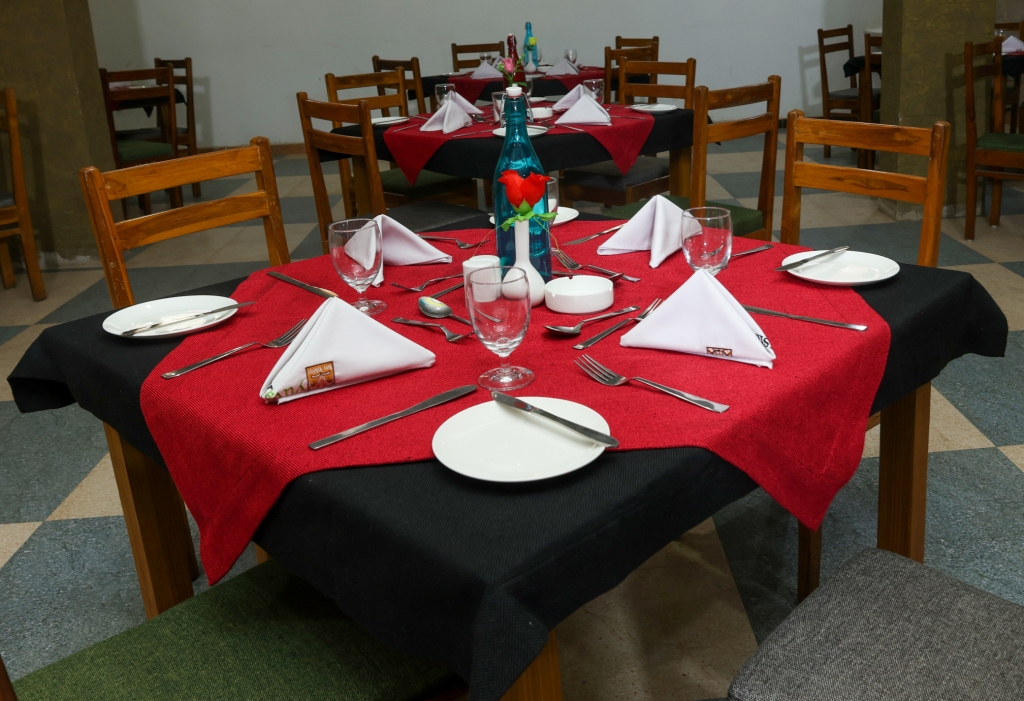
The restaurant becomes a place where attention to detail is second nature. Napkin folds are crafted with intent, table settings are executed with care, and every movement during service follows a practiced sequence. Students also gain early exposure to menu planning, food and beverage pairing, and maintaining appropriate guest etiquette—developing not just their technical skillset, but also the temperament and attitude required to work in refined hospitality spaces.
In this environment, learning becomes tangible. It’s not about rehearsing for an exam; it’s about preparing for a profession. Every plate served, every table cleared, and every guest interaction is part of the larger training process—shaping students into thoughtful, capable, and confident professionals, ready to carry the standards of fine service into the global hospitality industry.
Advanced Training Restaurant
There’s a moment in every hospitality student’s journey when the classroom fades, and the learning begins to feel real—where serving a guest is no longer a simulation, but a genuine performance of skill, timing, and care. That transformation begins inside the advanced training restaurant, where students are not merely taught—they are challenged.
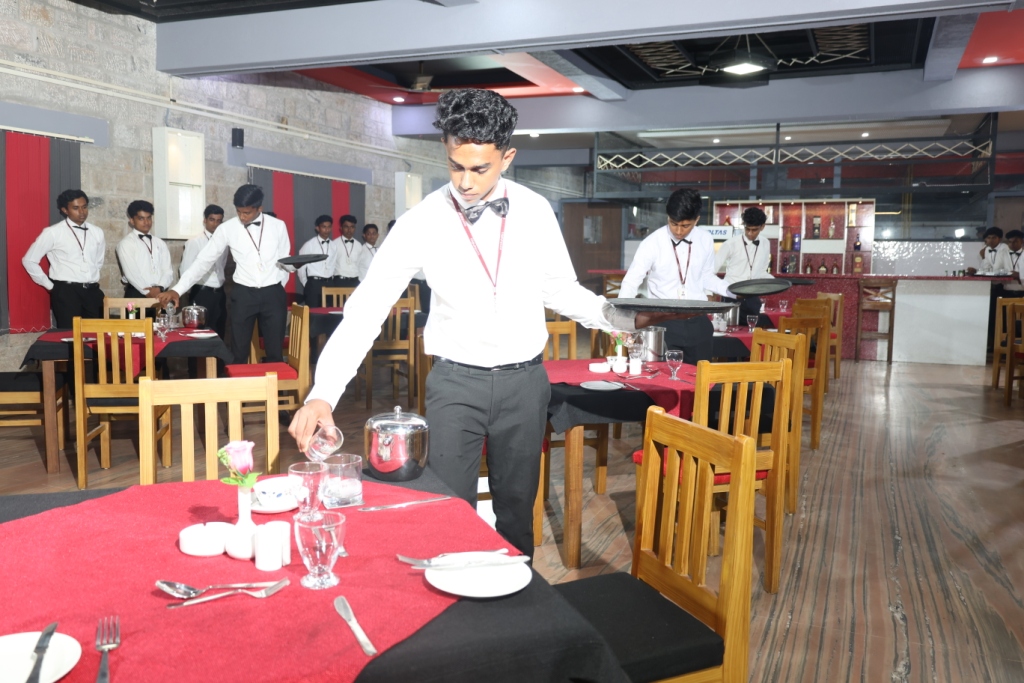
From the very first step into the restaurant, they are placed in a setting that mirrors the polished pace of high-end dining spaces. Everything around them—the texture of the table linen, the quiet gleam of glassware, the precision of the floor layout—serves as a cue. This is where they begin to understand that hospitality is not just about knowing what to do, but knowing how to feel the rhythm of service.
The environment is thoughtfully designed, equipped with features that match the operational demands of a contemporary restaurant. The bar counter, set at one end, is more than a training fixture—it’s a workspace where students practice their craft, from simple beverage presentation to the subtle art of mixology. Behind the scenes, the advanced training kitchen hums with activity, and the direct line between kitchen and restaurant allows for real-time coordination, much like the controlled chaos of an actual service shift.
Students here are not handed fixed instructions. Instead, they are guided through experiences that help them discover their own service persona. One day they may be preparing a table for a fine-dining à la carte service; the next, they’re navigating the elegance of a five-course meal, or managing the dynamic flow of a buffet. They take orders, input them into the POS system, and learn to move with purpose—not rushed, not hesitant, but assured. Their voices become more confident, their interactions more deliberate, their gestures more refined.
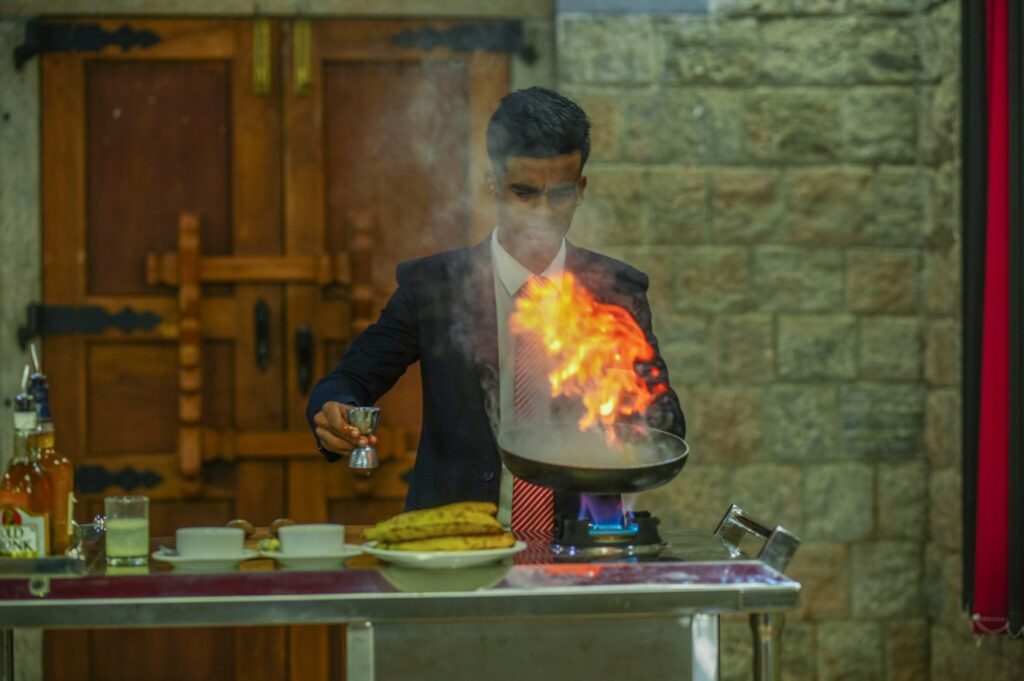
This is also where they begin to see the personality of different service styles. French gueridon service, with its theatrical flair, teaches them grace under scrutiny. Russian service, which demands coordinated precision, sharpens their awareness. The quiet charm of English host-led service fosters composure, while buffet service brings with it the responsibility of space management and guest anticipation. Each method is taught not in isolation, but as a reflection of cultural nuances and evolving guest expectations.
But the real strength of the training lies in its ability to stretch students beyond technical routines. They are introduced to menus that change in theme and tone—fusion dishes that reflect global trends, tasting courses that tell a culinary story, and experiences that must be paced and plated with care. They are encouraged to suggest, recommend, improvise, and engage—all while maintaining the posture of a professional.
Bar training becomes a world of its own. Students learn to treat every glass as a canvas, every beverage as an experience. They understand how the smallest actions—wiping a rim, choosing the right glassware, garnishing with intention—can shape a guest’s impression. Cleanliness, setup, presentation—these are not just tasks, but habits they carry into future roles.
In this space, success is not measured by how quickly a table is cleared, but by how smoothly a guest’s experience unfolds. Students learn when to step forward and when to disappear into the background. They begin to understand timing—not the ticking of the clock, but the natural ebb and flow of a service cycle. The ability to observe, interpret, and respond quietly becomes second nature.
By the time they step out of this environment and into the world of internships or job interviews, they carry with them more than a set of polished skills. They carry the weight of practice, the grace of lived experience, and the confidence that comes from having served, stumbled, adapted, and grown in a space that demanded their best. And that makes all the difference.

The Spirit Bar
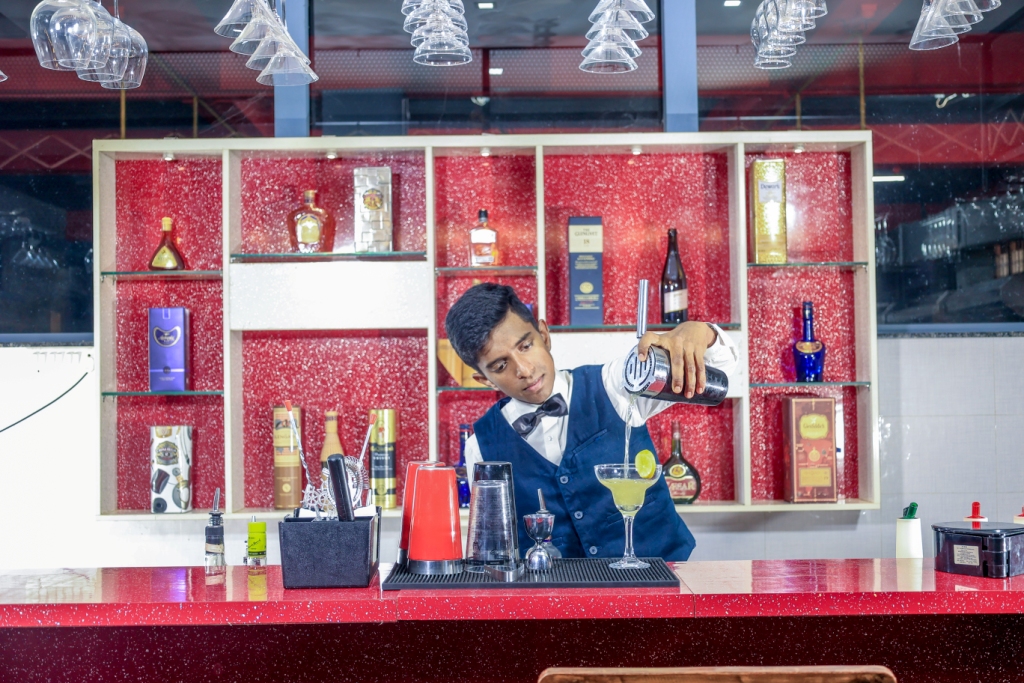
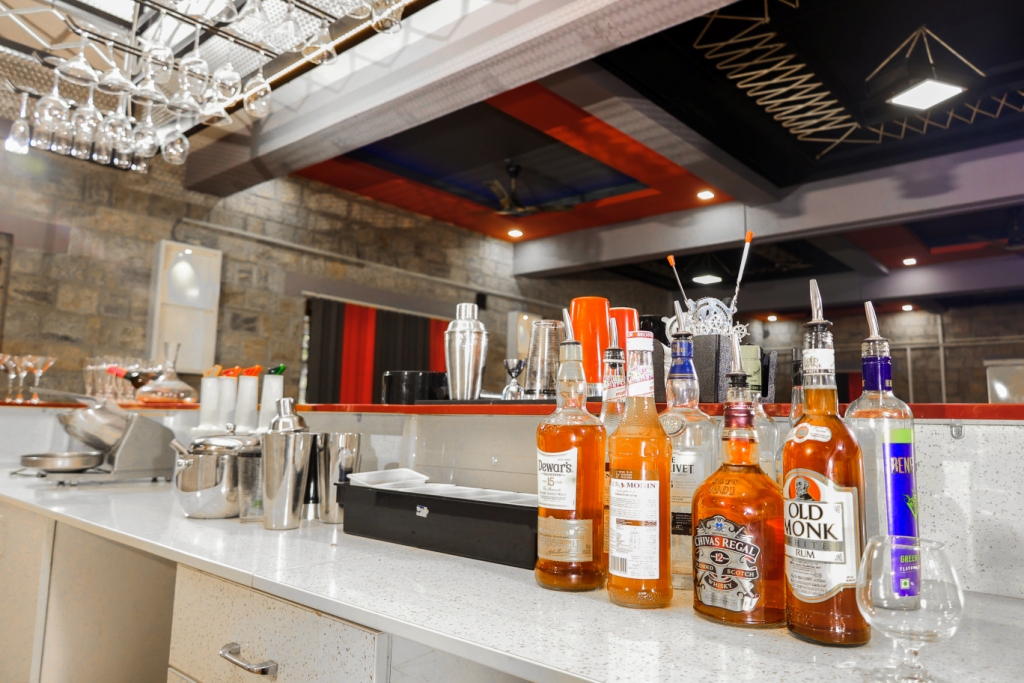
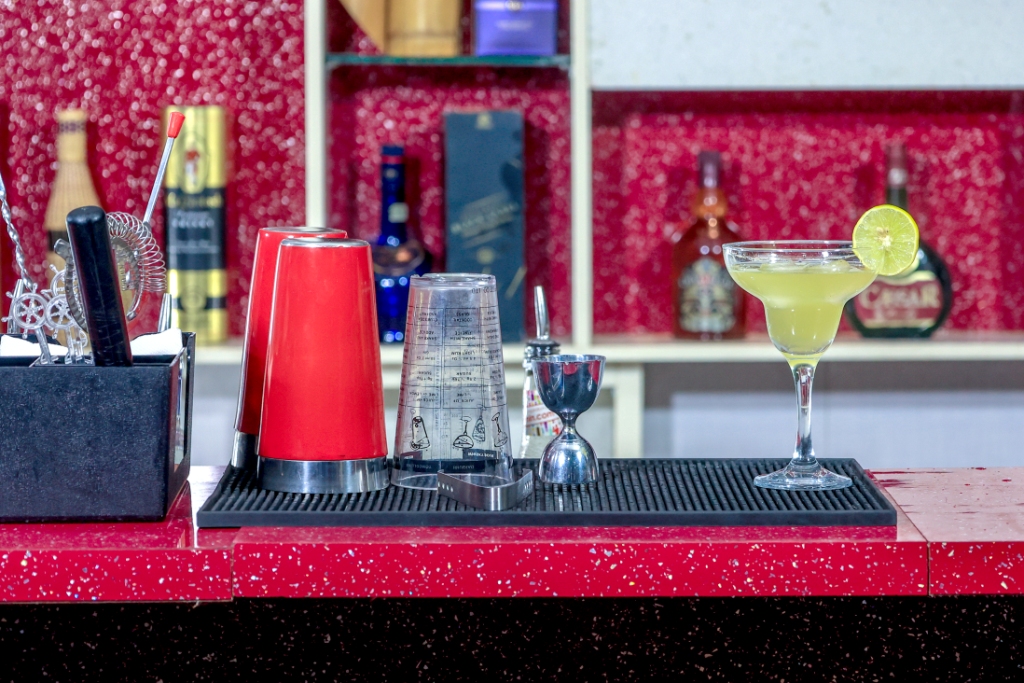
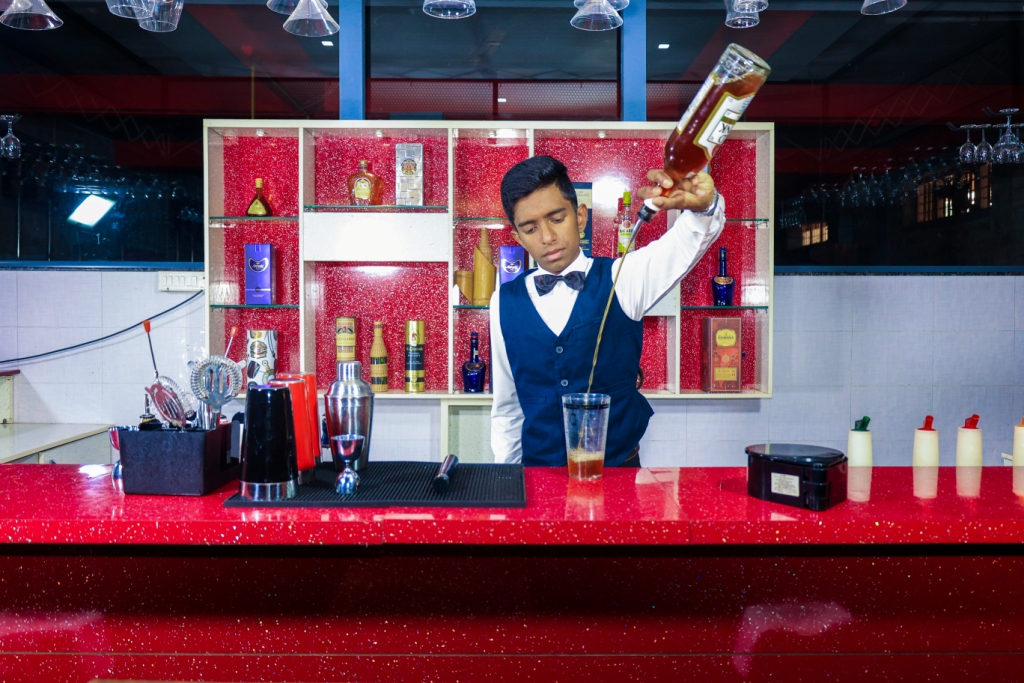
Within the polished counters and softly lit ambiance of the training bar, students are introduced to one of the most theatrical and expressive dimensions of hospitality—the art of beverage service. Here, the atmosphere is not just about bottles and glasses, but about transformation. What begins as a shelf of spirits becomes a canvas for creativity; what looks like a simple pour evolves into an act of precision, storytelling, and guest connection.
In this space, learners are guided through the fascinating world of alcoholic beverages—starting with the basics of spirit classification and their origins. Each bottle becomes a narrative. Whether it’s the subtle clarity of vodka, the botanical complexity of gin, the warm molasses notes of rum, or the smoky elegance of single malt whisky, students explore not only the taste but the lineage, geography, and craftsmanship that each spirit carries within. They come to know tequila by its region, liqueurs by their balance, and every bottle by its potential behind the bar.
As their understanding deepens, they are introduced to the logic and flair of cocktails. Every shake, stir, muddle, and pour is part of an intricate choreography. They master the building blocks of classics—think Mojitos, Martinis, Negronis—as well as the finesse needed to reinterpret or innovate upon them. Precision becomes second nature as they learn to balance acidity with sweetness, clarity with colour, simplicity with depth. Garnishing is taught not as decoration, but as an extension of the drink’s personality.
But the training goes far beyond taste. Students explore the universe of beer and fermentation—the delicate nuances of brews, the purpose of head retention, the types of glasses suited to different ales, and the unspoken etiquette of pouring. Alongside this, there’s a deep emphasis on hygiene, responsibility, and sustainable practices. A well-run bar, after all, begins with an organised station, an alert mind, and an awareness of the social and ethical dimensions of alcohol service.
Equally important is the art of interaction. Students are taught to listen as much as they serve—to read body language, to sense mood, and to adapt their energy to each guest. Whether serving a business traveller in quiet contemplation, a group of tourists seeking cheer, or a family preferring non-alcoholic options, learners are trained to craft an experience that feels personalised and thoughtful. From introducing a mocktail menu that suits diverse cultural preferences, to understanding when flair adds charm and when it distracts—judgement, timing, and restraint are nurtured with care.
Basic flair techniques are introduced not for show alone, but to instil rhythm, control, and confidence. Tossing a shaker or flipping a bottle becomes a way of expressing personality—an extension of the bartender’s presence, not a gimmick. There’s an art to knowing when to perform and when to simply serve, and students gradually grow into that instinct.
The bar thus becomes more than a workstation—it becomes a reflection of one’s professional identity. With every service round, they move closer to understanding that hospitality behind the bar is not just about mixing drinks, but about making moments. Whether delivering an American-style cocktail with swift efficiency, offering a relaxed English-style table service, or facilitating interactive service in a lounge-like setting, students develop a flexibility of approach and a calm authority that sets them apart.
By the time they leave this space, what they carry is far more than recipes and ratios. They emerge with a sense of poise, a respect for the craft, and a quiet readiness to take their place in lounges, resorts, cruise ships, and luxury bars across the world. They know the weight of a perfect pour, the silence before a guest’s smile, and the balance between presence and subtlety—because here, they didn’t just learn to serve drinks. They learned to serve people.
The Wine Bar
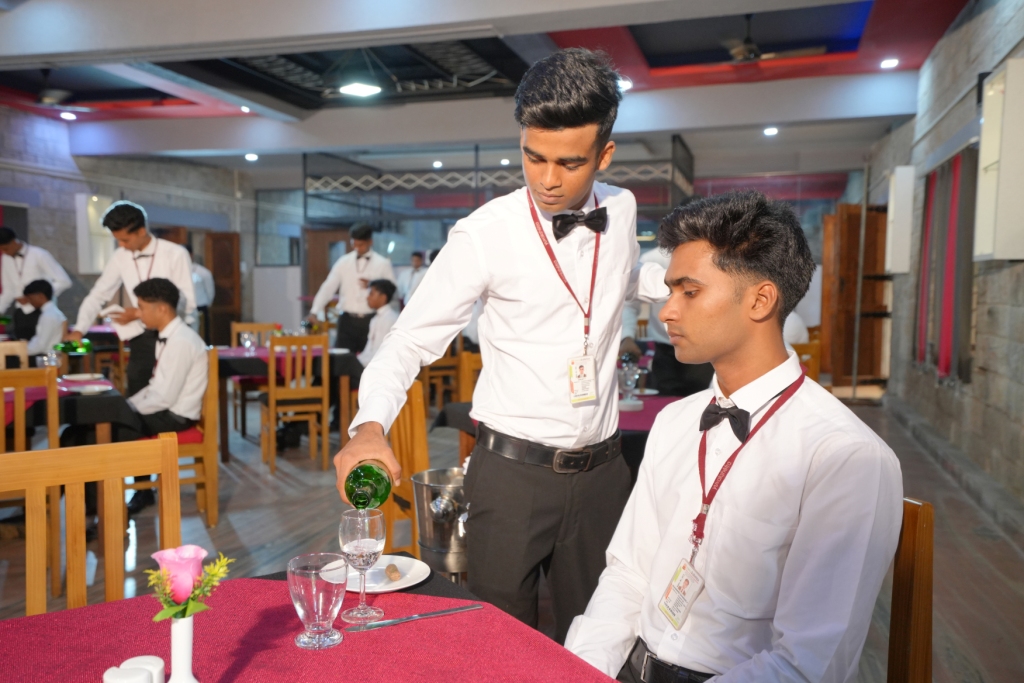
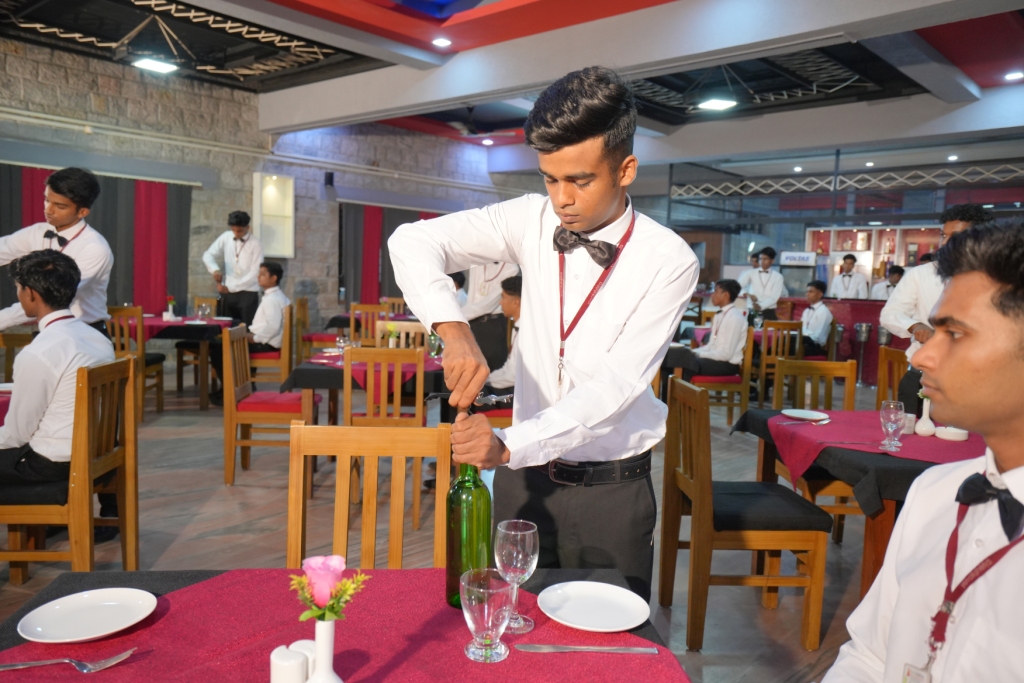
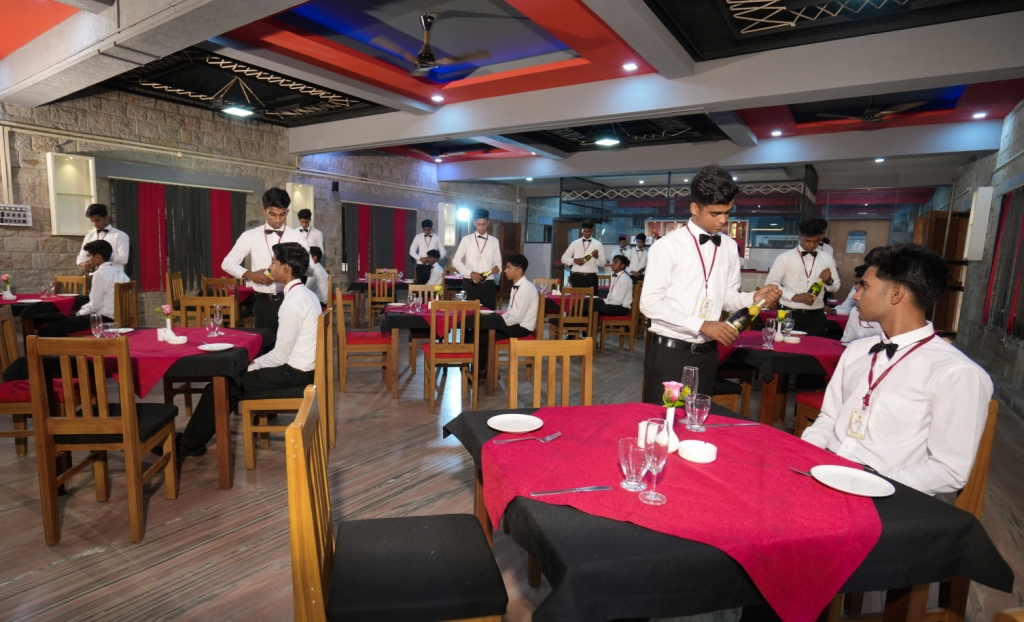
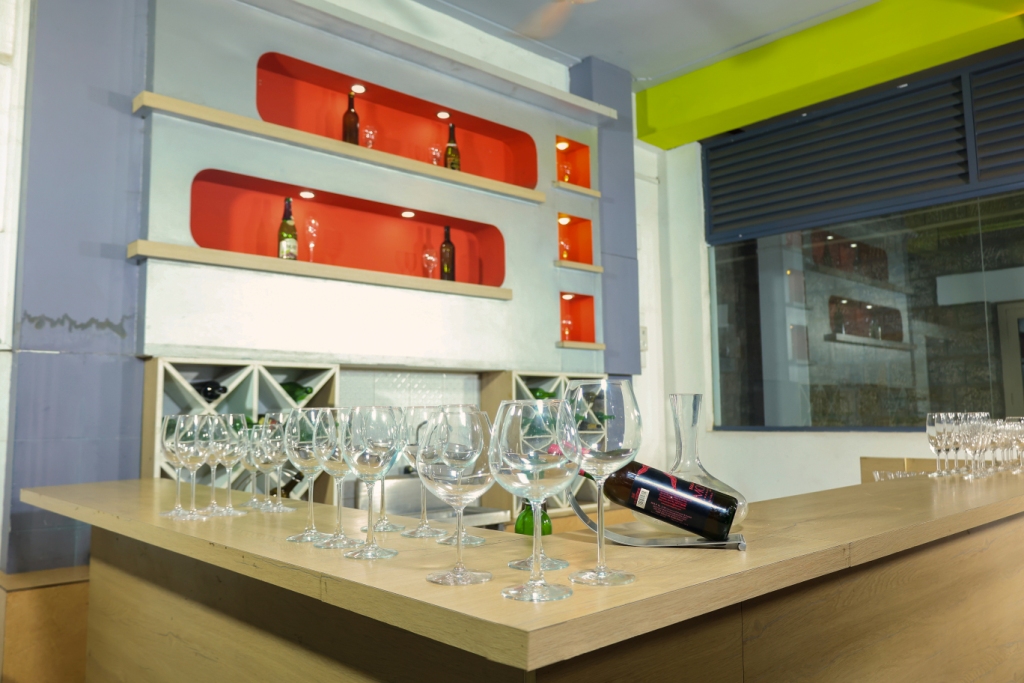
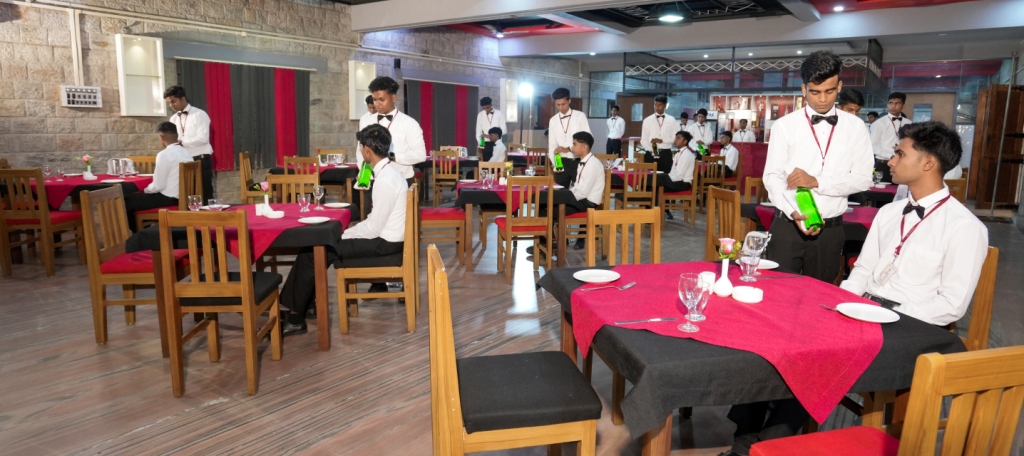
There is a quiet refinement in the world of wine—an elegance that whispers rather than announces, a depth that reveals itself slowly. At Yuvakshetra Institute of Management Studies, this refinement is brought to life through a dedicated wine training space where students are not only taught how to serve wine, but more importantly, how to understand it—its culture, its character, and the stories it holds in every swirl.
The space itself feels different—quieter, more contemplative. Shelves lined with bottles from both familiar and faraway regions speak of grape varieties shaped by climate, soil, and time. Here, students are invited to approach wine not as a beverage, but as a dialogue between nature and craftsmanship. They begin by recognising the nuances between a bold Cabernet Sauvignon and a delicate Pinot Noir, learning how the structure of a red wine speaks of sunlit vineyards and slow ageing. With whites, they explore the crisp, aromatic freshness of a Sauvignon Blanc, the buttery roundness of a Chardonnay, or the mineral elegance of a Riesling. Rosés are introduced with their summer-kissed blush, while sparkling wines—from Prosecco to Champagne—are understood as celebrations bottled. Fortified wines like Port or Sherry add to the richness of knowledge, teaching students about fortified flavours and regional legacies.
But understanding wine goes beyond varietals. Students are trained to feel the relationship between wine and food—to sense how a dry white can elevate the delicacy of seafood, or how a bold red pairs beautifully with grilled meats. They experiment with textures, spices, sauces, and regional cuisines to discover the subtle dance of harmony and contrast in a wine pairing. Whether it is aligning a Gewürztraminer with spicy Indian fare or suggesting a Pinot Noir to accompany duck, the goal is to make choices that are thoughtful, intuitive, and tailored to the guest.
Learning the correct etiquette of wine service is just as essential. Every gesture—presenting the label, opening a cork without a sound, allowing the guest to approve a pour—becomes part of a graceful ritual. Students are trained to perform each of these steps with quiet confidence, understanding when to lead, when to suggest, and when to simply let the guest enjoy. They learn to serve red wines at room temperature, chill whites and sparkling wines to the perfect degree, and pour with precision, ensuring the glass is neither too full nor too bare. In fine-dining service styles like French or English, they are taught to approach the guest with care and discretion, while in American service settings, they’re expected to balance efficiency with warmth.
Beyond the glass, the training also introduces them to the backstage responsibilities of a sommelier. From planning curated wine lists that complement a seasonal menu, to understanding storage conditions that preserve aroma and complexity, students are immersed in the practical aspects of wine management. They learn how to stock and rotate a cellar, how to read labels and vintages, and how to spot flaws in taste or corking.
Tasting sessions are not about indulgence but awareness. Each session is designed to awaken the senses—to recognise acidity, tannins, sweetness, and body; to describe aromas that evoke stone fruits, spices, oak, or earth; and to develop a vocabulary that is precise yet accessible for guest conversations. Through role-play and service simulations, they practice suggesting wines to a couple dining on continental cuisine, guiding a guest new to rosé, or explaining the story behind a lesser-known varietal from the Loire Valley.
By the end of their time in this space, students begin to carry themselves differently. They are no longer intimidated by wine lists or labels in foreign tongues. They move with assurance, speak with poise, and listen with intent—traits that mark the difference between a server and a sommelier. Whether working in the grandeur of a five-star restaurant, a resort in Tuscany, a luxury cruise lounge, or even curating events with wine tastings and pairings, they step into their roles with sensitivity, skill, and a refined understanding that wine, above all, is about enhancing human connection—one pour at a time.
Basic Training Kitchen
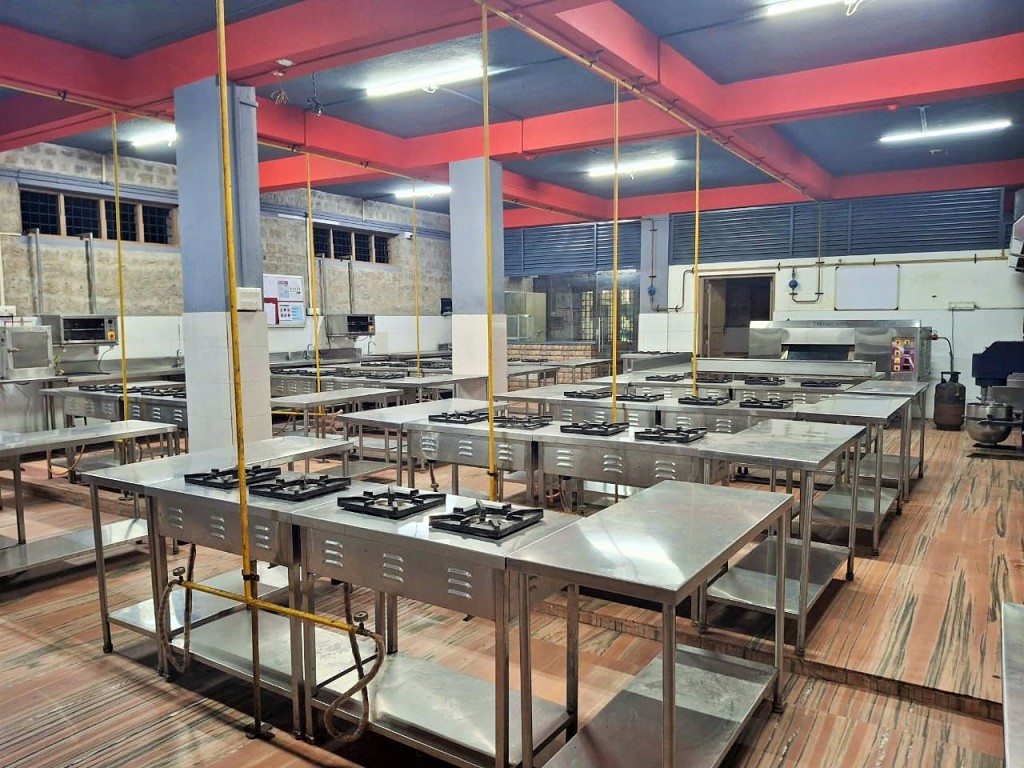
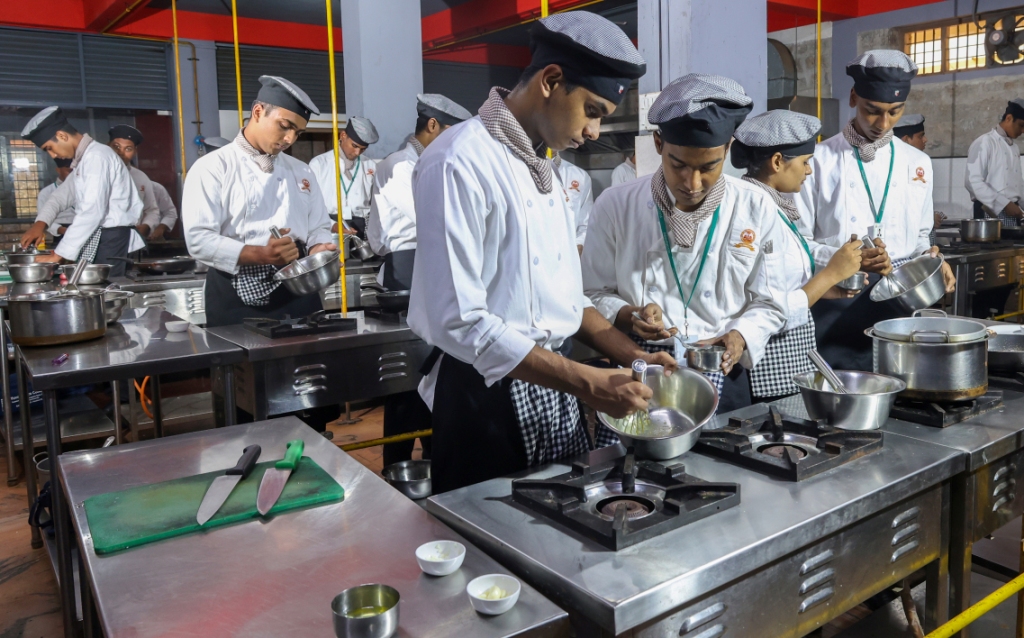
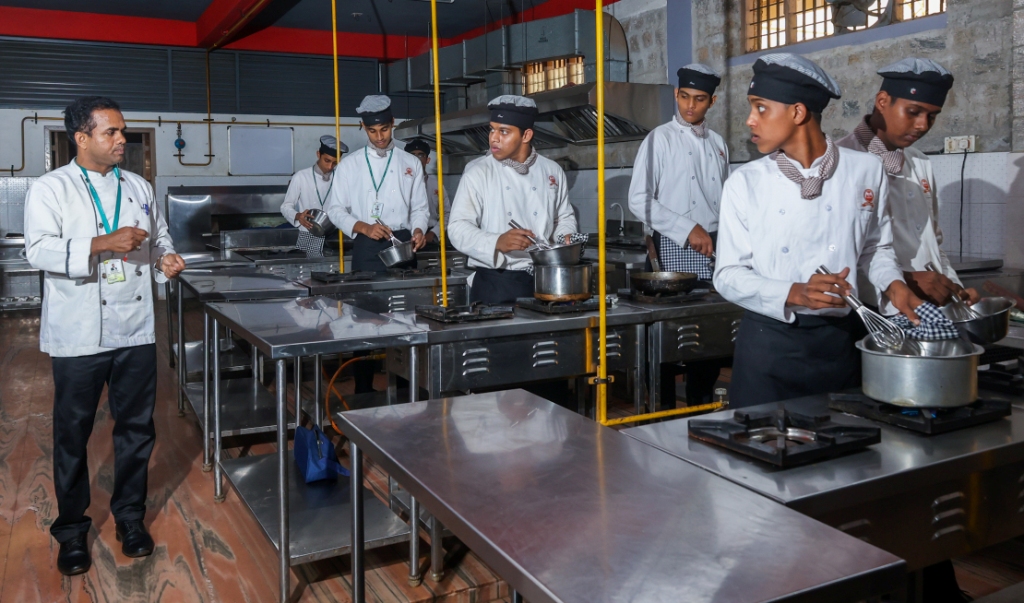
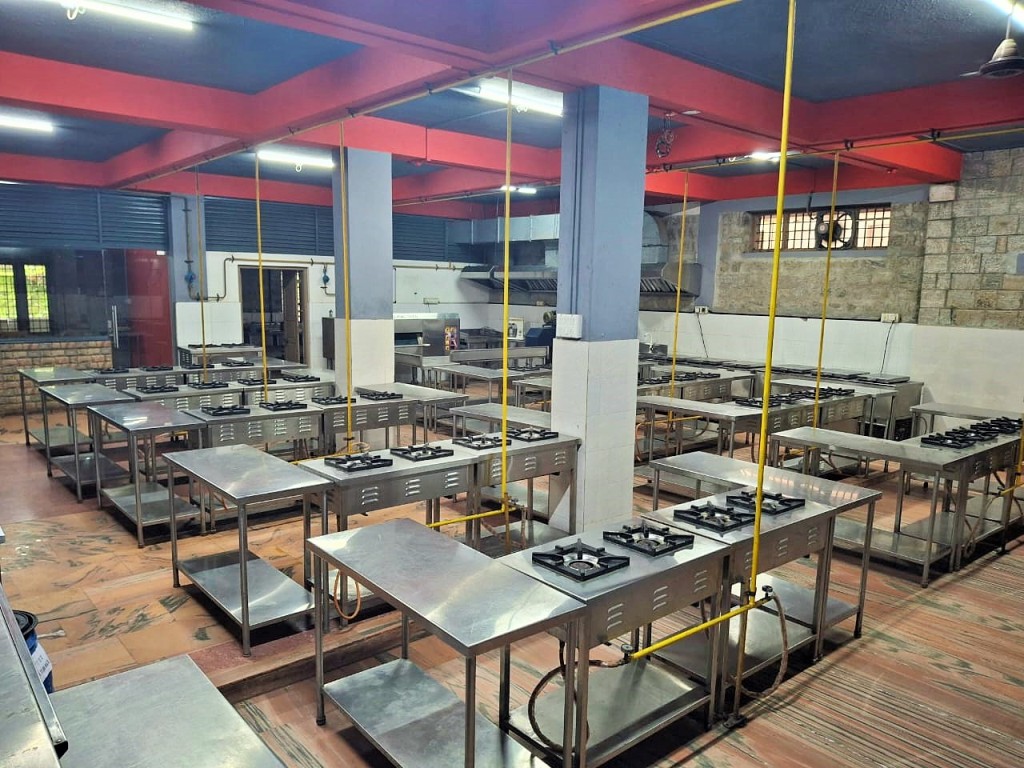
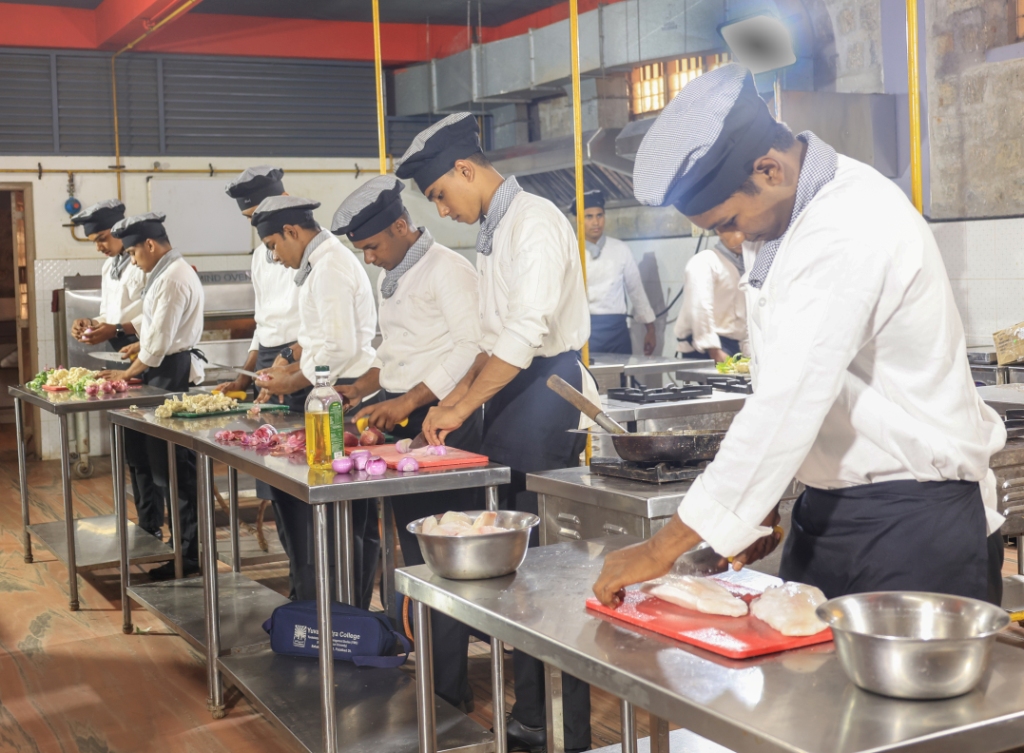
At the heart of the culinary training experience at Yuvakshetra Institute of Management Studies lies an advanced kitchen space—an environment crafted not just to teach cooking, but to shape artists of the culinary world. Stepping into this space, one is greeted not by the stiffness of a classroom, but by the quiet hum of ambition and the aroma of global cuisines in the making. Every detail of this kitchen has been designed to echo the rhythm of professional hospitality settings, from the sleek counters to the glint of steel ranges that await their next creation.
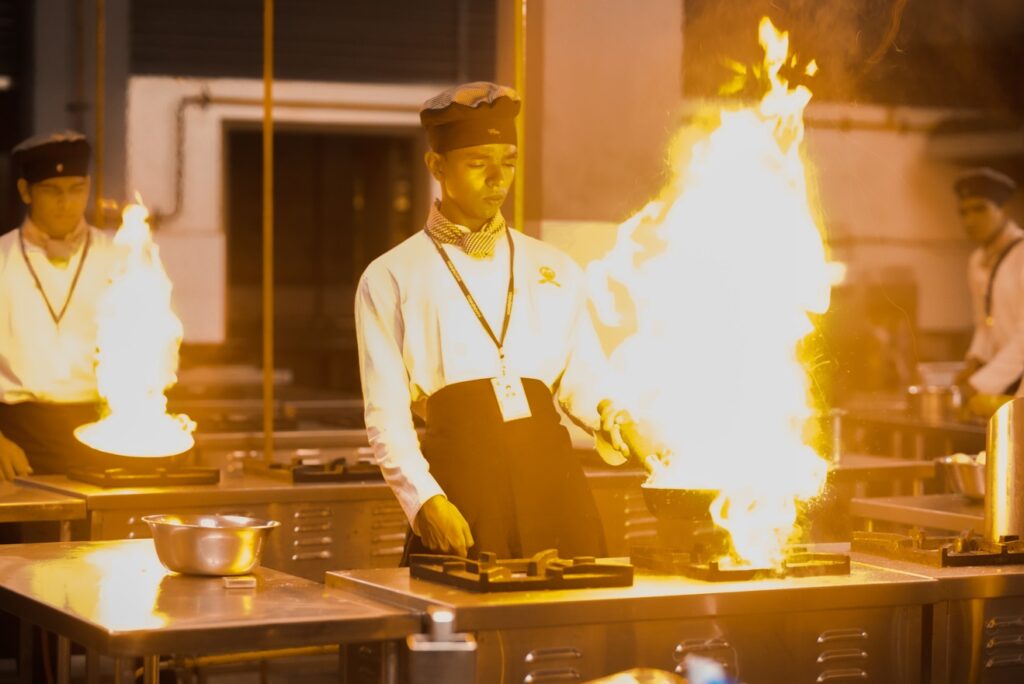
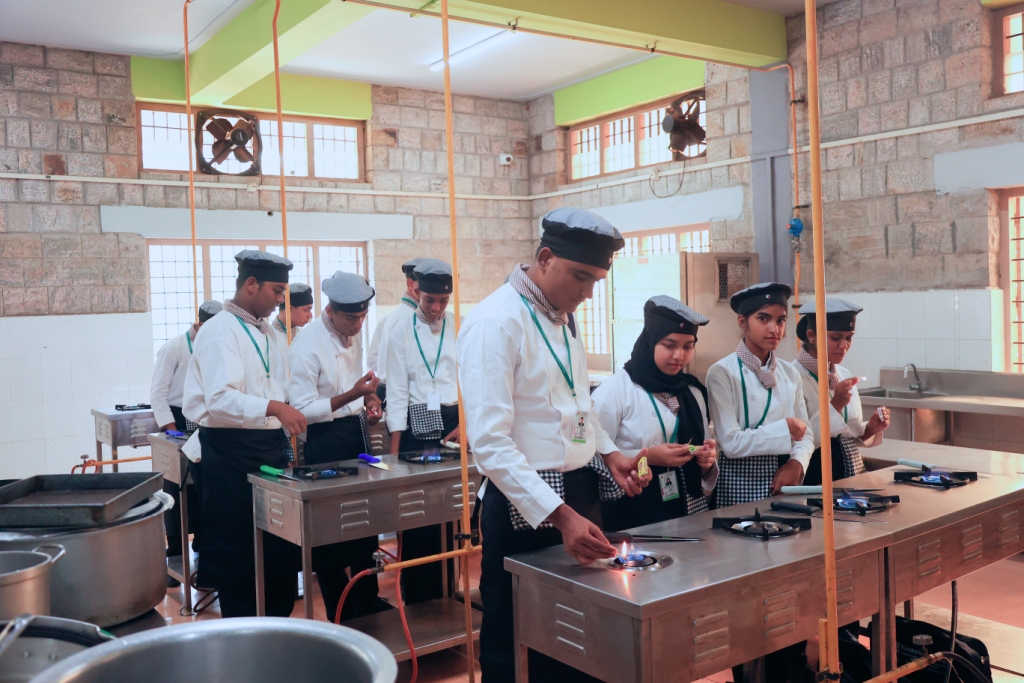
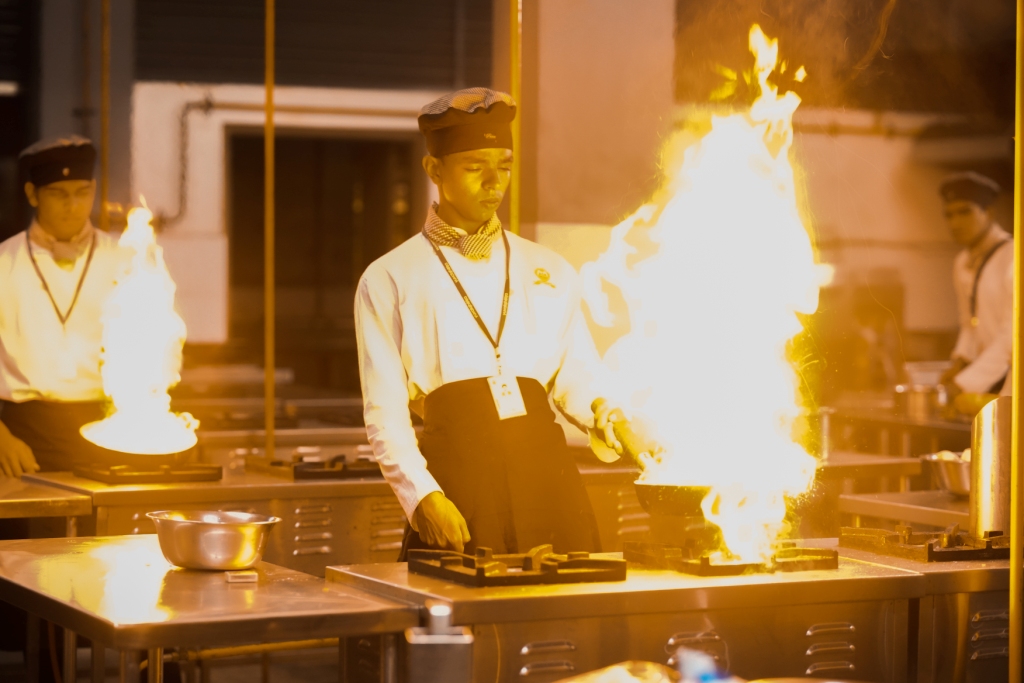
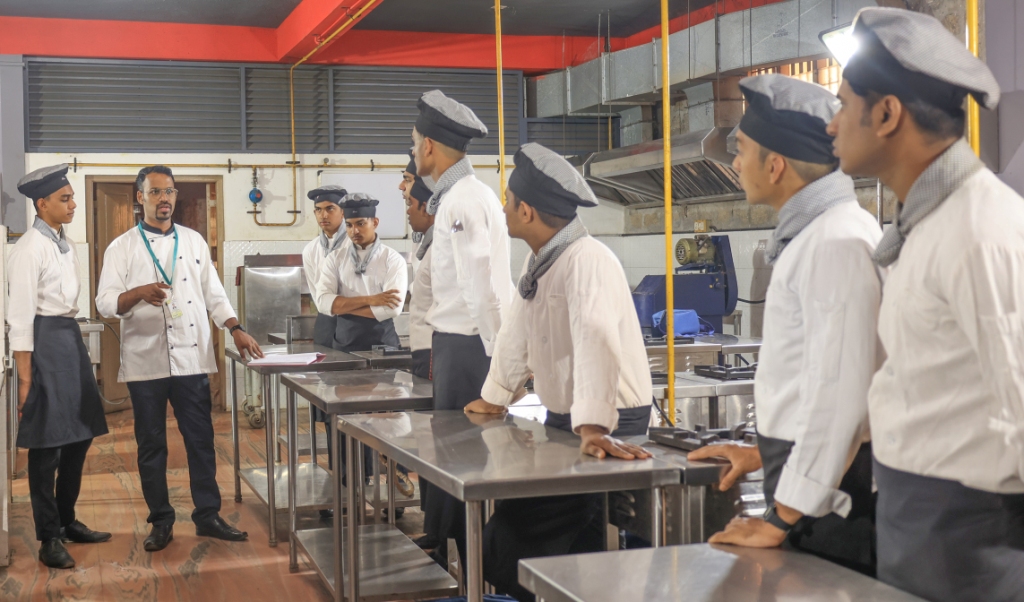
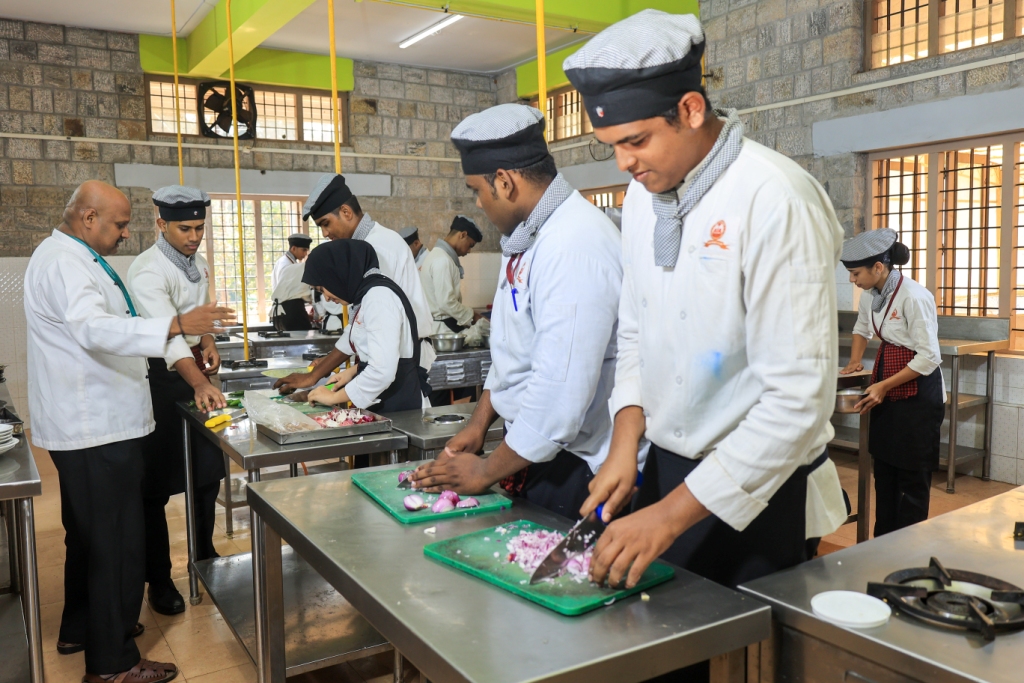
Equipped with eighteen high-performance cooking ranges and a full complement of both manual and electric equipment, the facility comfortably accommodates thirty-six aspiring chefs at a time. Here, students are not mere observers; they move, prepare, create, and serve with purpose—mirroring the pace, precision, and pressure of real hotel and restaurant kitchens. It is a space where dexterity is sharpened, palates are refined, and discipline becomes second nature.
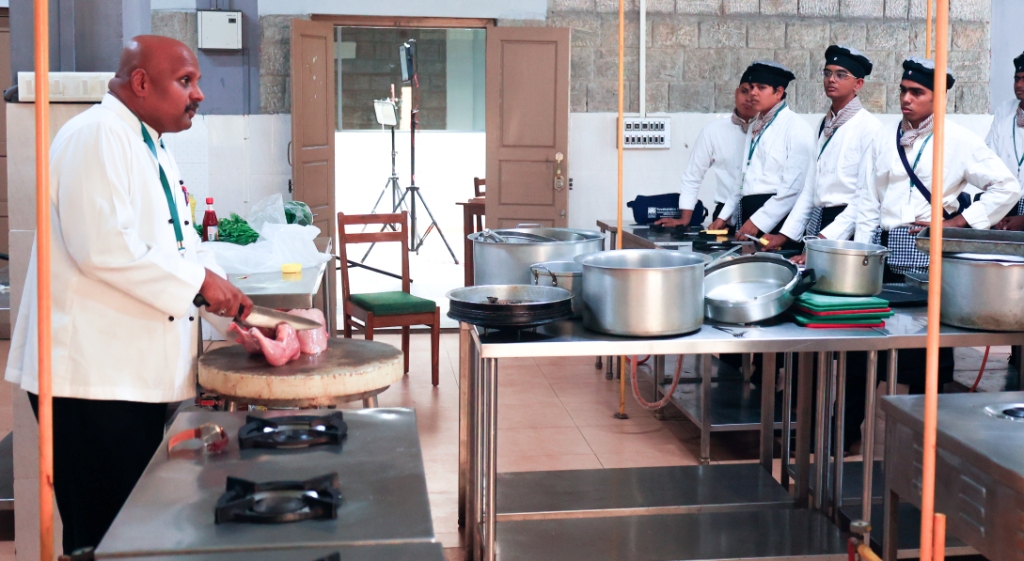
The culinary journey begins humbly in the adjoining foundation kitchen, where students first learn the language of their craft—how to hold a knife correctly, how to dice an onion with uniform precision, how to prepare a mise en place that speaks of efficiency and readiness. These early steps are not rushed; they are repeated, reviewed, and respected, for they lay the groundwork for all that follows.
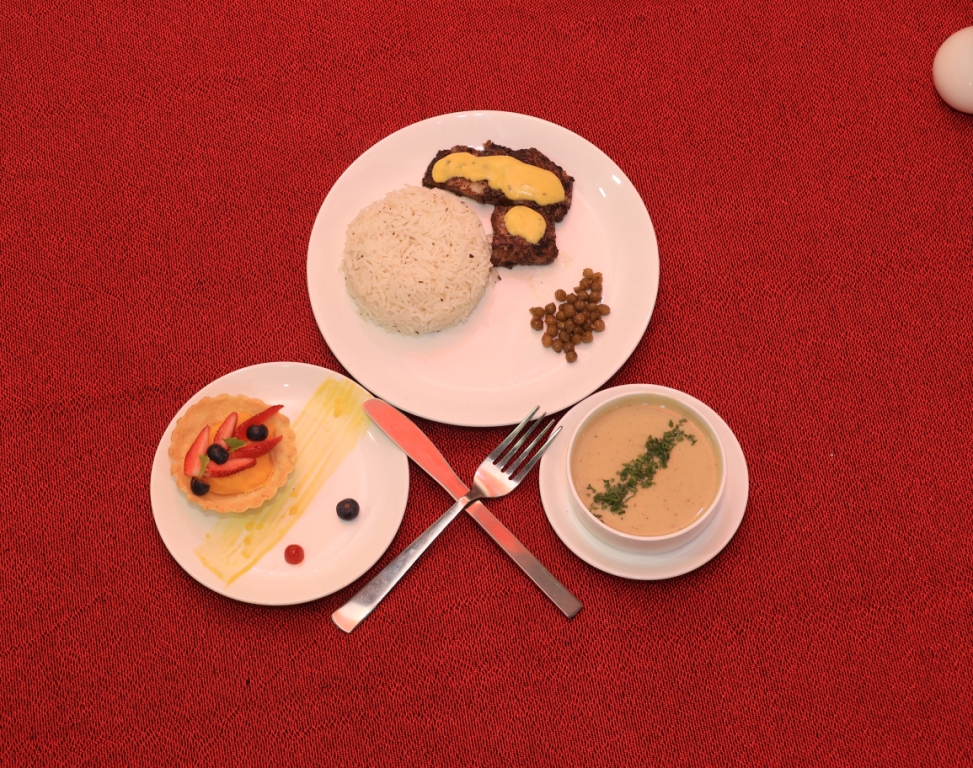
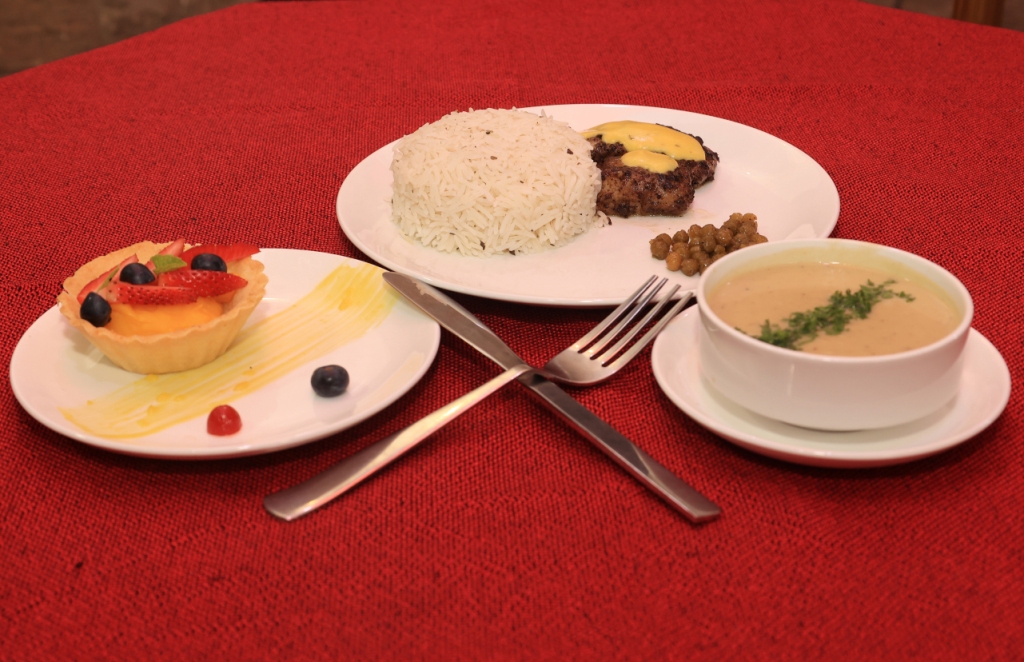
As their confidence grows, students transition to more complex culinary territories. They plan menus, curate multi-course meals, and experiment with a diverse spectrum of cuisines—from elegant continental fare and rich pan-Asian dishes to flavourful South Indian thalis and modern fusion creations. In doing so, they learn that cooking is both an art and a science—one that thrives on creativity but demands method, precision, and respect for ingredients.
The kitchen is also a stage for vibrant learning beyond the daily curriculum. Students take part in themed workshops and competitions that challenge their artistry and technical skills—fruit and vegetable carving, live cooking battles, and food plating challenges that test both form and flavour. Distinguished chefs and industry leaders are frequently invited to conduct demonstrations, bringing with them tales from kitchens across the world and imparting lessons that no textbook can offer.
Amidst this flurry of flame and flair, the emphasis on hygiene, safety, and food standards is unwavering. Students are rigorously trained in sanitation practices, kitchen conduct, personal grooming, and the fundamentals of food safety as per global HACCP guidelines. These habits become ingrained through daily routines, practical evaluations, and an institutional culture that values accountability.
More than just a room of stoves and steel, this kitchen becomes a crucible where passion is tempered by technique, where innovation is born through collaboration, and where future culinary professionals learn to carry not just a chef’s knife, but a sense of purpose. Whether their journey takes them to five-star hotels, luxury cruises, or entrepreneurial ventures, students emerge from this space with a deep respect for their craft—and with the quiet confidence to create something extraordinary, one plate at a time.
Advanced Training Kitchen
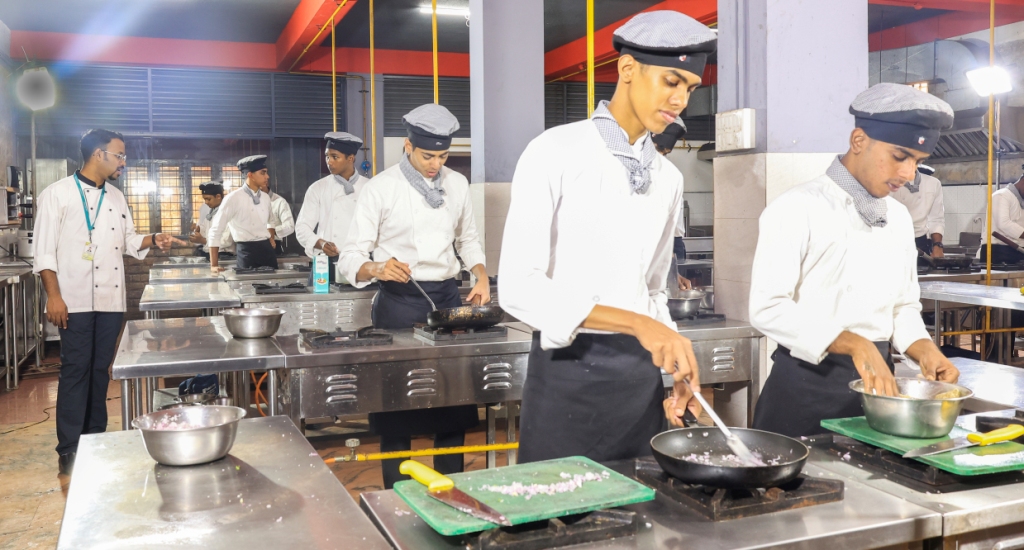
In the heart of culinary instruction lies a training space where precision is not just taught—it’s demanded. This is not a beginner’s kitchen. This is where techniques mature, timing tightens, and the expectations rise. Here, students don’t simply cook—they orchestrate. Dishes aren’t just prepared; they are conceptualised, constructed, and refined with a growing sense of mastery.
Each station is equipped to reflect the workflow of a fully functioning fine-dining or high-volume hotel kitchen. With modern appliances, individual cooktops, and high-grade preparation counters, the environment supports simultaneous execution of complex tasks. Yet, it’s not the equipment that defines this space—it’s the rhythm. There’s a certain pulse that runs through it, one of controlled urgency, creative flow, and unspoken coordination. Students come to understand that this is not a place for hesitation. It’s a place to trust one’s training.
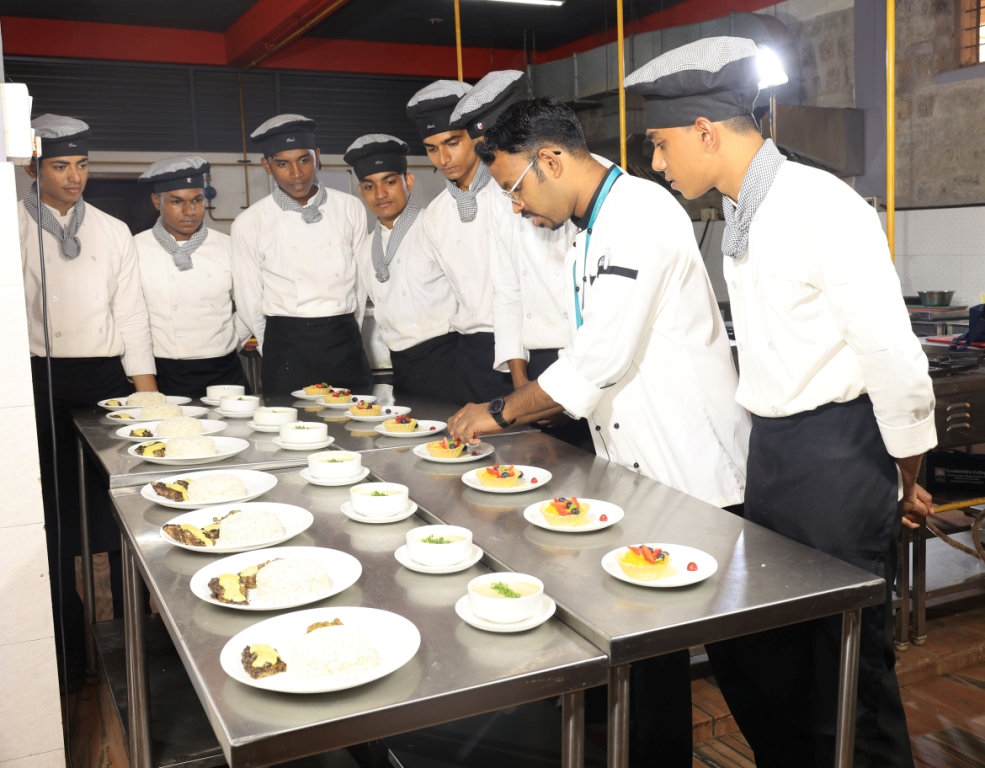
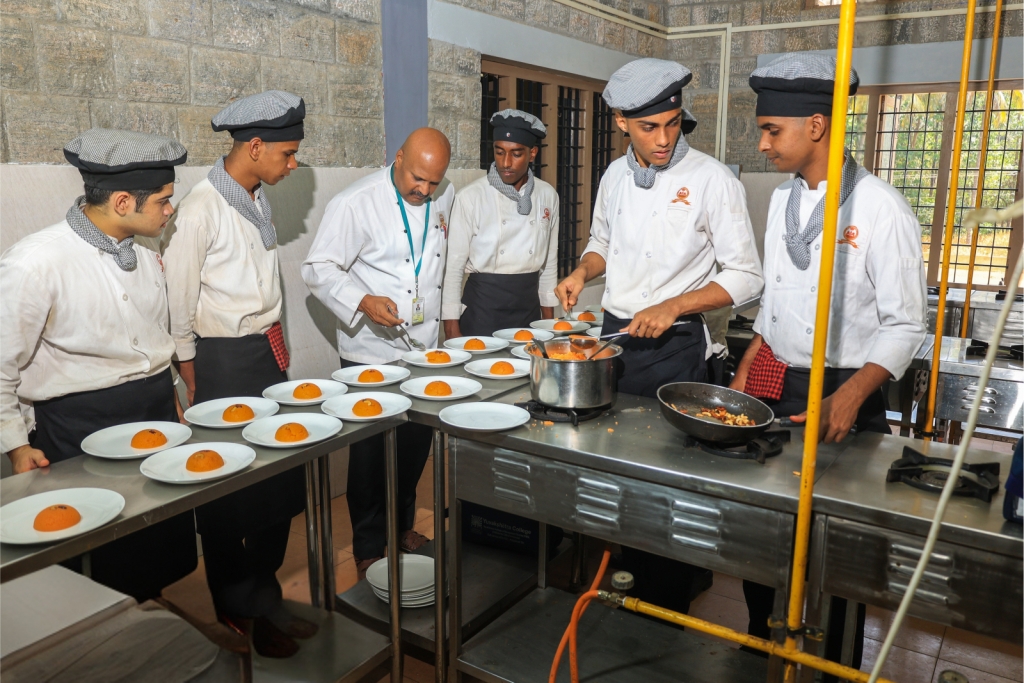
Learners are immersed in the study of contemporary and classical methods alike—slow-infused sauces, flash sears, sous vide tenderness, and emulsions that must hold both visually and on the tongue. Multi-course meal construction teaches not just cooking but sequencing, pacing, and cohesion across a dining experience. Whether building a seasonal tasting menu or designing for banquet scale, students learn to manage inventory, portion, and flavour integrity with equal weight.
But beyond the stove, another layer of learning unfolds. Kitchen dynamics—how to lead without shouting, follow without lagging, and pivot when a dish veers off course—become part of the curriculum. Presentation moves from an aesthetic concern to a communicative one, where every swirl, sprinkle, or smear must answer the silent question: what is this plate trying to say?
Sessions are often structured around challenges—time-sensitive tasks, guest-imposed dietary demands, or surprise ingredients. Evaluation is constant but constructive, as students learn to take critique not as correction, but as calibration. Through it all, standards are never lowered. Excellence is not optional; it is cultivated, coached, and earned.
In this space, the air is thick with intention—the quiet focus of students plating with purpose, the low murmur of coordination across workstations, the alertness that comes only from working in close proximity to pressure. Yet, beneath that pressure, confidence is forged. Every drop of sauce, every seared edge, every plated course is a moment of decision, a mark of growth.

Quantity Training Kitchen
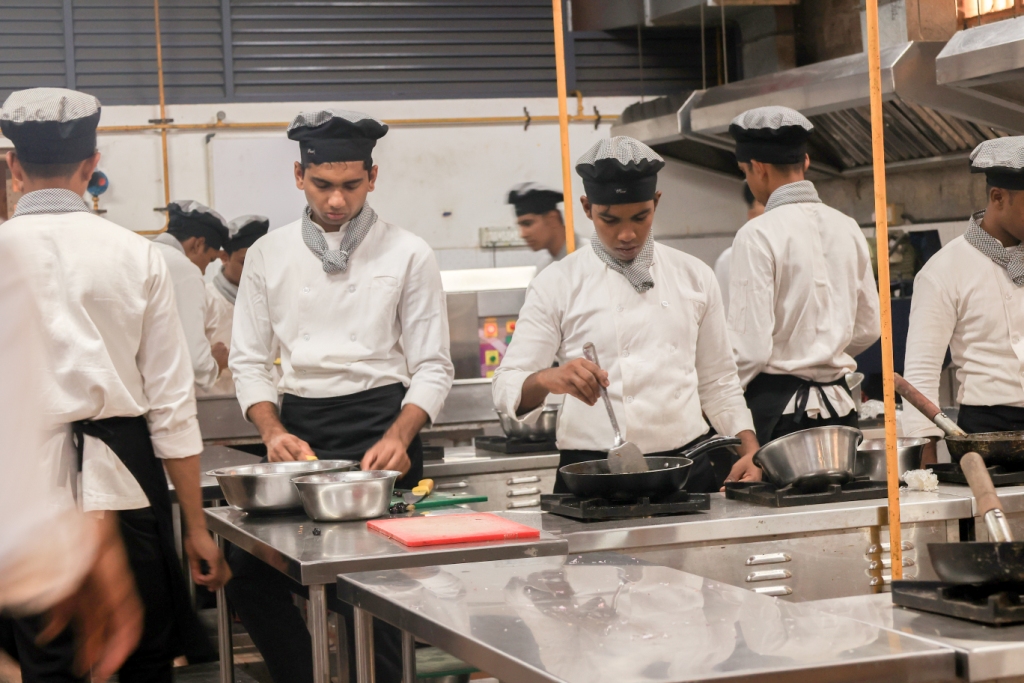
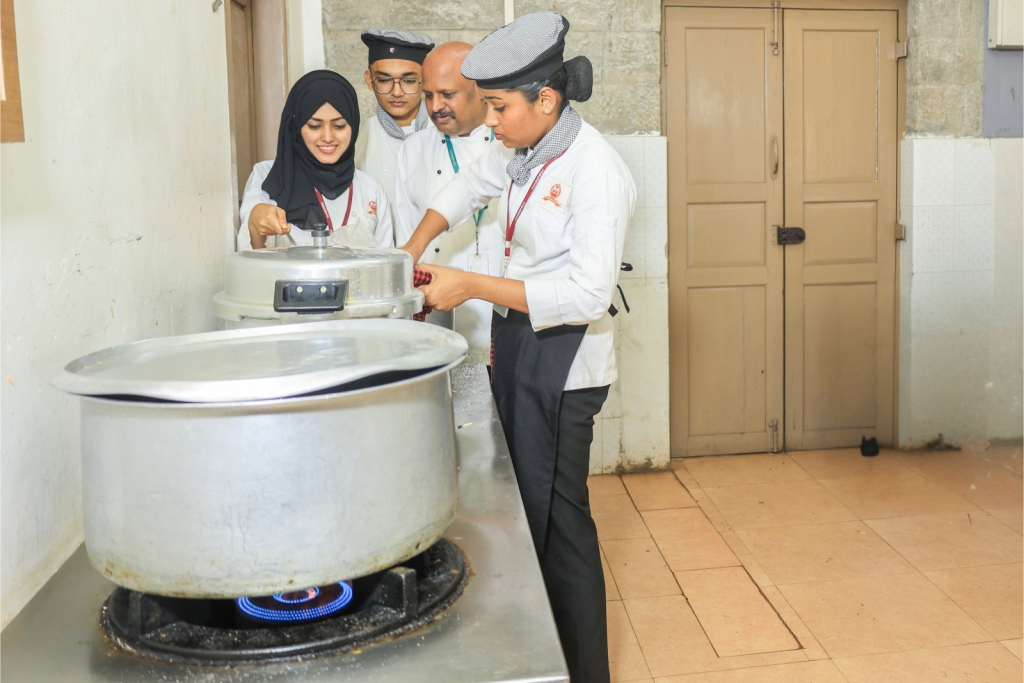
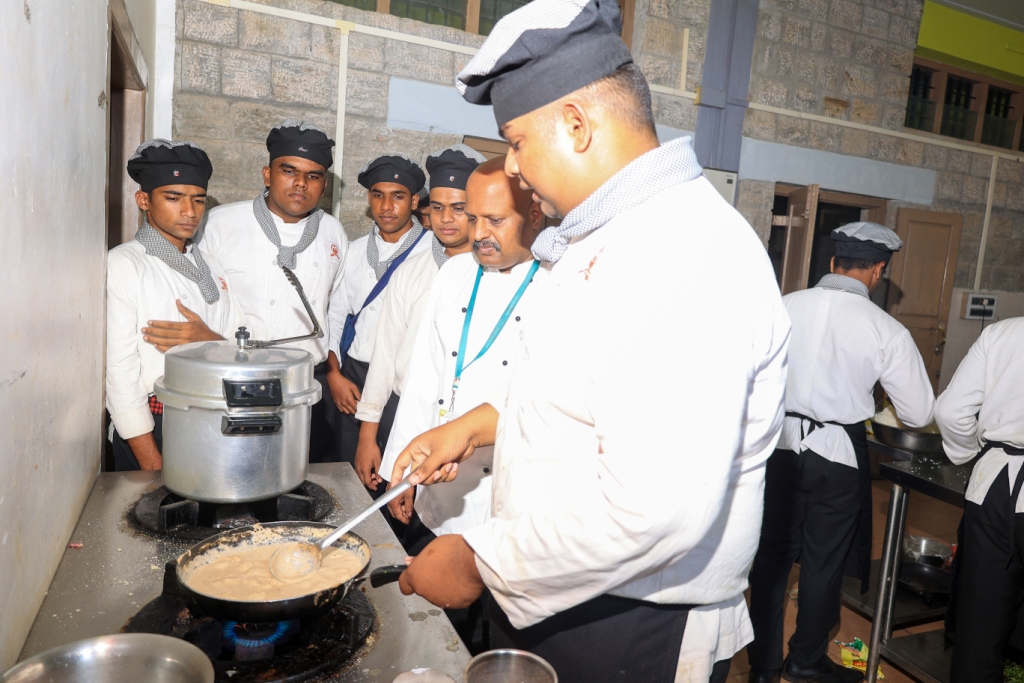
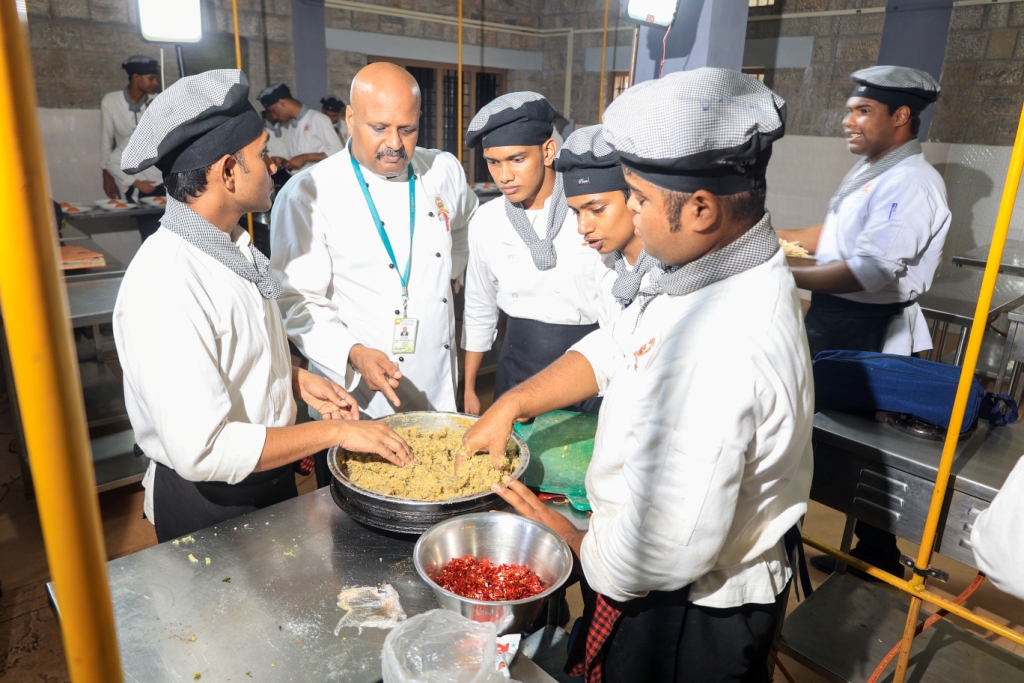
The Quantity Cooking Kitchen is a theatre of scale, rhythm, and precision—where students step into the demanding world of large-volume culinary operations with sleeves rolled up and senses fully engaged. This is not a place of quiet simmering and slow plating; it is a space where timing is everything, portions are multiplied by the hundreds, and the challenge lies in delivering consistent flavour and quality across every single serving.
Modelled to echo the bustling environments of banquet kitchens, institutional food services, and high-volume catering units, the Quantity Cooking Kitchen introduces learners to the energy and discipline required for mass production. Here, a recipe is more than a list of ingredients—it becomes a logistical blueprint. Students are trained to scale recipes with accuracy, portion with precision, and coordinate multiple dishes in tandem—all while maintaining nutritional balance, cost-efficiency, and aesthetic appeal.
The facility is equipped with robust, professional-grade machinery: towering stockpots simmer over broad burners, industrial ovens work in constant rhythm, and steam-jacketed vessels hum as they handle bulk cooking with grace. Students operate within a structured flow, understanding not just how to cook, but how to plan, prepare, and deliver meals at volume—without losing the essence of the dish.
Each session in the Quantity Cooking Kitchen is a deep dive into culinary systems thinking. Learners must think several steps ahead—calculating ingredient yield, planning storage, executing batch-wise preparation, and timing the final service with precision. The flavours of a lentil stew or a delicate curry must remain just as balanced in the first plate as in the last, whether it’s for fifty or five hundred. That consistency is not merely expected—it’s demanded.
But beyond the technicality lies something more: a growing appreciation for teamwork, urgency, and responsibility. There is a collective heartbeat in this kitchen—a synchrony that forms when students communicate seamlessly, adapt under pressure, and respect the flow of service. Hygiene is paramount, equipment handling must be methodical, and every action is tied to both safety and speed.
The Quantity Cooking Kitchen offers a kind of transformation. It equips future professionals not only with the ability to produce at scale but with the mindset to lead, plan, and execute with clarity.


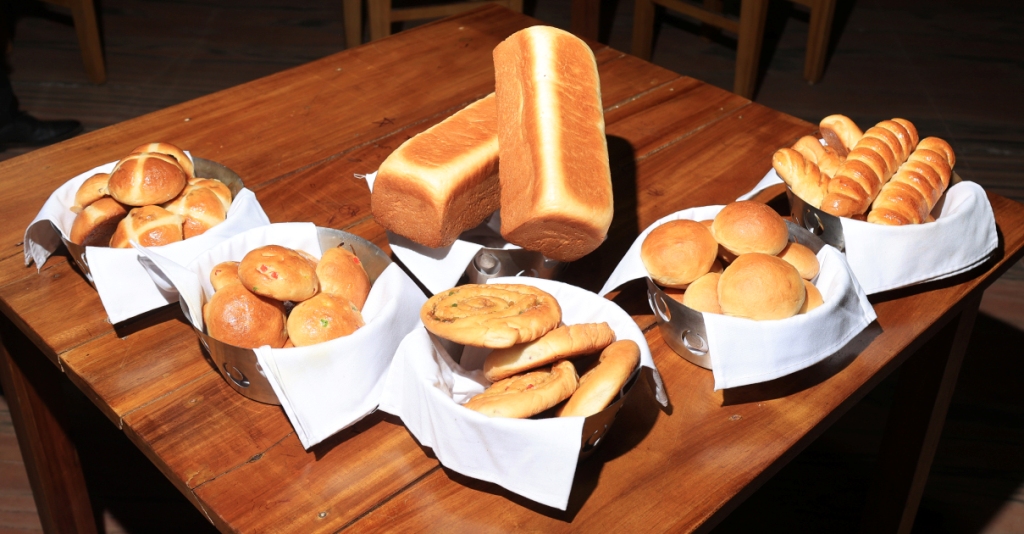
Bakery & Confectionery
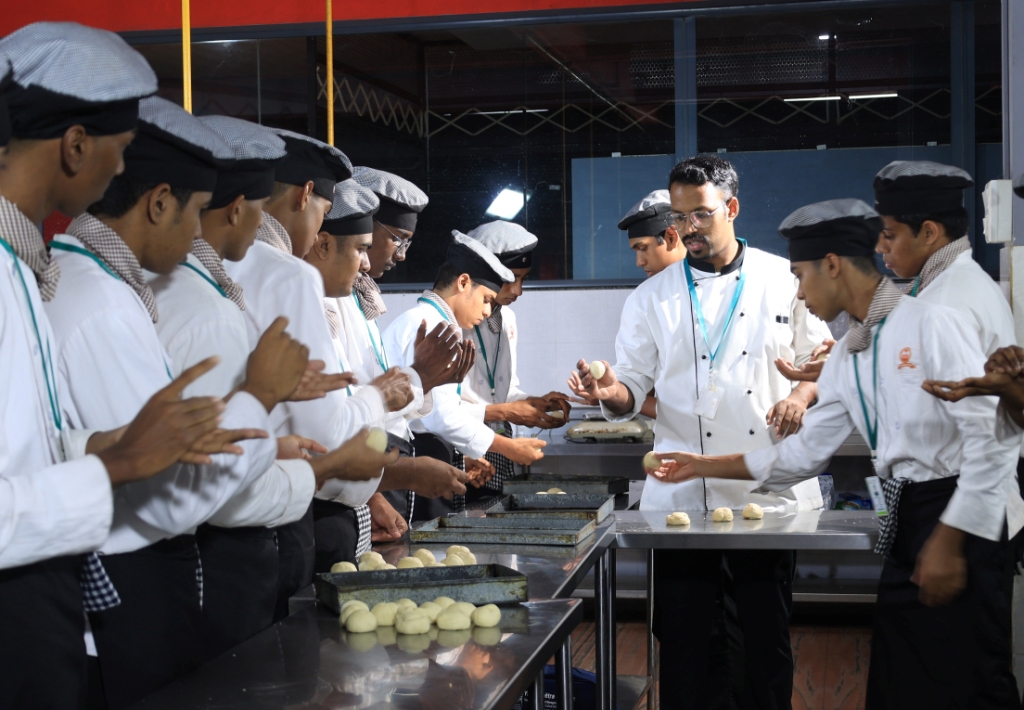
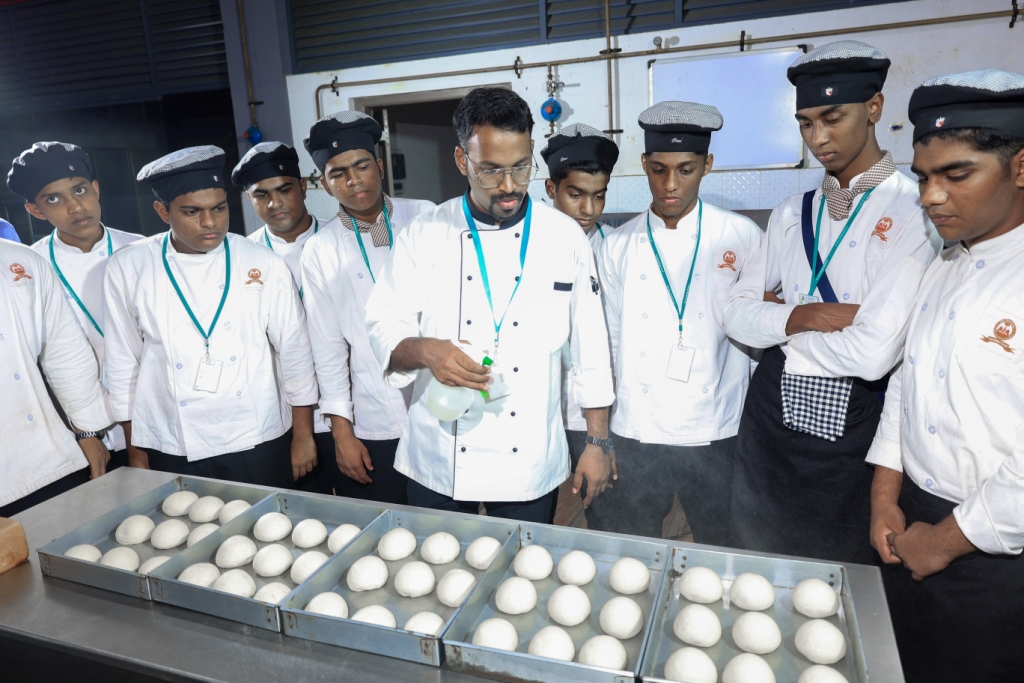
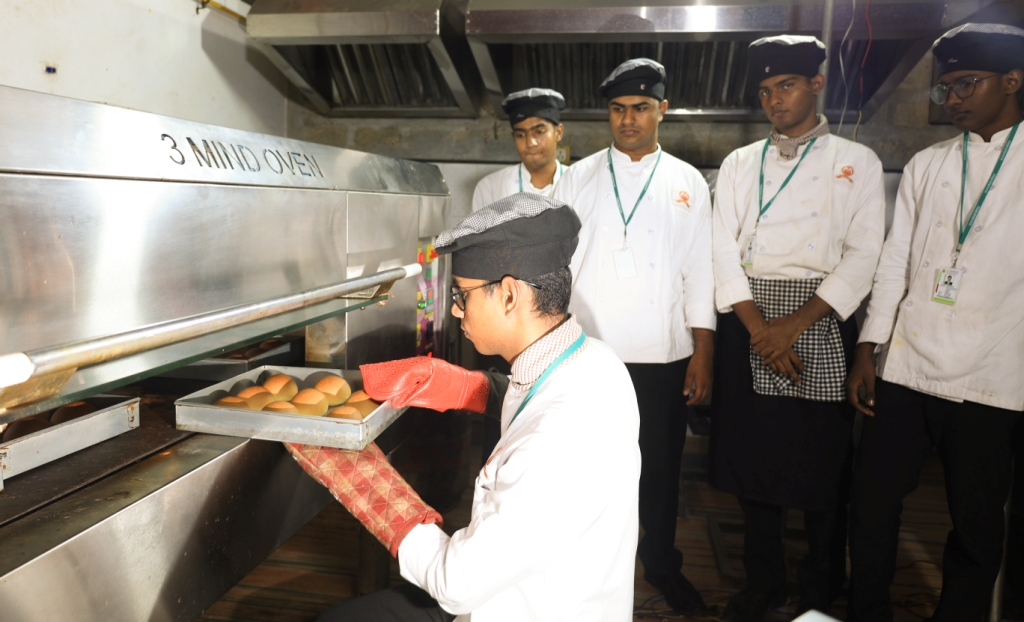
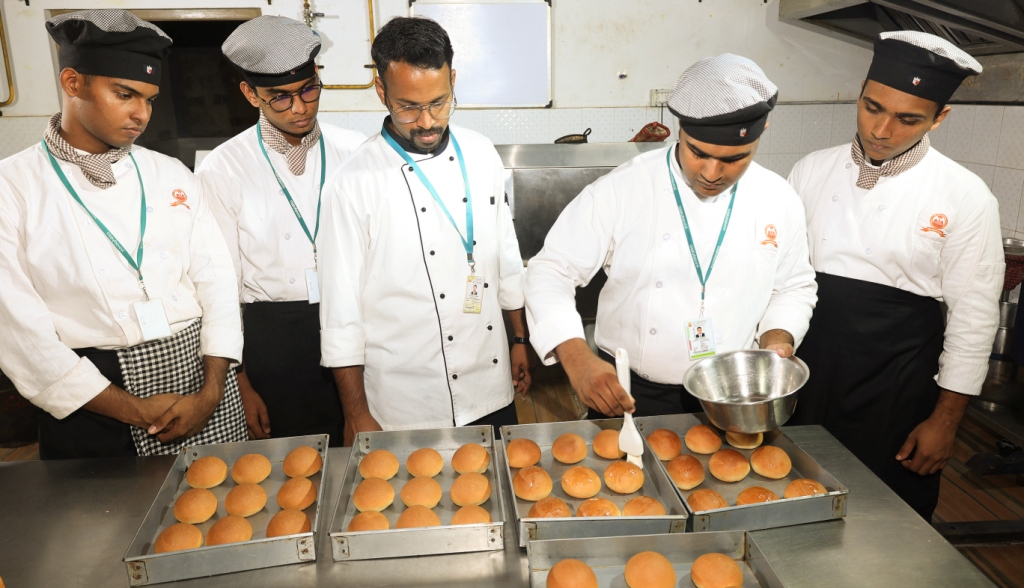
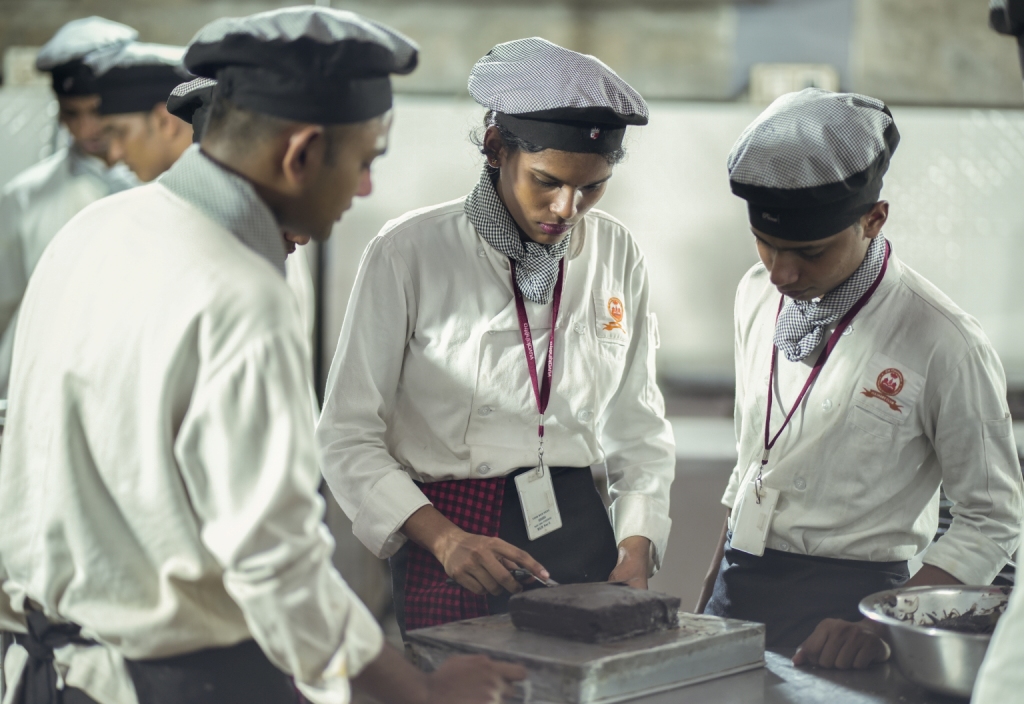
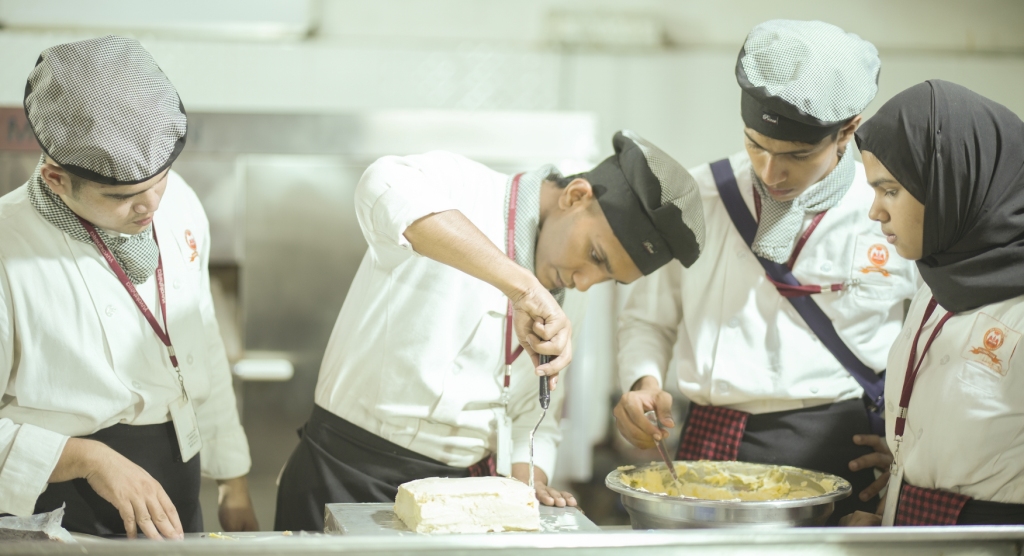
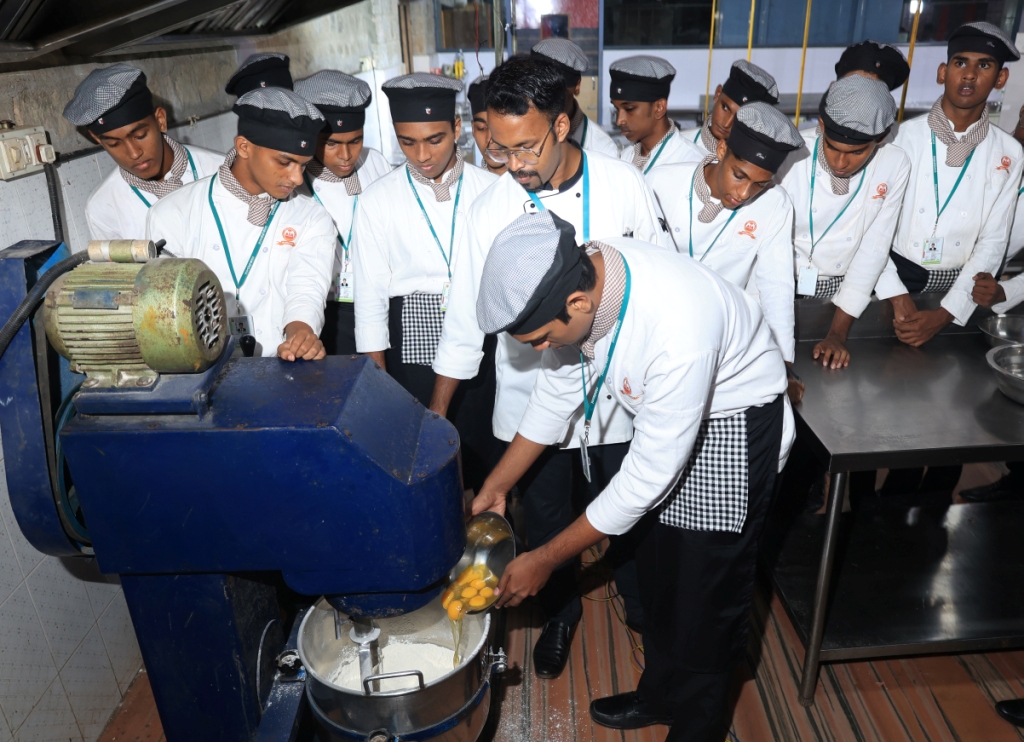
Step into the Bakery & Confectionery Lab, and you step into a world where flour, butter, and sugar come alive with artistry, science, and soul. This is a space that hums with quiet discipline and bursts with the intoxicating aromas of warm croissants, molten chocolate, toasted nuts, and caramelised sugar—each scent telling a story of patience, temperature, and technique.
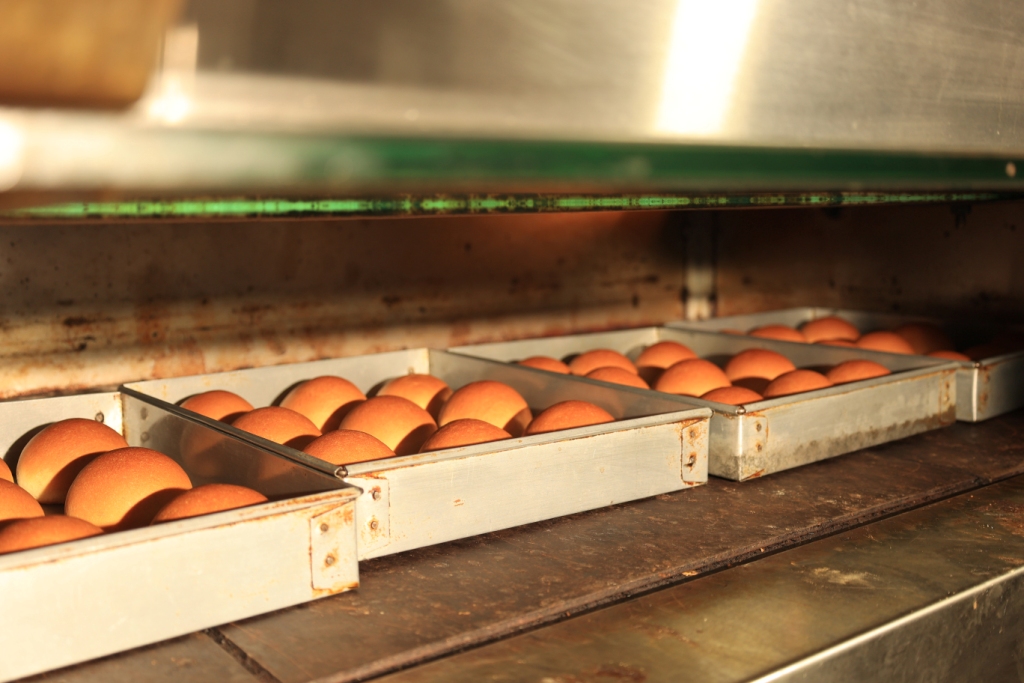
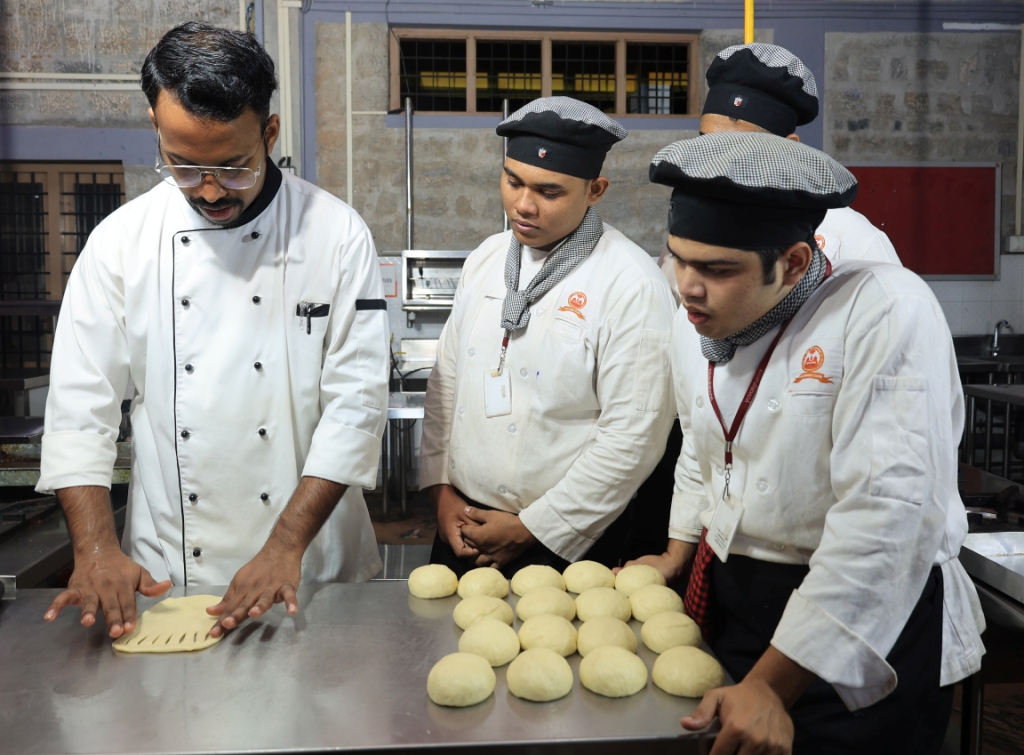
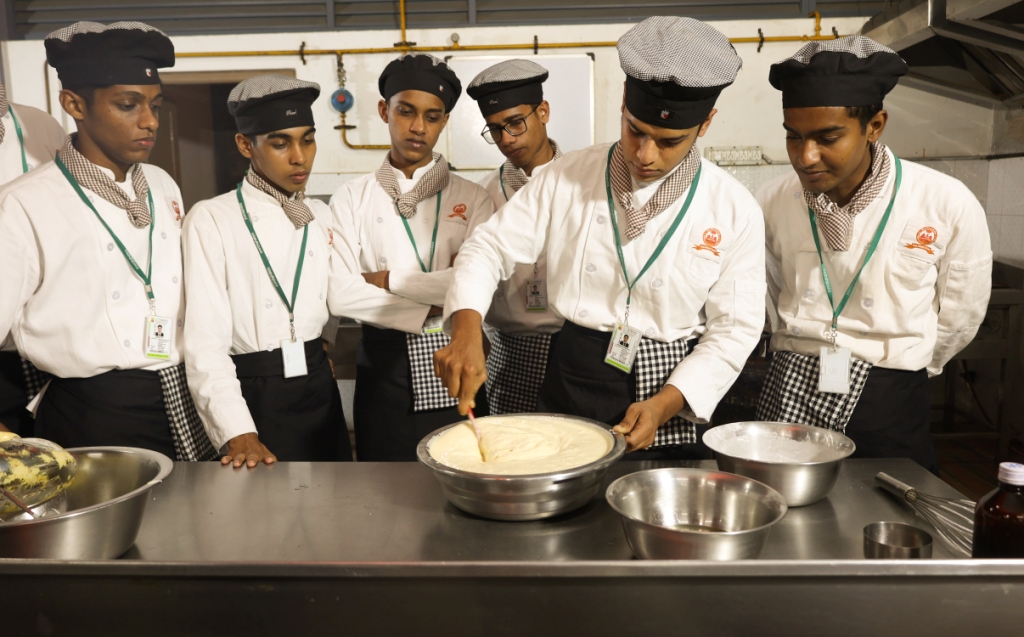
Within this hands-on atelier, students are not simply baking; they are sculpting experience. Every bench is a workspace of transformation, where ingredients are measured to the gram, temperatures monitored to the degree, and the smallest detail can elevate a simple sponge into a layered delight of texture and elegance. Industrial ovens breathe warmth into bread dough, cold counters host delicate mousse work and chocolate tempering, and mixers pulse with rhythm as recipes rise into life.
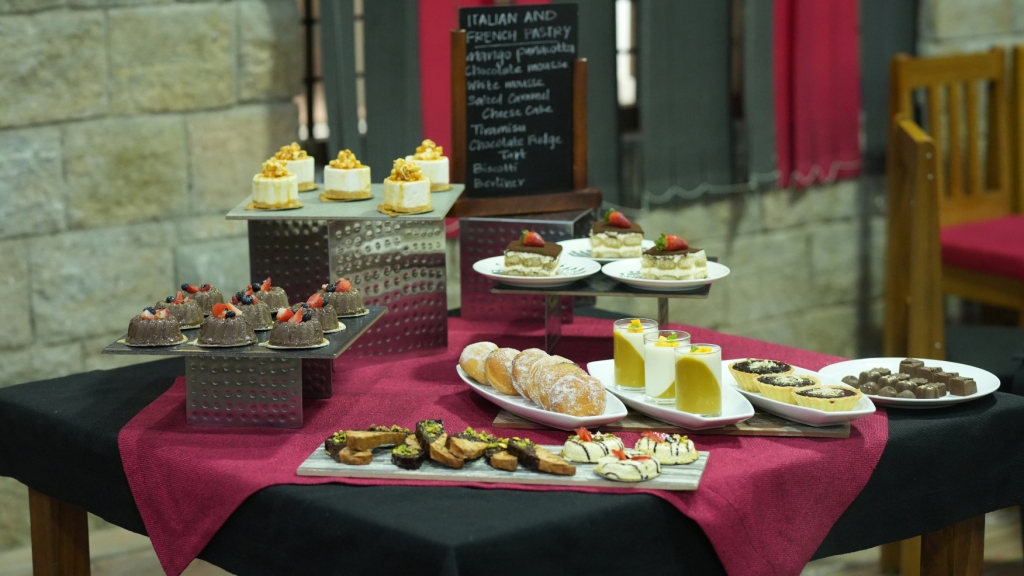
Guided by expert hands and exacting standards, students move through an evolving repertoire that stretches from rustic artisan loaves to the precise geometry of French entremets. They knead and laminate, whisk and glaze, pipe and garnish—each gesture a study in both restraint and creativity. Doughs are treated with respect, rested, folded, and coaxed into golden crusts. Chocolates are tempered until they gleam. Sugar is spun, pulled, or sculpted into ornate flourishes. And cakes? They become canvases for celebration, for expression, for storytelling through tiers and textures.
But beneath the visual beauty lies deep technical fluency. Here, students internalize the chemistry of leavening, the physics of heat, the behaviour of fats, and the science of setting. They learn why a tart shell holds or crumbles, what makes a sponge airy or dense, and how butter behaves differently in a Danish than in puff pastry. This understanding becomes second nature, shaping not just what they create, but how they think as professionals.
More than just a curriculum, the journey in this lab is shaped by seasonal inspirations, cultural influences, and global trends. Students may one day craft a batch of melt-in-the-mouth Indian milk sweets and the next, layer delicate mille-feuille with pistachio cream. They work in response to themes, to briefs, to visual prompts—designing plated desserts that balance colour, contrast, and contour.
Time, too, is a teacher in this space. The clock ticks through proofing cycles, chilling stages, and rapid assembly in fast-paced service simulations. Precision and pacing walk hand in hand. Every session demands awareness—of order, hygiene, workflow, and composure under heat.
And yet, amidst all this control, there is freedom. In decoration, in design, in flavour pairing—students are encouraged to explore, to dare, to reinvent. They learn to think not just as bakers or pâtissiers, but as stylists and innovators ready to respond to the evolving expectations of star hotels, high-end patisseries, cruise lines, and modern catering spaces.
In the end, this lab is far more than a training station. It is a crucible where raw talent is shaped through repetition, curiosity, and care—where hands become steady, eyes become discerning, and every pastry leaves a lasting impression long before the first bite.
Housekeeping Lab
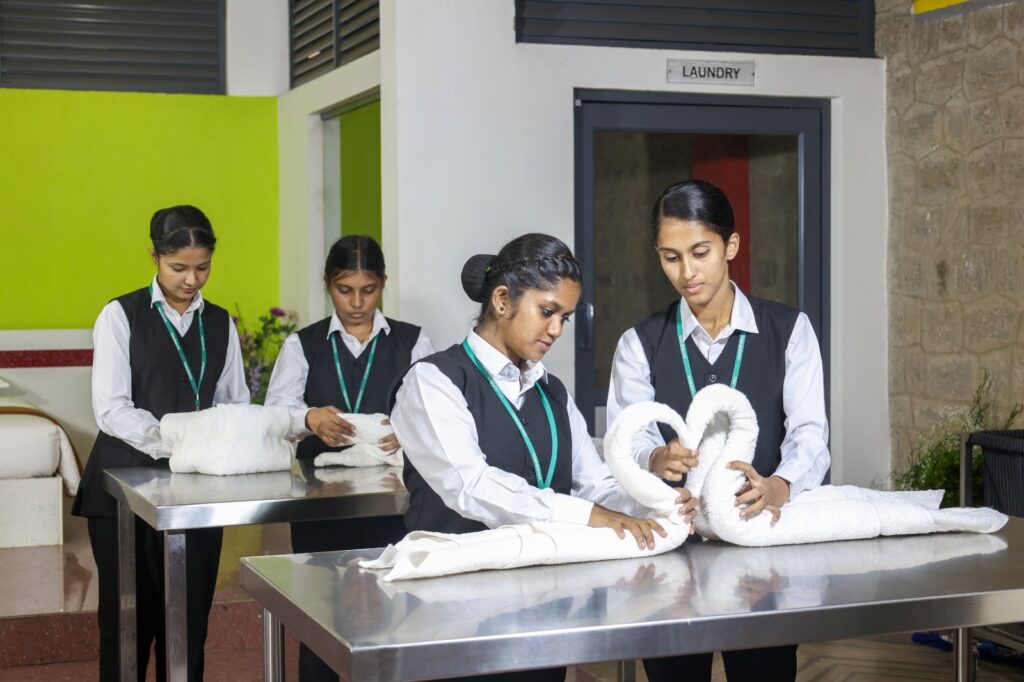
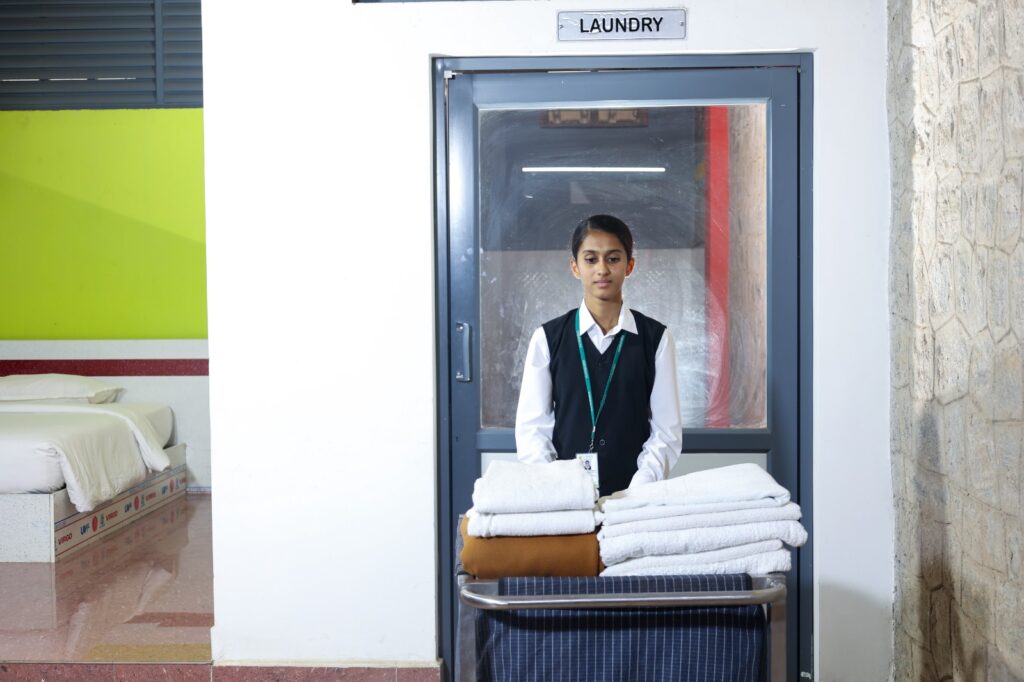
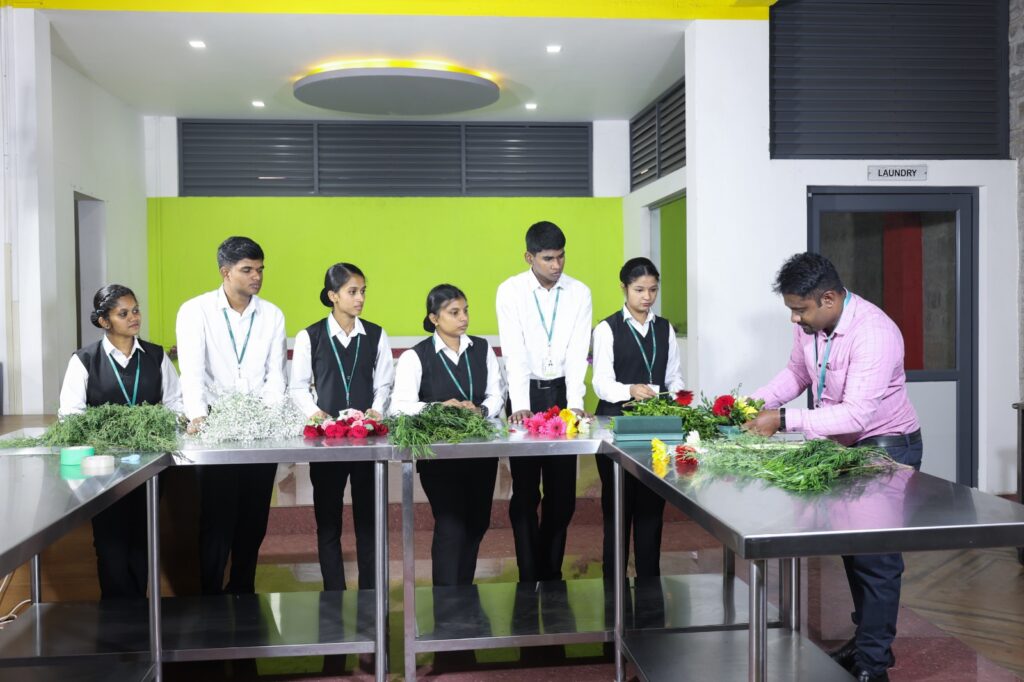
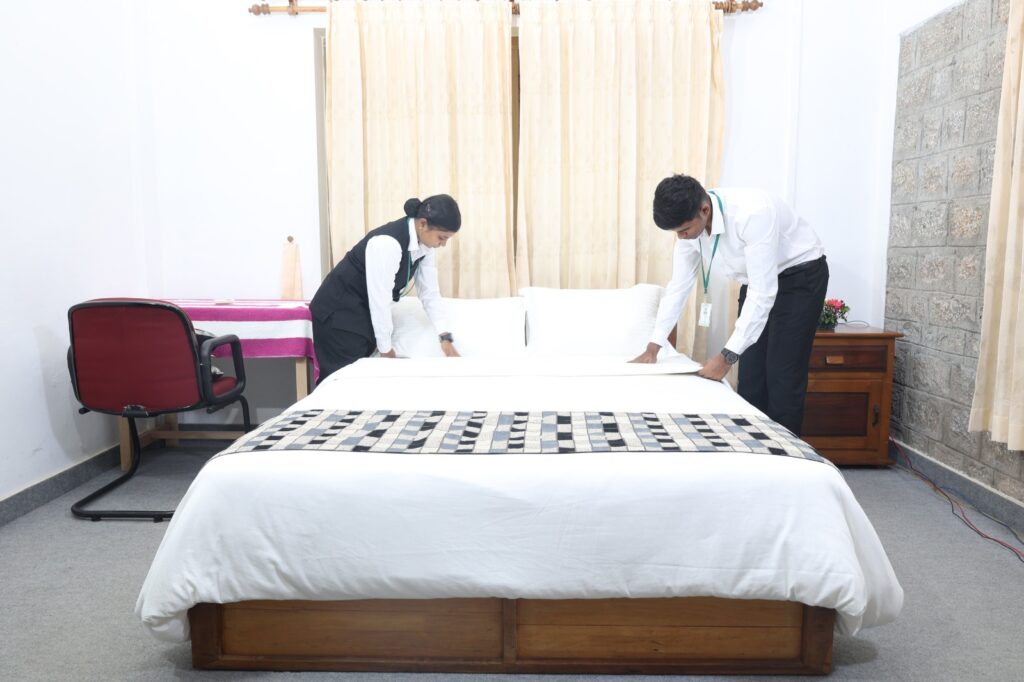
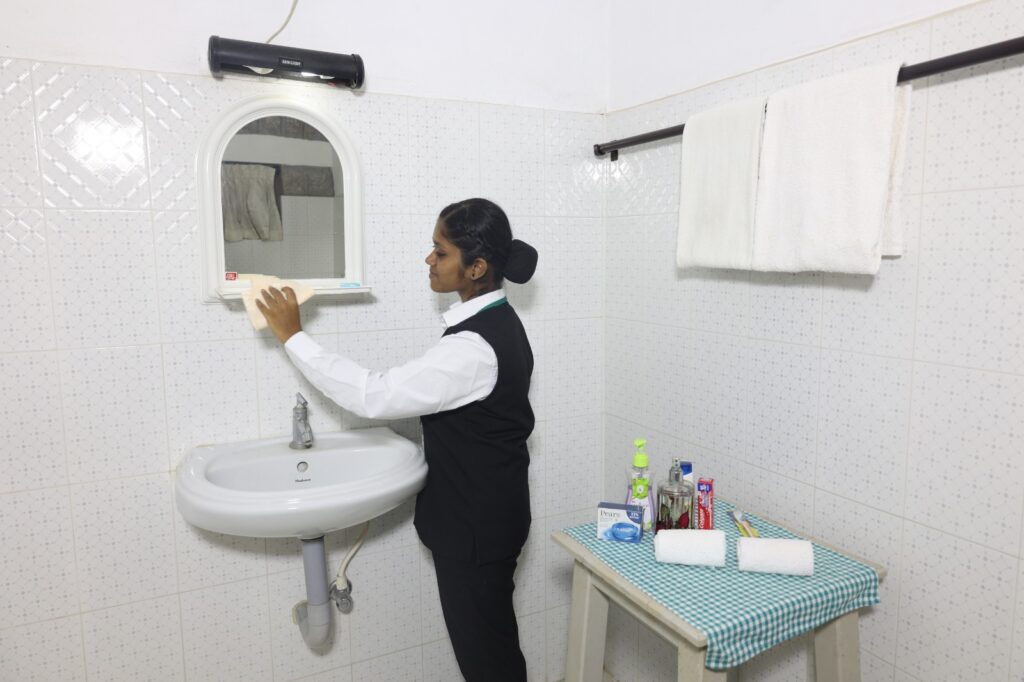
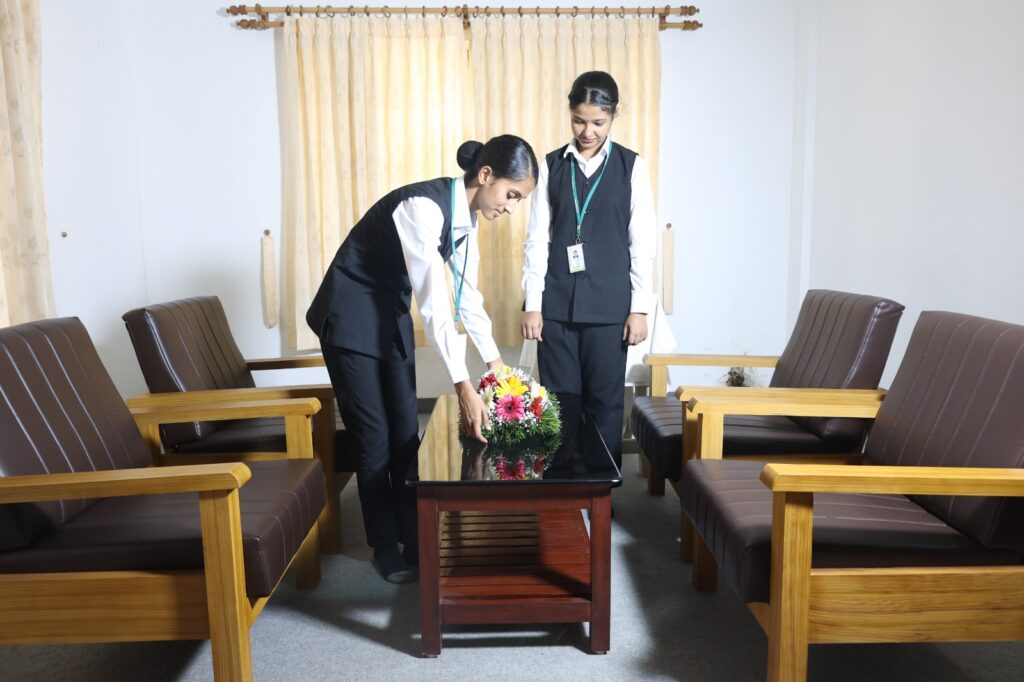
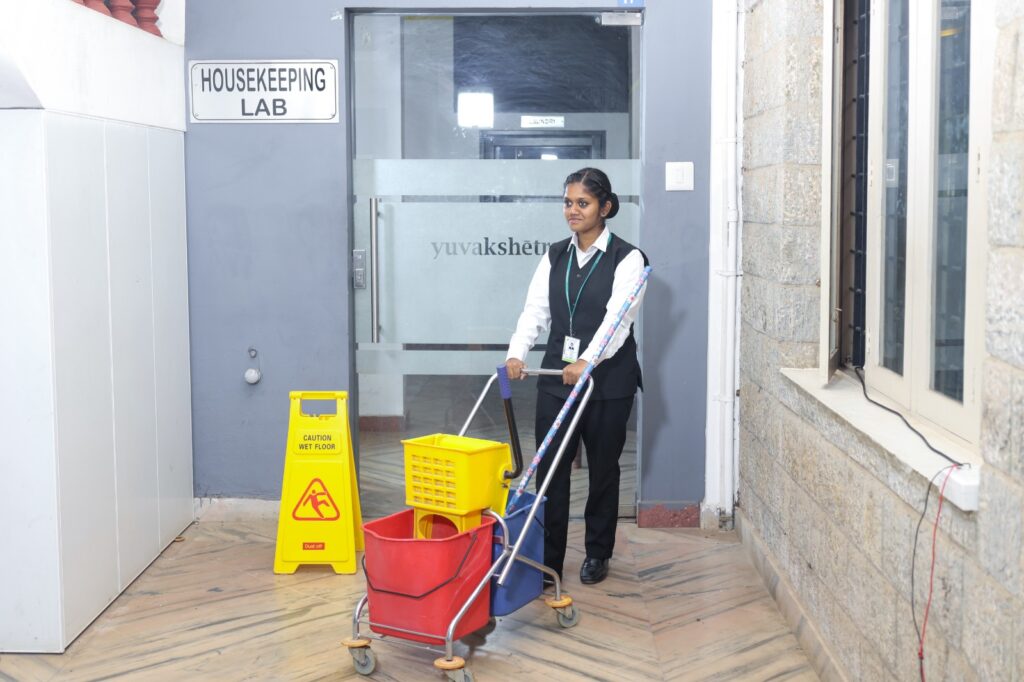
Tucked within the framework of hospitality training lies a space often overlooked, yet absolutely vital—the Housekeeping Lab. It is here that precision meets presentation, and where cleanliness is elevated to a form of silent hospitality. Designed to emulate the seamless flow of a hotel’s accommodation operations, this professional setting invites students into the intricate world of guestroom perfection and behind-the-scenes mastery.
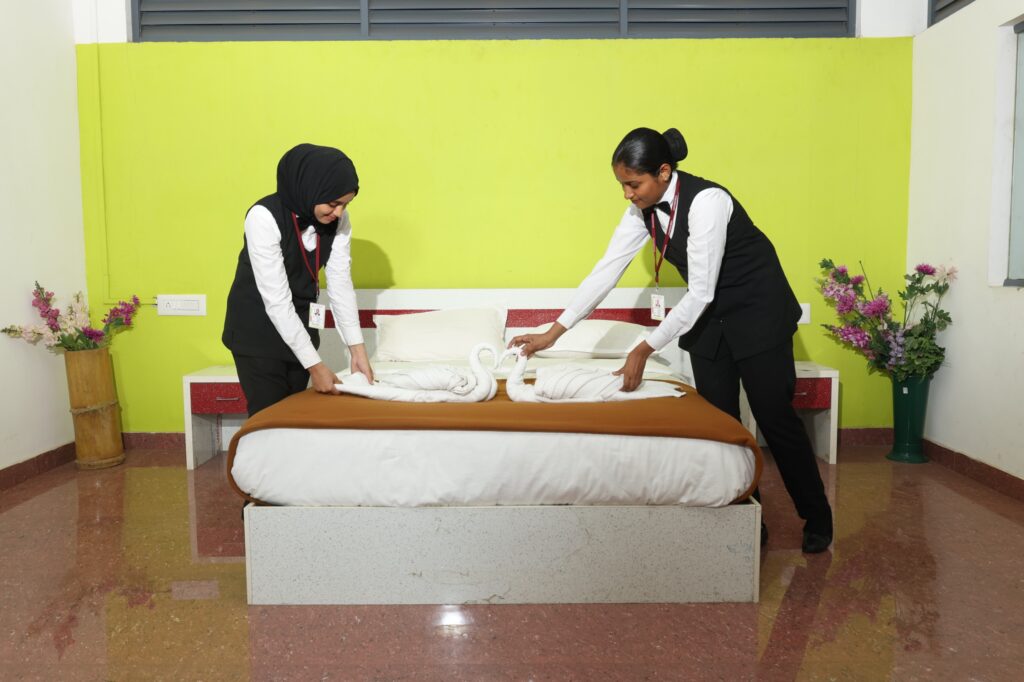
Every corner of this lab speaks the language of order. In this carefully curated environment, students are introduced to the fine art of room readiness—from learning how to compose a perfectly aligned bed with crisp linens to arranging guest amenities in thoughtful symmetry. They practice maintaining both private and public areas, executing tasks with the kind of subtle grace that goes unnoticed when done well, yet makes all the difference to a guest’s comfort.
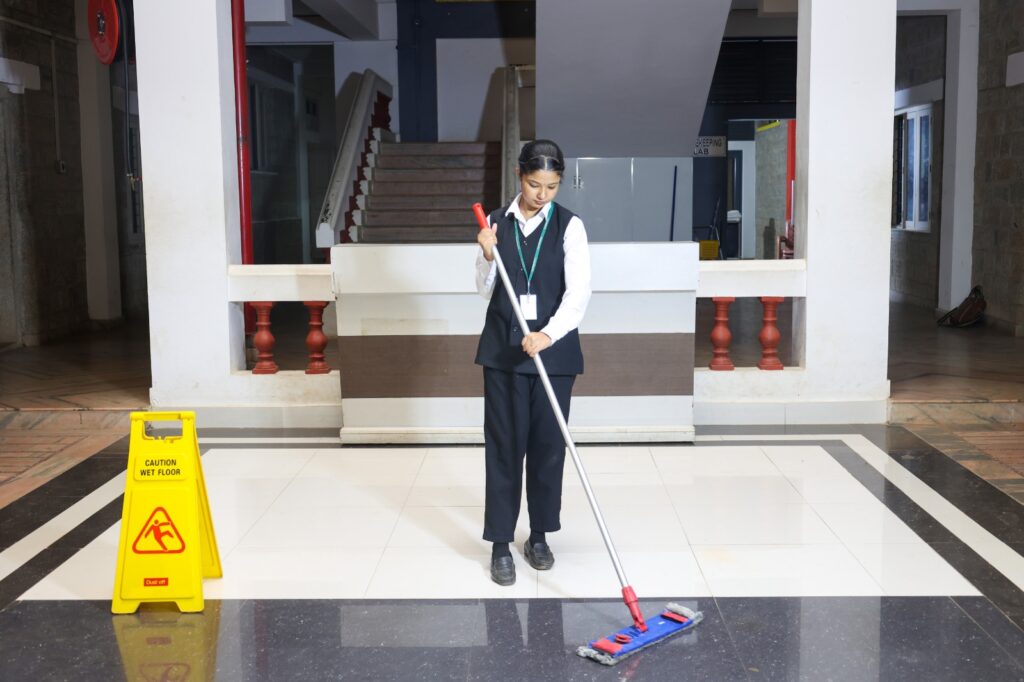
The training immerses them in more than cleaning techniques. With guided instruction, students become familiar with handling both manual tools and mechanical cleaning devices, selecting appropriate agents based on surface and requirement, and adhering to strict hygiene protocols. The lab becomes their learning ground for real-world expectations, demanding not only speed and precision but a constant awareness of aesthetics and hygiene.
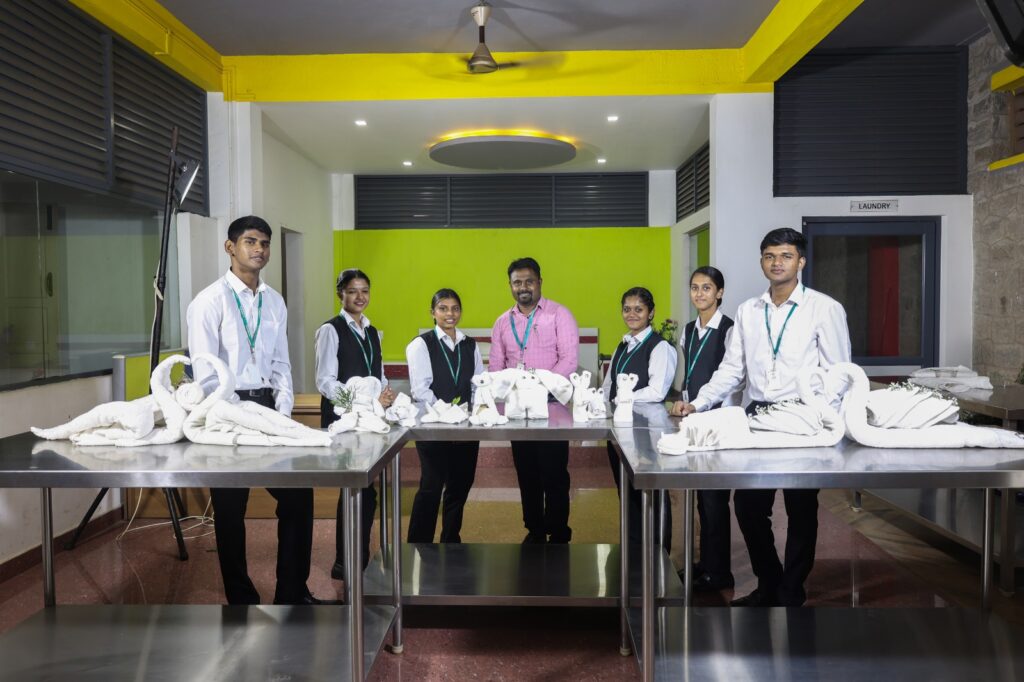
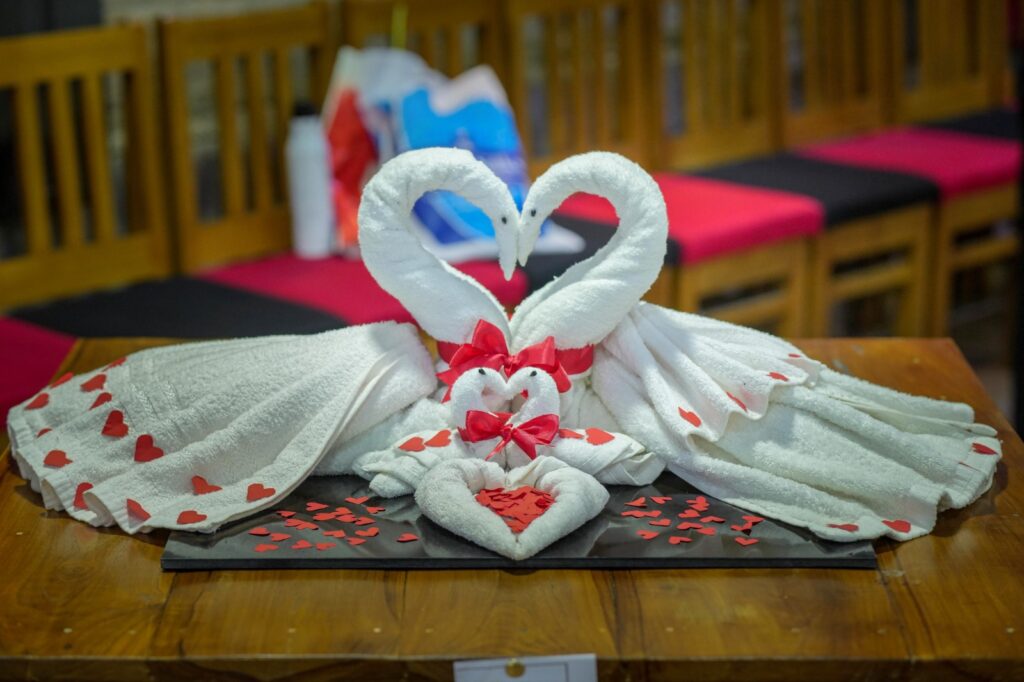
Every task is layered with deeper learning. Flower arrangements are not just decorative—they are carefully designed with attention to balance and seasonality. Towel art, often viewed as a flourish, becomes a lesson in presentation and detail. Guestroom inspections become opportunities to understand the subtleties of quality assurance and the discipline of keen observation.
Beyond daily routines, learners engage with the systems that keep housekeeping departments running smoothly. From maintaining linen inventories to managing checklists and monitoring outsourced services like laundry and maintenance, students explore the managerial side of the operation. They’re encouraged to think not just like attendants, but like supervisors—problem-solving, anticipating needs, and upholding service excellence across all touchpoints.
The space also opens a window to design thinking. Lessons touch on colour harmony, soft furnishing choices, lighting aesthetics, and thematic arrangements—all of which shape the ambiance a guest steps into. The curriculum sensitizes students to seasonal décor, functional layout adjustments, and subtle visual cues that influence mood and comfort.
At its heart, this training environment instills more than procedural knowledge—it cultivates a standard of care, an eye for refinement, and an understanding that true hospitality is often expressed through the smallest of gestures. Each polished surface, folded corner, and thoughtful detail becomes a silent promise of comfort and consistency. In mastering this invisible art, students prepare themselves to step confidently into the world of luxury hospitality, ready to uphold standards that speak not through words, but through pristine, well-kept spaces that make every guest feel genuinely welcomed.
Front Office Lab
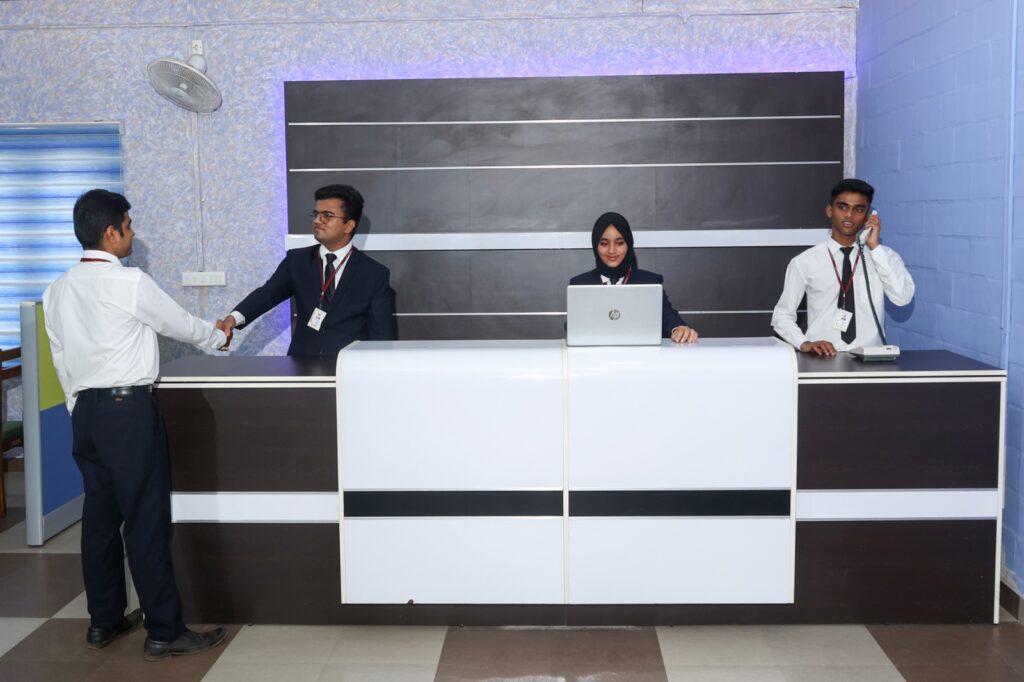
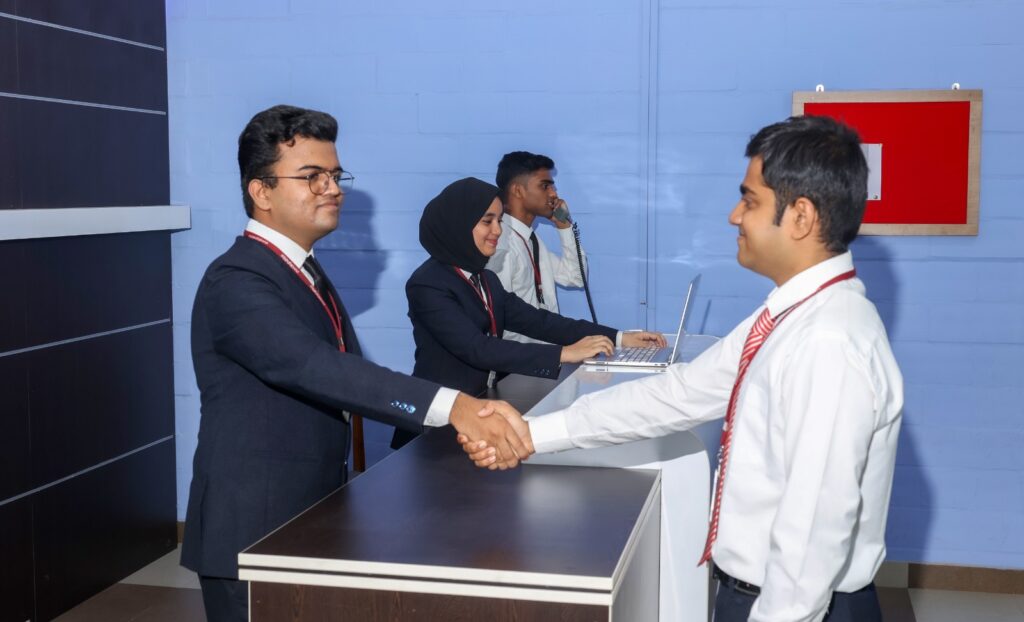
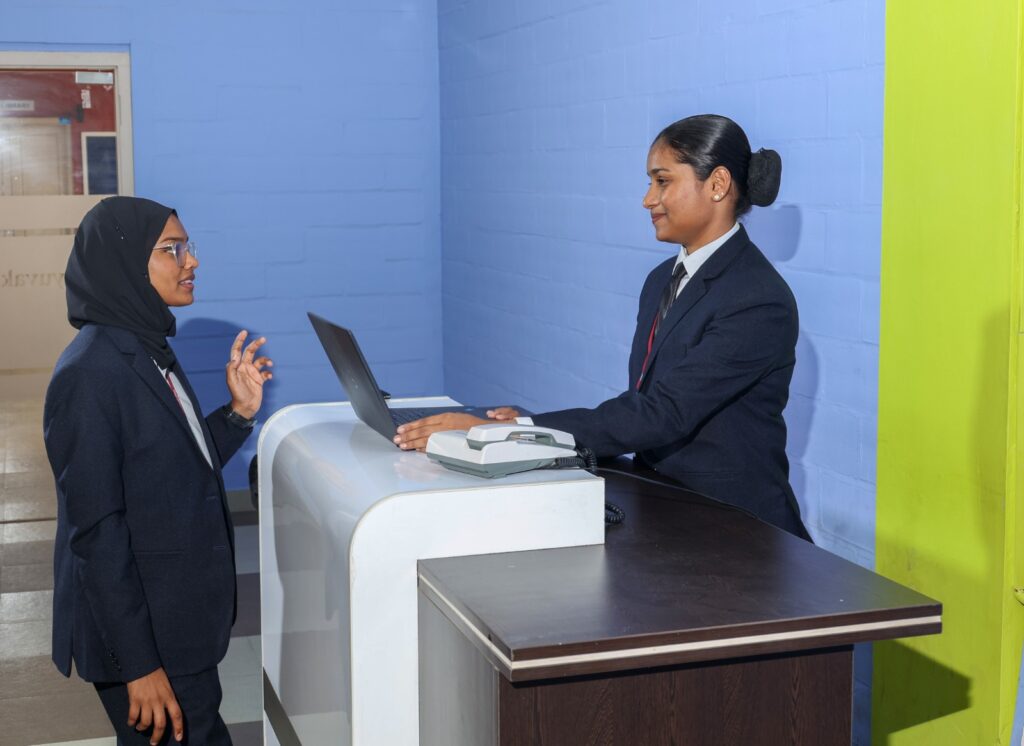
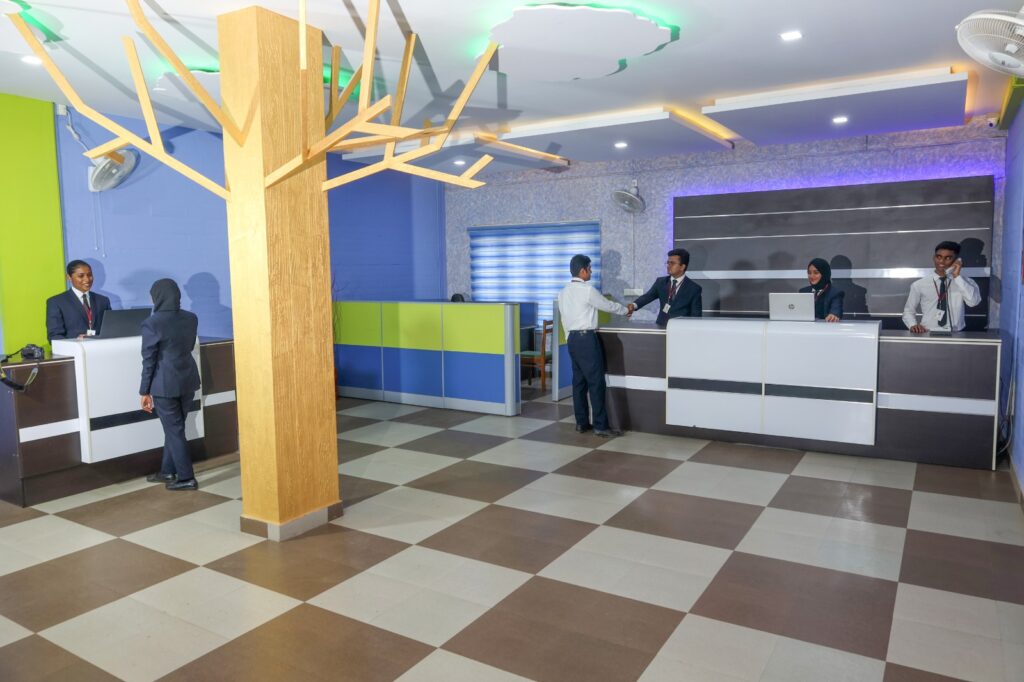
Within the Front Office Lab, hospitality takes form in its most refined expression—where gestures matter, voices are trained to soothe and assure, and precision is woven into every exchange. This thoughtfully designed space mirrors the polished atmosphere of a hotel’s reception and lobby area, allowing students to step into the roles they are preparing for, not as observers, but as active participants in the choreography of guest service.
Each day in this lab is a blend of routine and surprise, where students rehearse the familiar rhythm of check-ins, reservation verifications, room allocations, and billing formalities, all while preparing to respond to the unexpected—a guest’s complaint, a sudden request, a last-minute change. It is here that they learn not only how to manage systems but how to manage moments. Real-time roleplays and guided simulations encourage them to engage with one another as professionals-in-training, building fluency in communication, responsiveness in thought, and confidence in approach.
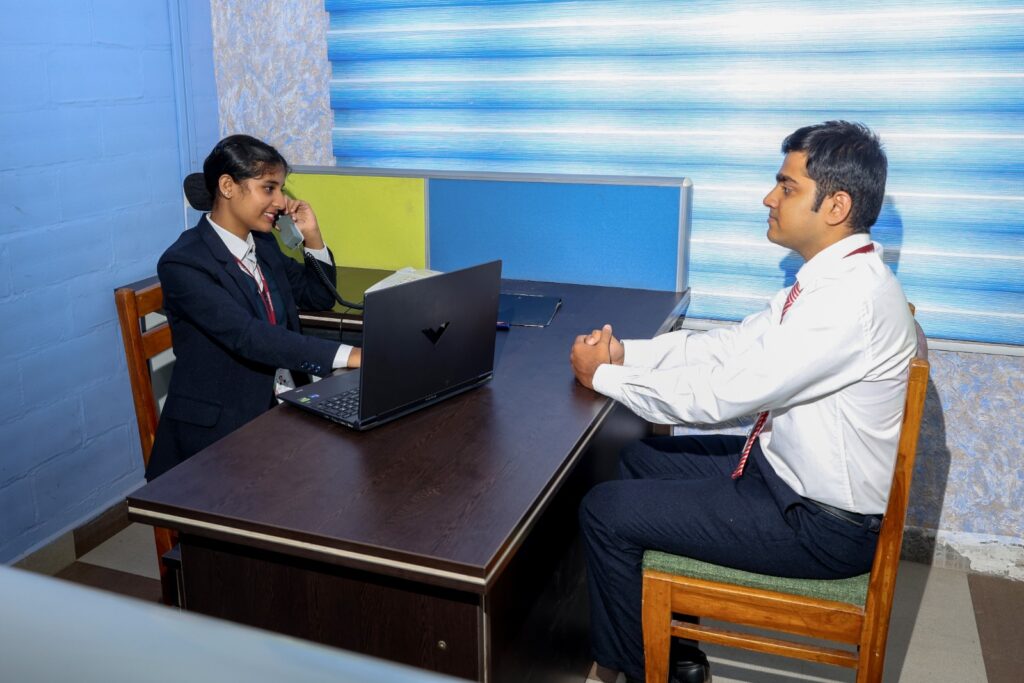
The design of the space itself is immersive. A functioning reception counter serves as the nucleus of activity, complemented by dedicated areas for bell desk operations, itinerary support, and guest engagement. A mock front office manager’s cabin introduces them to the quiet logistics that often unfold behind closed doors—administration, record-keeping, and managerial oversight. Each element, from the flow of guest queries to the posture behind the counter, is intended to sharpen instinct and elevate professionalism.
Digital training forms an integral part of their preparation. With hands-on exposure to industry-standard property management systems, students develop ease in navigating software platforms such as Opera or Fidelio, learning to merge data accuracy with guest sensitivity. They explore the fine details of documentation and simulate interdepartmental coordination—an essential part of seamless hospitality that rarely meets the guest’s eye, yet always defines their experience.
But more than hardware and rehearsals, this lab fosters a transformation that is internal. Students learn to carry themselves with calm assurance, speak with respect and warmth, listen without haste, and resolve with discernment. The emphasis is not solely on what to say, but how to say it—with grace, with tact, and with an understanding that every interaction is a reflection of the place they represent.
In essence, the Front Office Lab is not only a training ground—it is a quiet forge of poise and presence. By the time students walk out its doors, they do so with more than technical proficiency. They carry with them a refined sensitivity to human needs, a command over detail, and the unwavering ability to make a guest feel seen, heard, and genuinely welcomed.
Language Lab
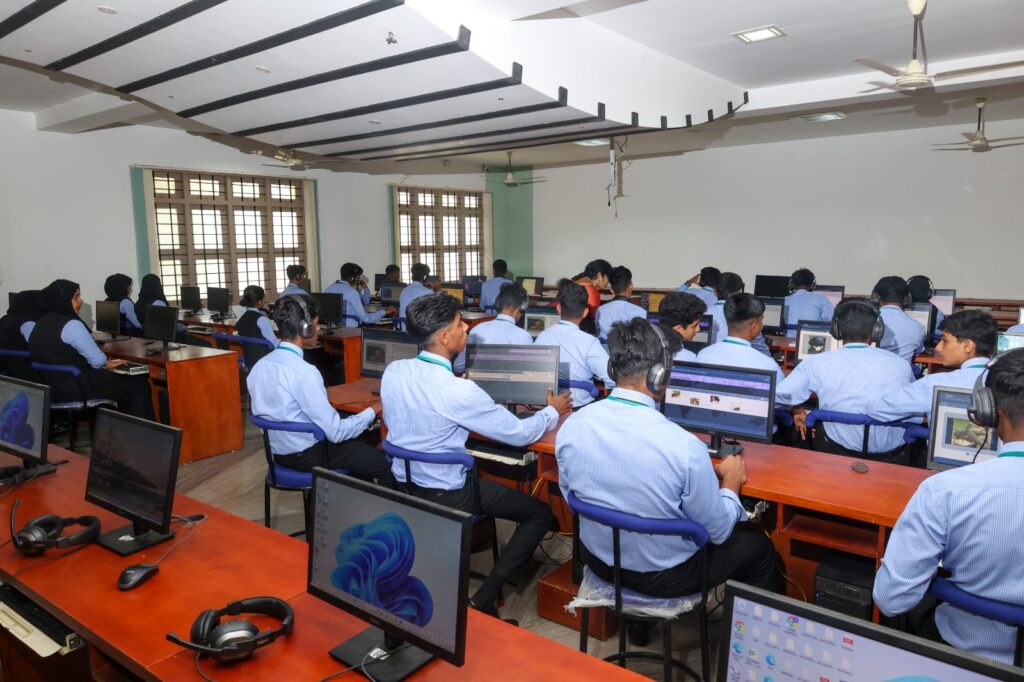
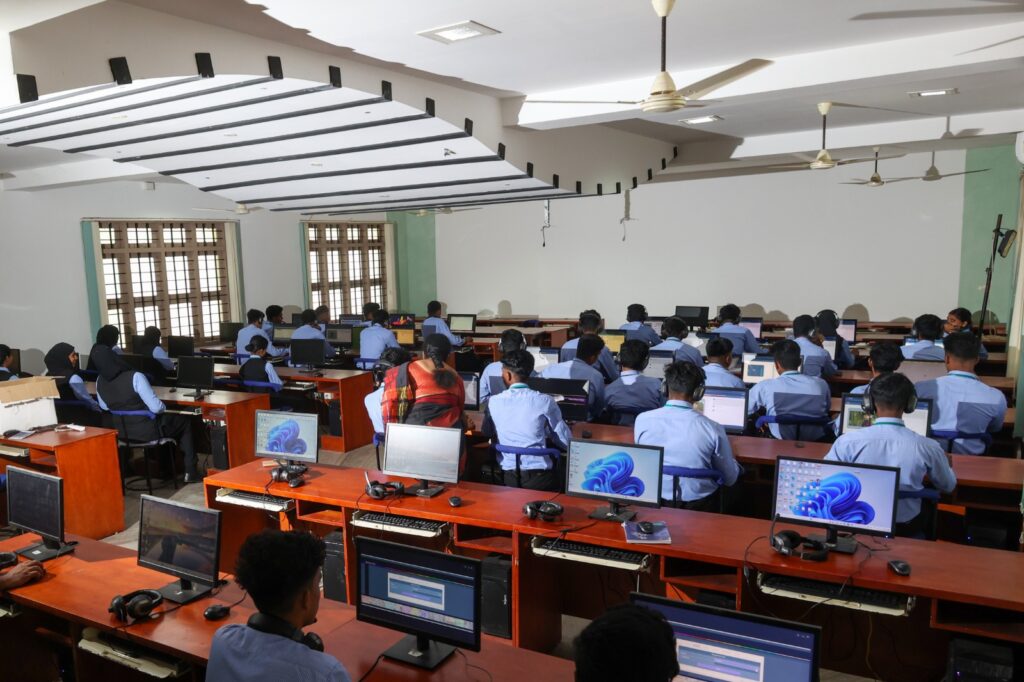
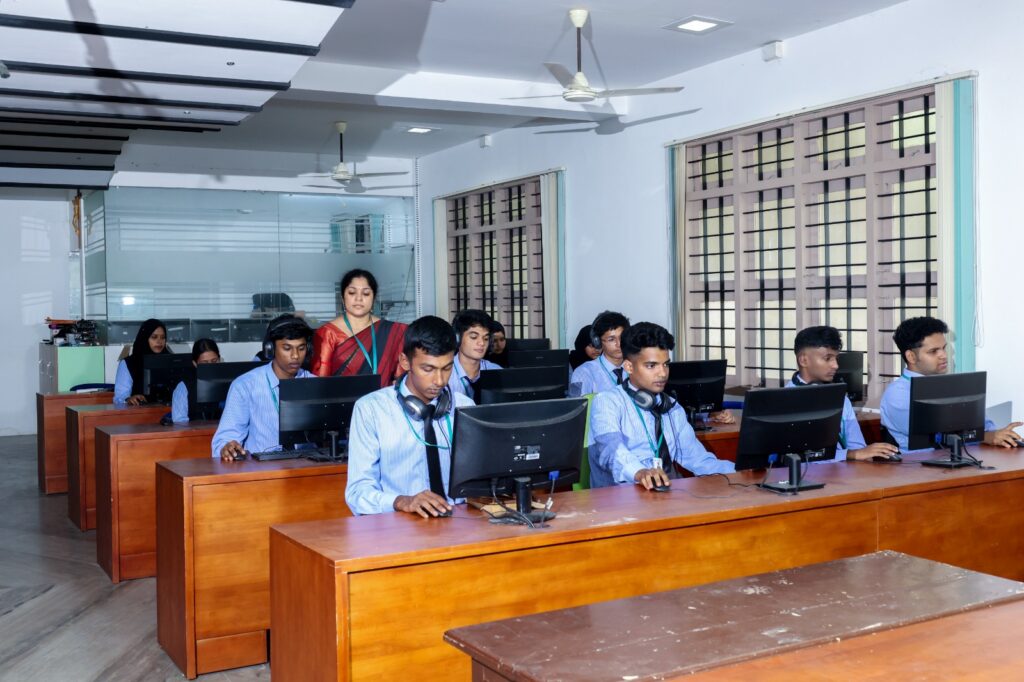
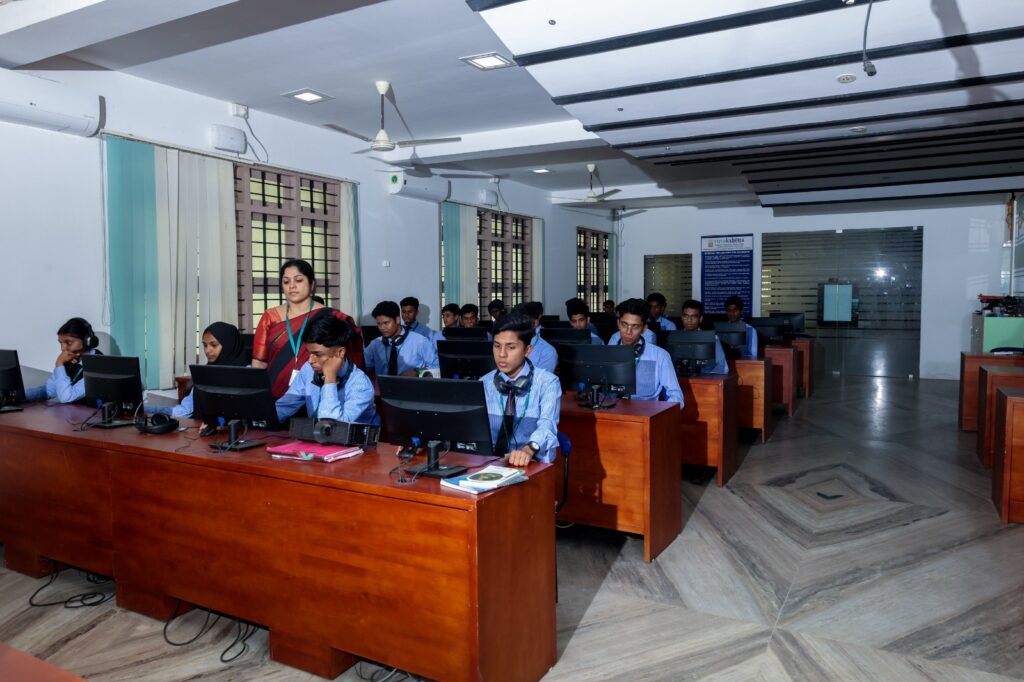
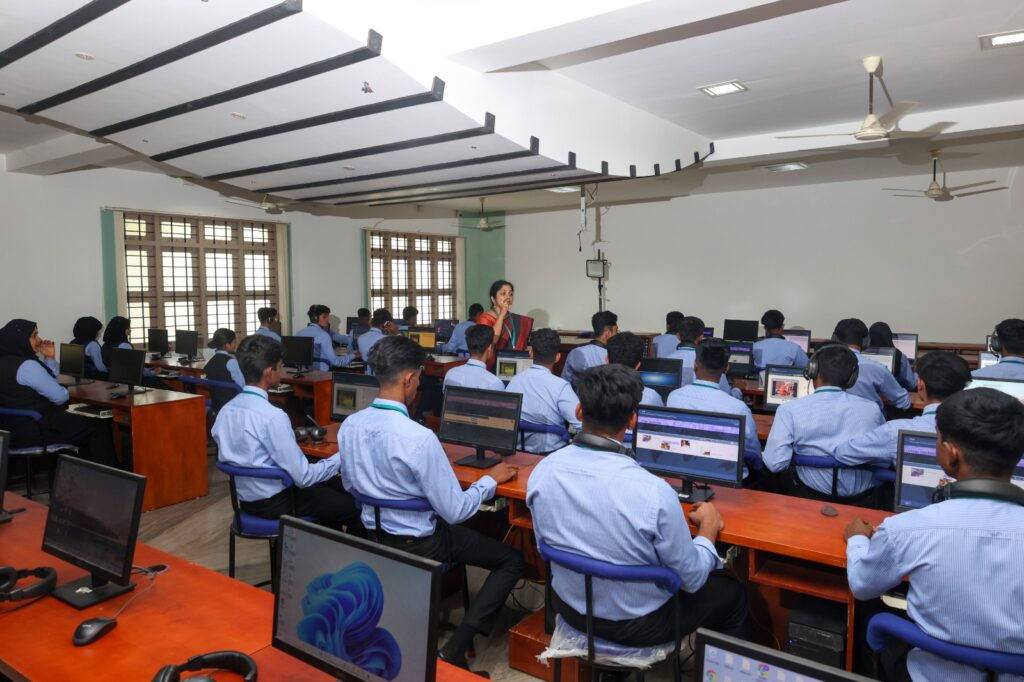
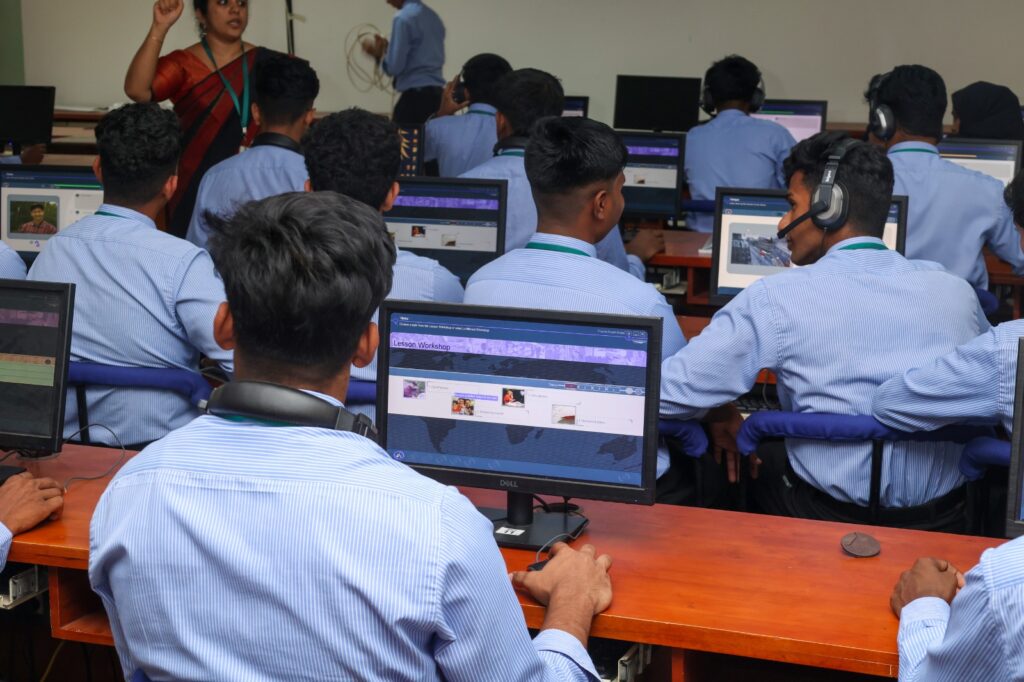
The Language Lab is not built on mere rules of grammar or phonetics—it’s shaped by the everyday demands of real conversations, by the tension in a guest’s voice, or the pause that follows a question. In this quiet, technologically enabled space, students don’t just practice communication—they slowly learn to mean every word they say.
Here, a mispronounced syllable becomes an opportunity, not an error. A poorly structured email draft turns into a discussion about tone, intent, and clarity. Through real-time speech activities, simulated phone calls, and impromptu presentations, students begin to unlearn fear and relearn presence. They begin to notice that good communication is rarely perfect—it’s patient, adaptable, and aware of the person on the other side.
Rather than simply teaching students to write a report or rehearse a speech, the lab helps them ask better questions, hold eye contact a moment longer, or choose the right silence when words might fail. There’s no script—just situations. A missed cue becomes a lesson. An awkward introduction turns into laughter, and later, confidence.
Over time, the Language Lab becomes less about technology and more about transformation. It becomes a space where voices settle, where personalities sharpen, and where future professionals learn not just how to speak—but how to be heard.
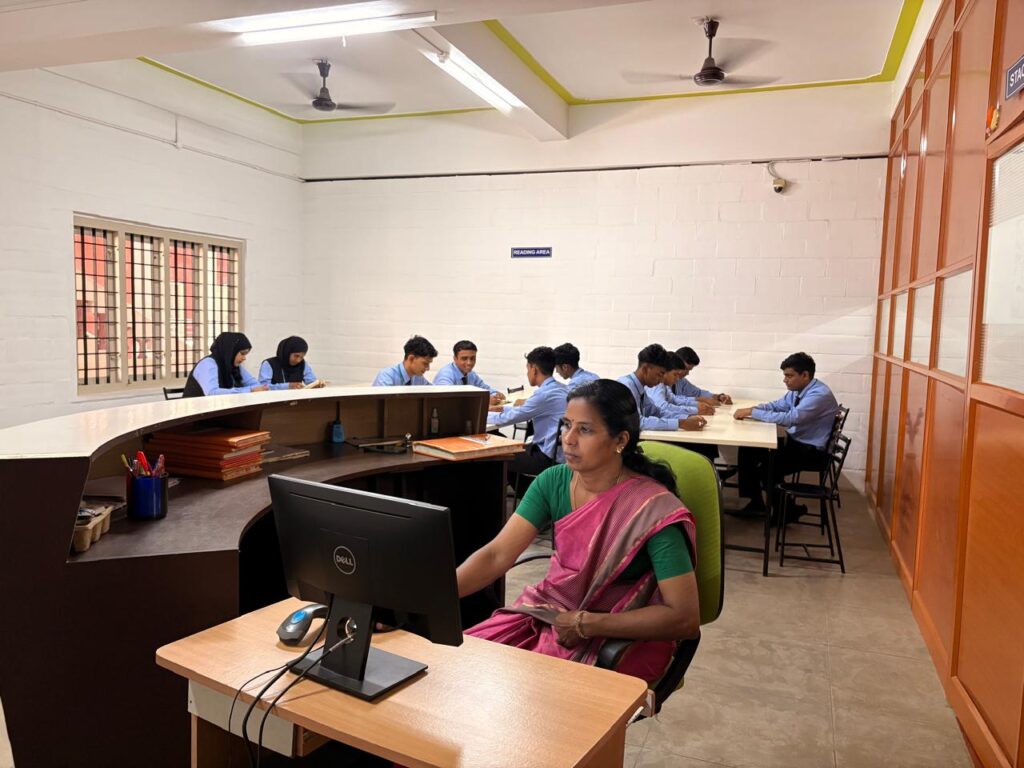
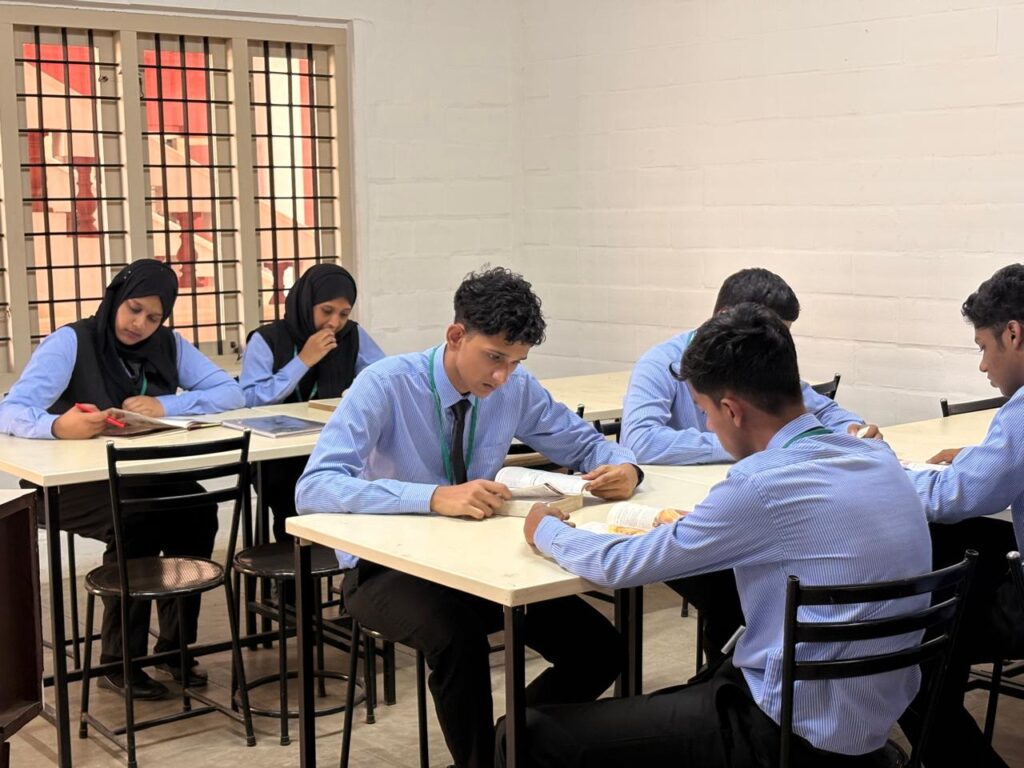
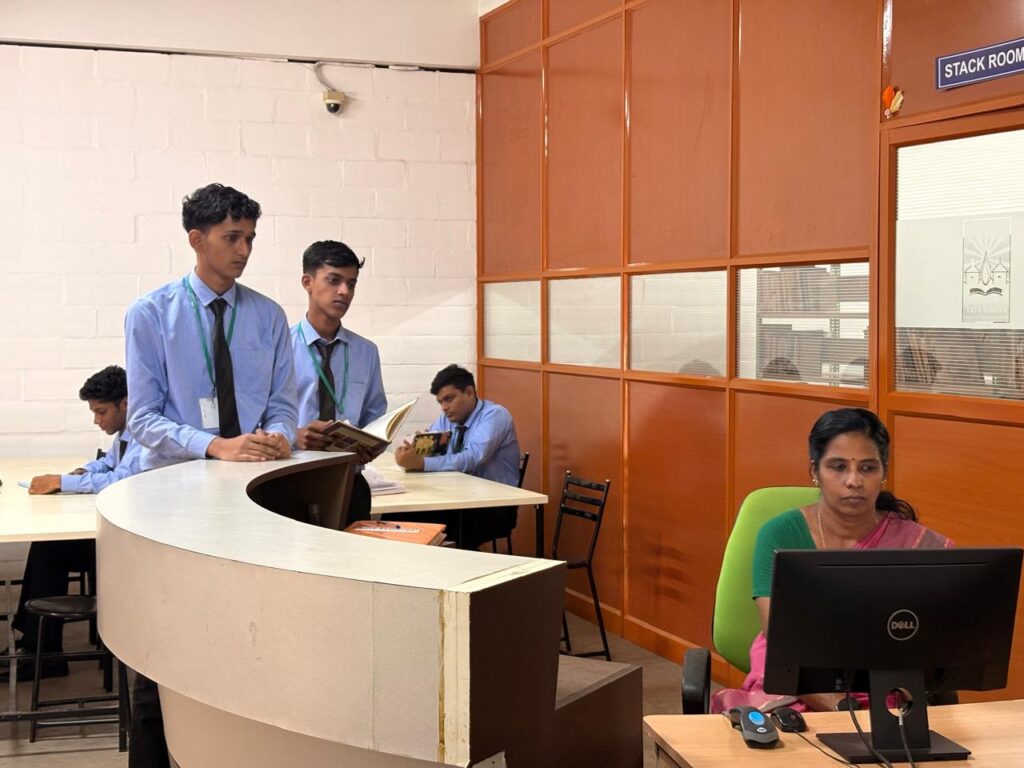
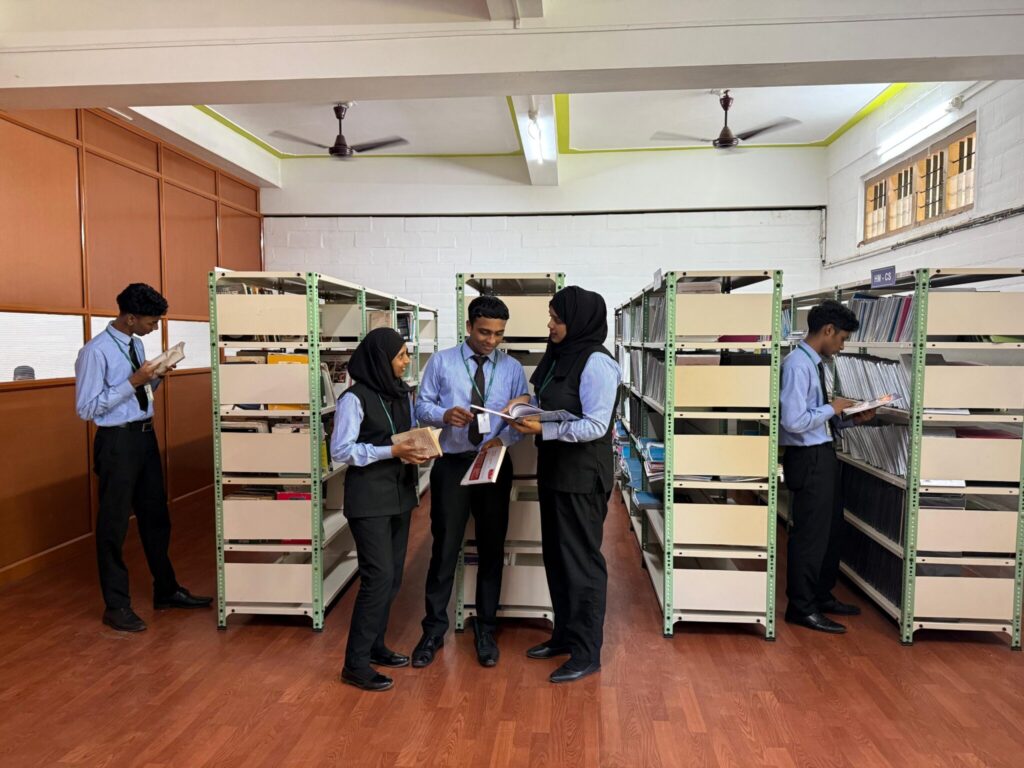
Hotel Management Library
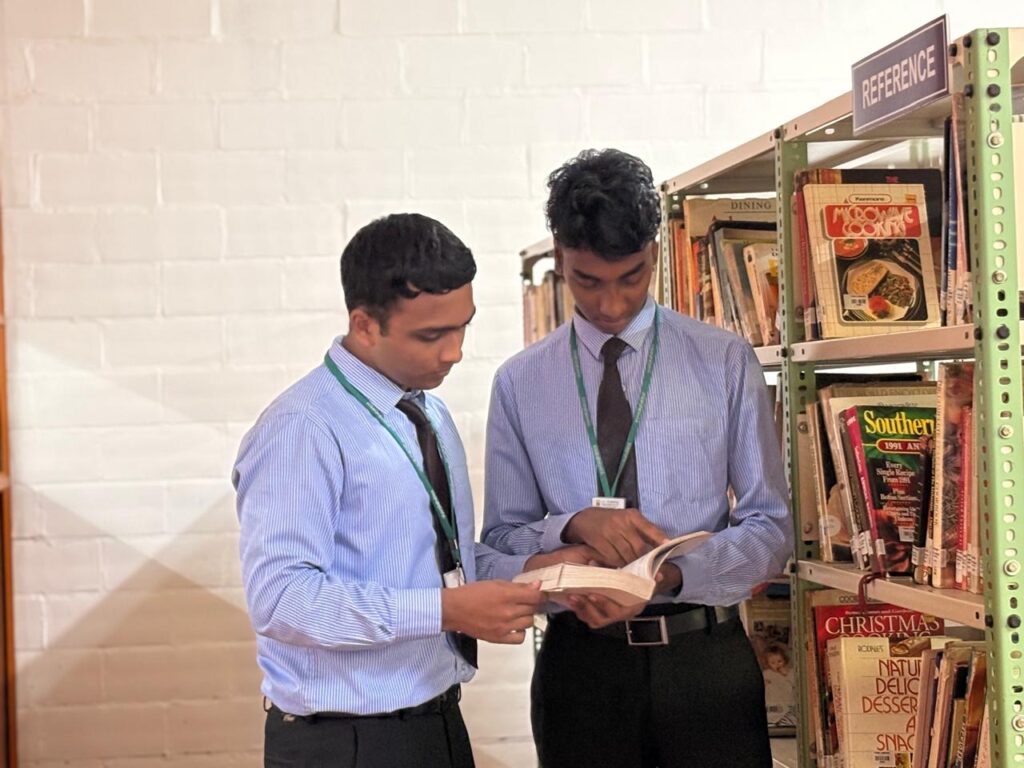
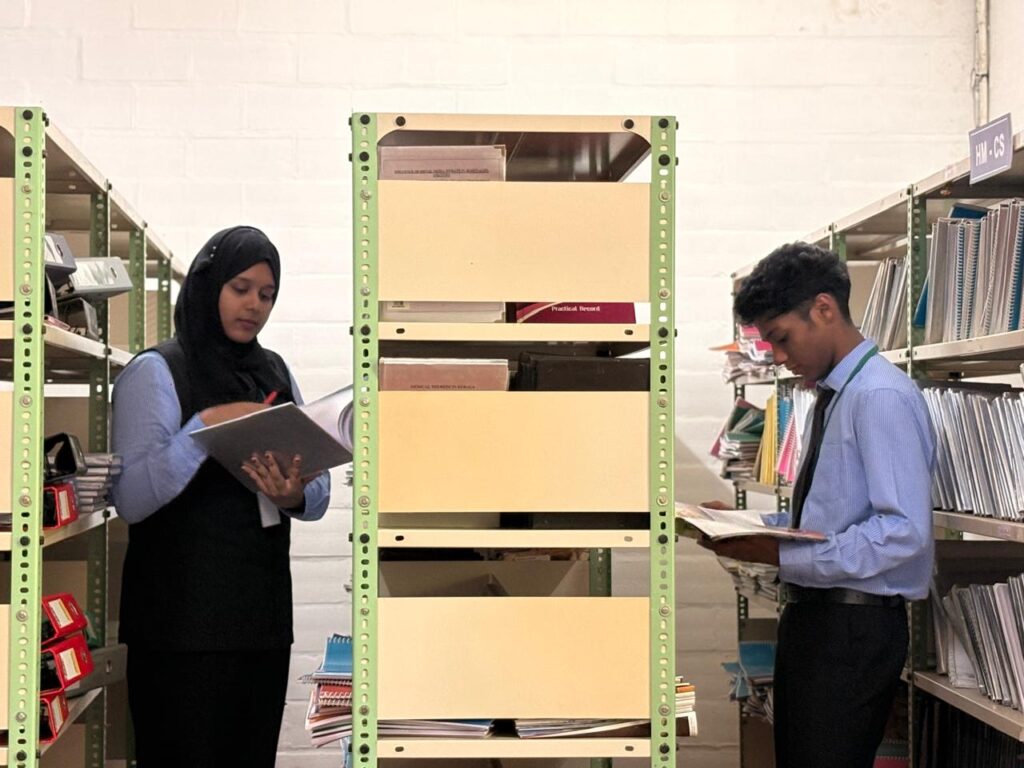
The Hotel Management Library offers a purposeful and intellectually stimulating environment, crafted to meet the academic and industry-oriented aspirations of budding hospitality professionals. Unlike a conventional library that stretches across multiple disciplines, this exclusive domain speaks the language of hotels—every book, journal, and document anchoring itself to the rhythm of service, management, and innovation.
Walk through its doors and you’ll find more than stacks of books—you’ll enter a landscape of ideas where global hospitality trends meet timeless hotel traditions. Texts on culinary artistry, operational management, sanitation protocols, tourism principles, and guest service philosophies line the shelves, offering not just content, but context. Current hospitality journals, trade publications, and student-authored case studies add layers of relevance and perspective, encouraging learners to go beyond theory and glimpse the industry in motion.
Technology, too, finds its place here—not as a luxury, but as a necessity. With access to e-resources, digital archives, and multimedia content, students are empowered to research, cross-reference, and explore hospitality as it evolves across continents and cultures. Whether working on a solo research paper or teaming up for a collaborative project, learners make full use of the space for critical inquiry and thoughtful reflection.
This is a library where silence does not signify stillness—it reflects focus, preparation, and a growing awareness of the professional world waiting just beyond campus. From daily reading to academic deep dives, from discovering a management theory to analyzing a food cost sheet, every moment spent here contributes to shaping well-informed, industry-ready individuals.
Classrooms
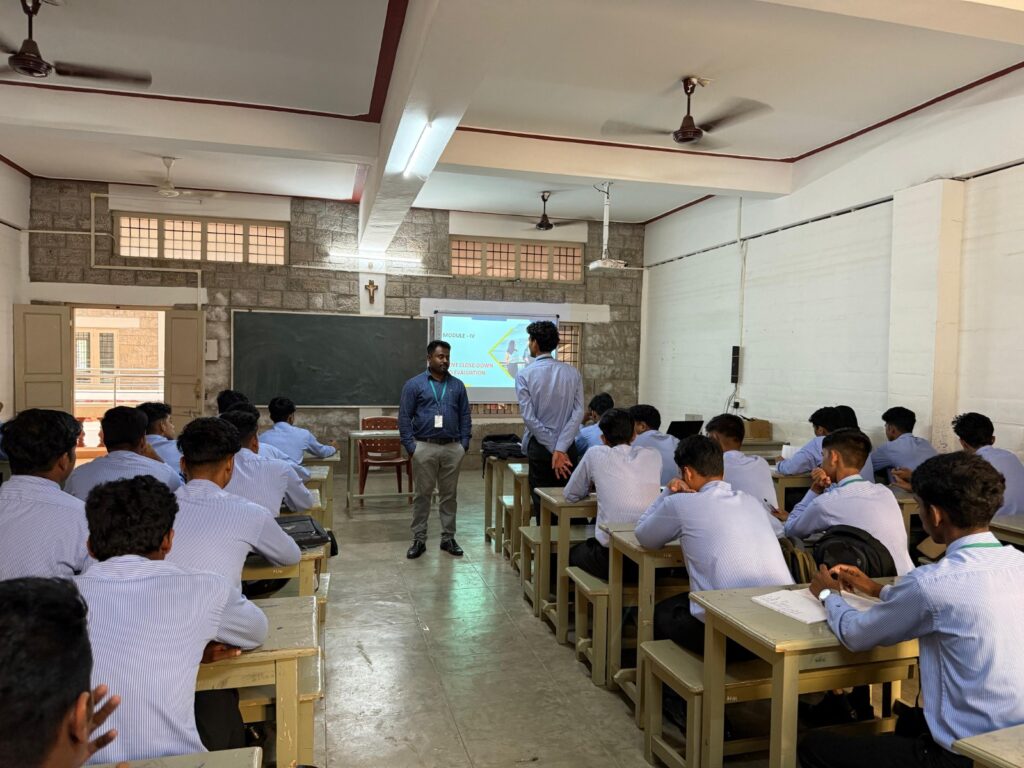
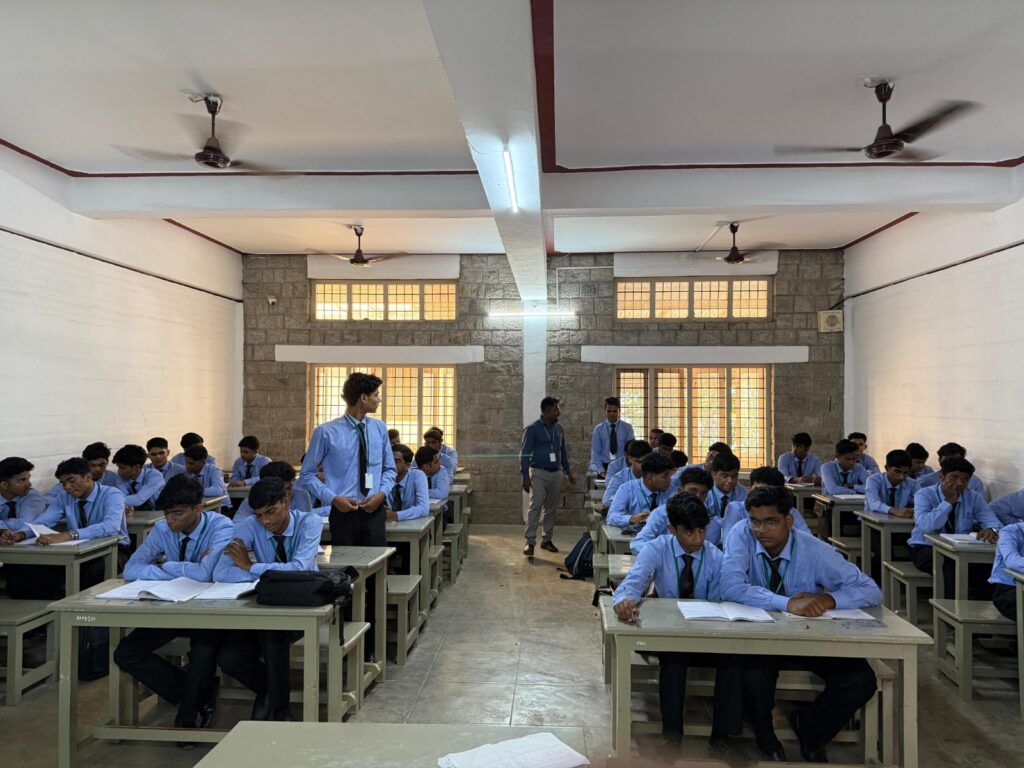
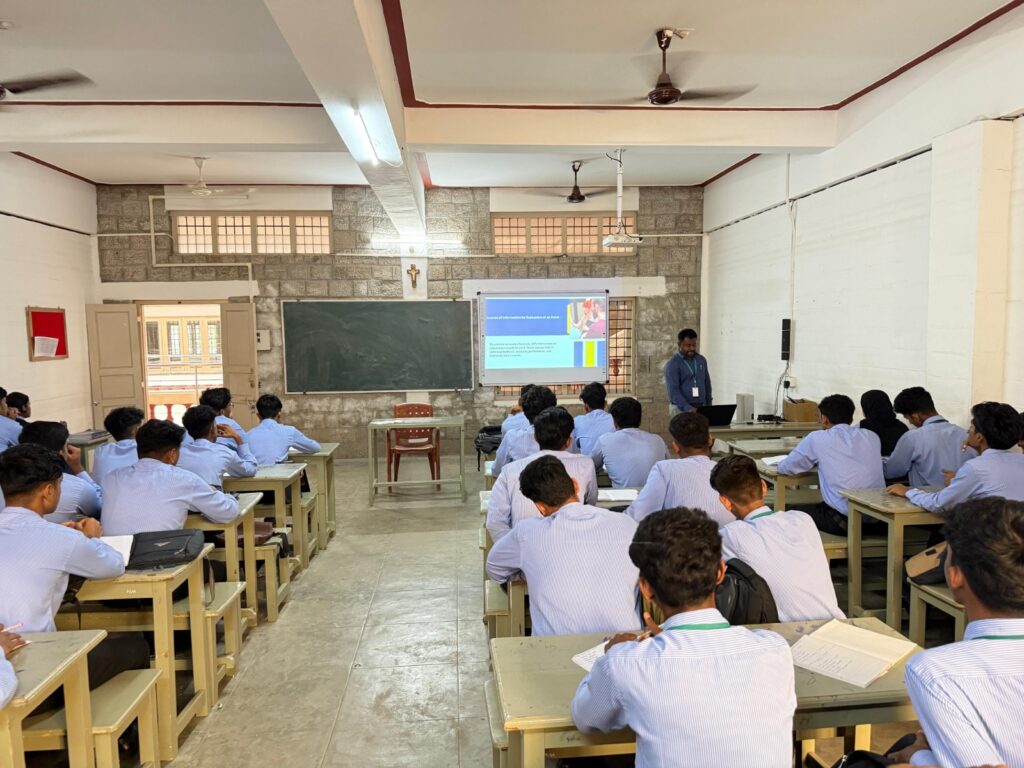
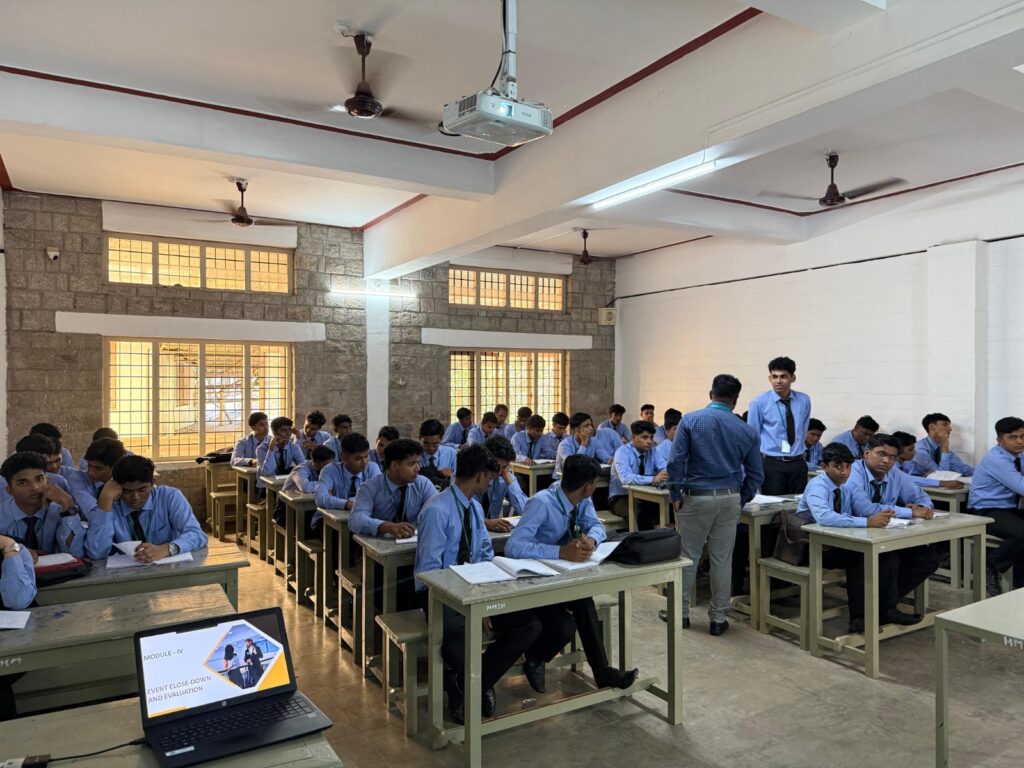
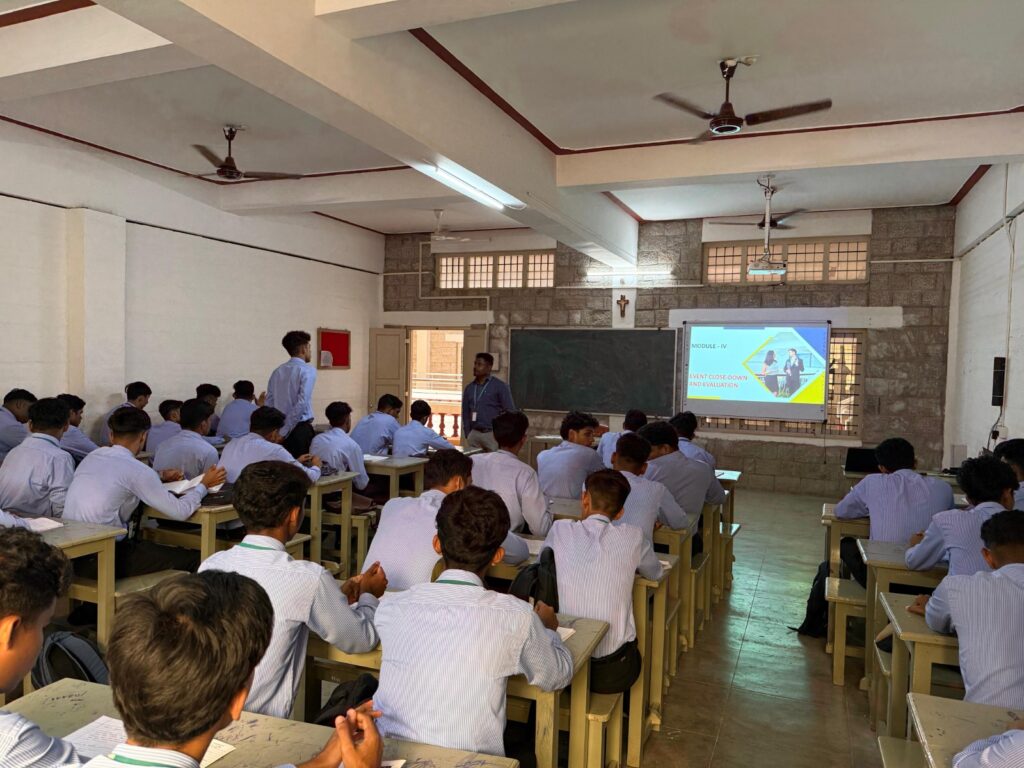
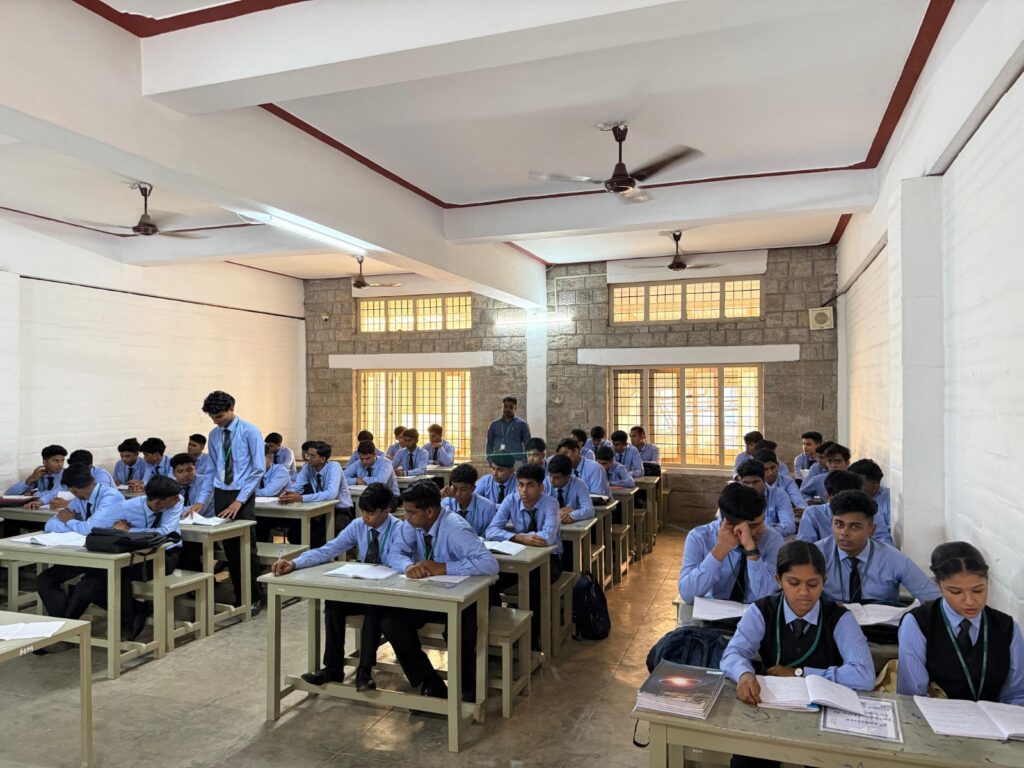
Step into our classrooms, and you’ll find more than four walls and rows of desks — you’ll enter a space where technology, comfort, and design converge to create an inspiring atmosphere for learning. Each ICT-enabled classroom is thoughtfully equipped with ergonomically crafted writing tables and benches, high-resolution projectors, and interactive whiteboards that turn lessons into dynamic, visually engaging experiences.
Seamless high-speed internet connectivity and advanced audio-visual systems bring the world into the classroom, enabling instant access to online resources, virtual demonstrations, and multimedia content. The integration of smart classroom technology fosters active participation, collaborative problem-solving, and interactive discussions that spark curiosity and deepen understanding.
Every detail is intentional — from the spacious, well-ventilated interiors that ensure comfort during long sessions to the carefully arranged seating that encourages engagement and focus. Here, students don’t just attend lectures; they immerse themselves in an environment designed to nurture ideas, sharpen skills, and inspire excellence.